Home
/
RELIGION & LIBERTY
/
Mandated giving doesn't come from the Heart
May 15, 2026 9:14 PM

It seems that some Biblical fallacies never go away, especially as regards redistribution and the poor. Hardly a day passes when I don't hear some version of the following: The Gospels speak clearly on the issue of the poor. They must be cared for. Special obligation falls to the rich who have the resources to care for them. This country has programs in place that are designed to do just that. Therefore, Christians have an obligation to politically support these programs.

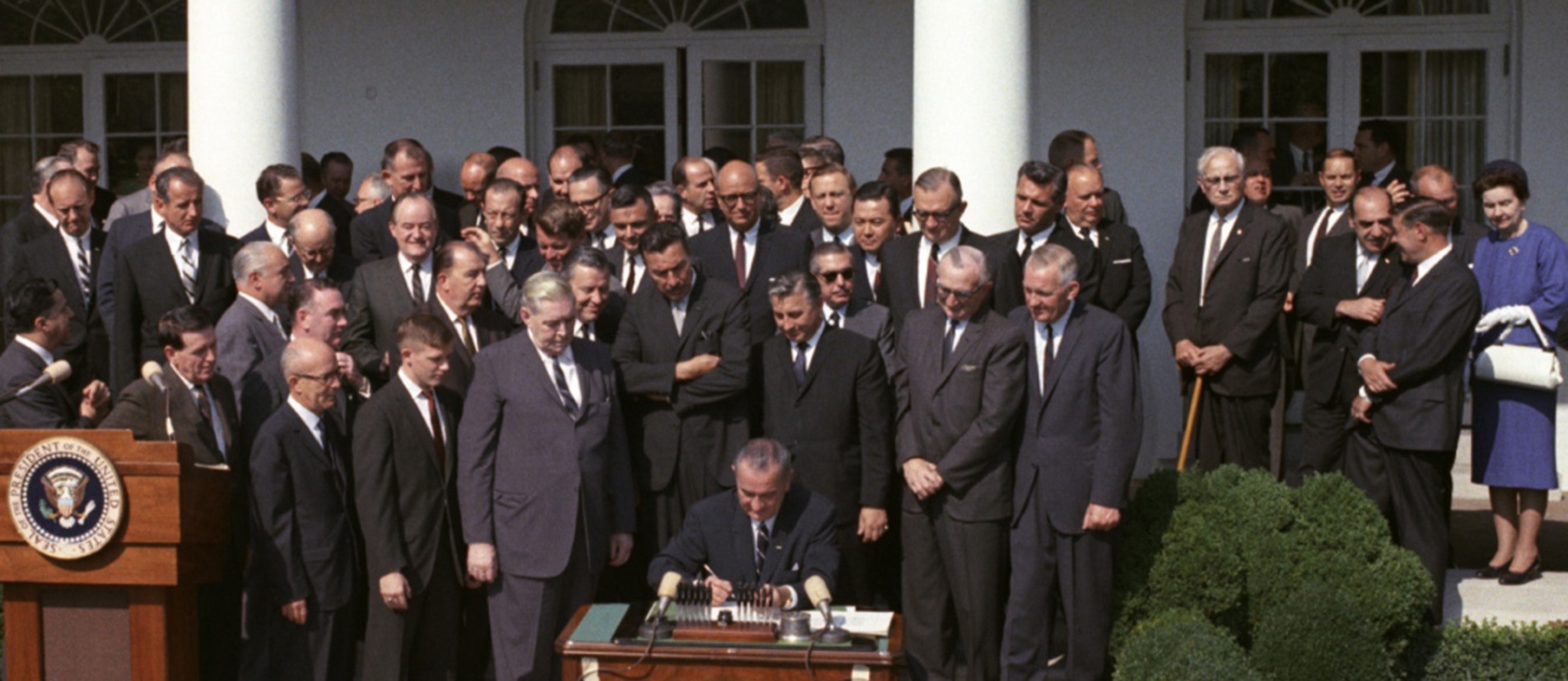
The problem here is the slick move from personal ethics to public policy. What is required of us as individuals may or may not translate into a civic policy priority. In the case of the welfare state, it is possible to argue that it does great good (though I would dispute that). Whether it does or does not, however, a government program effects nothing toward fulfilling the Gospel requirement that we give of our own time and e toward assisting the poor.

The reason has to do with matters of the human heart. If we are required to do anything by law, and thereby forced by public authority to undertake some action, ply because we must. That we go along with the demand is no great credit to our sense of humanitarianism or charity. The impulse here is essentially one of fear: we know that if we fail to give, we will find ourselves on the wrong side of the state.

Remember that the government has no money, no resources, of its own. Everything it has it must take from the private sector, which is the engine of wealth creation. If we can imagine a world in which there is no private sector at all, we can know with certainty that it would be a world of bare subsistence at best: universal impoverishment.

Wealthy societies today can afford to create large welfare states while avoiding that fate. But let us never forget the funds that make it possible do not appear as if by magic. They are taken from others without their active consent except in the most abstract sense that people might vote for them.

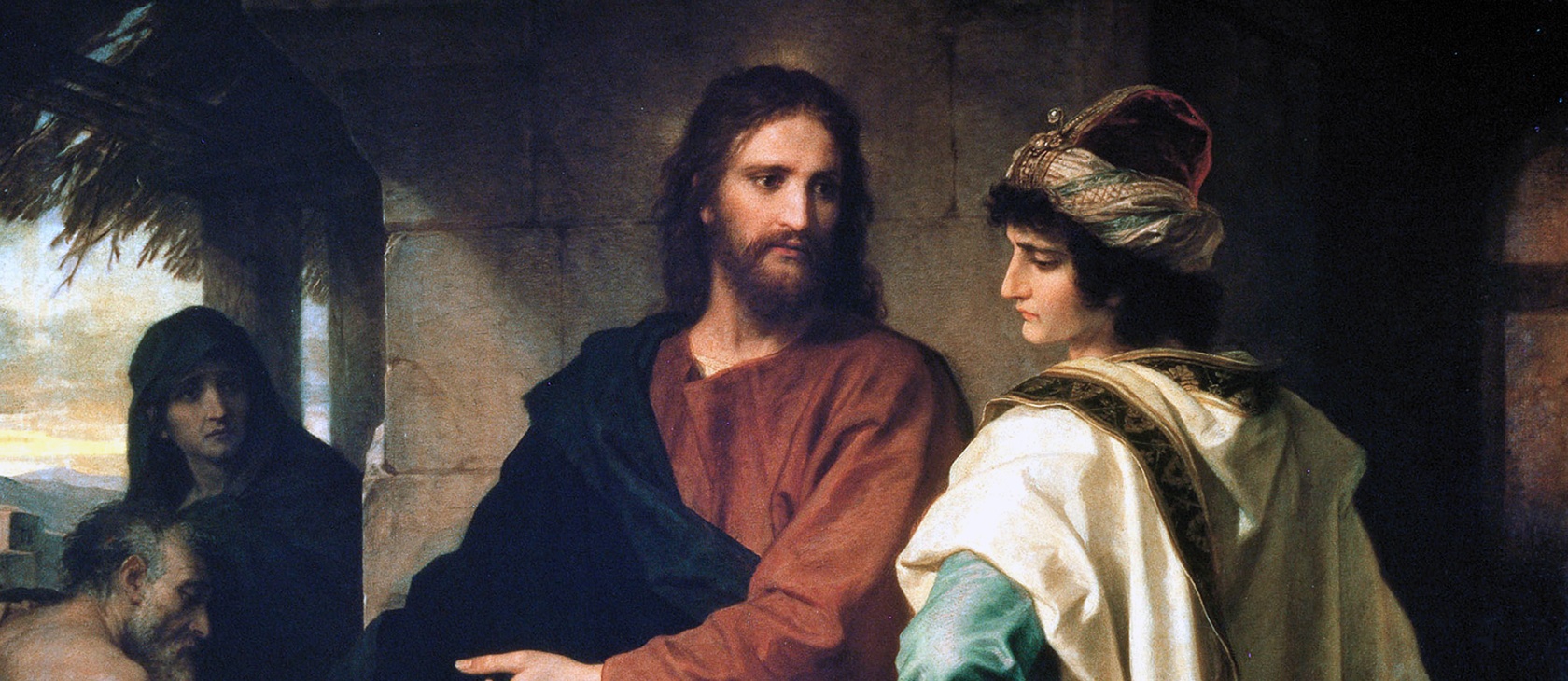
I cannot see how this method of redistributing wealth has anything to do with the Gospel. Jesus never called on public authority to enact welfare programs. He never demanded that his followers form a political movement to tax and spend. Nor did he say that the property of the rich must always be forcibly expropriated. He called for a change in the human heart, not a change in legislation. There is a massive difference.

There are other grave dangers in confusing the welfare state with personal charitable obligation. The more people hear that the welfare state discharges their moral mandate to give, the more these programs crowd genuine charity. "I gave at the office," es the attitude. This is essentially what was behind ment by Ebenezer Scrooge in A Christmas Carol when he dismissed his need to be charitable. "Are there no poorhouses?"

There are further problems. The programs are not effective over the long term. They generate dependency and bureaucracy. They create upside-down incentives. But leaving all that aside, the core message here is that, from a moral point of view, they do not fulfill the criterion that the Gospels specify for generosity, which e from within and cannot be imposed from the top down.

Rev. Robert A. Sirico is president of the Acton Institute for the Study of Religion and Liberty in Grand Rapids, Michigan.

Comments
Welcome to mreligion comments! Please keep conversations courteous and on-topic. To fosterproductive and respectful conversations, you may see comments from our Community Managers.
Sign up to post
Sort by
Show More Comments
RELIGION & LIBERTY
The American Bible Society Will Close Its $60 Million Museum
  American Bible Society announced it will shutter its Faith and Liberty Discovery Center (FLDC), a Bible museum it invested more than $60 million into, after less than three years in operation.   ABS had projected that the museum, centrally located on Independence Mall in Philadelphia, would draw 250,000 visitors a year. The revenue from ticket sales for the museum show a...
Noble Dreaming
  In “Time for Two States,” Rachel Lu observes that after the shocking events of October 7, “the sequence of events was somewhat predictable. Israel retaliated. It was clear they would win.” Well, maybe not win, exactly. But definitely, “Israel’s war with Hamas is reaching its final stages.” If only it were. According to the Wall Street Journal, “Israelis have made...
A Tale of Two Statues
  Should the bronze statue of the Rev. John Witherspoon, put up at Princeton University with great fanfare as recently as 2001, be removed from its prominent position on campus? Yes, according to a petition drafted in May 2022 by five members of the University’s Philosophy department—four graduate students and one professor—and ultimately signed by 285 people, including nine professors (seven...
Israels Juristocracy
  In early 2024 and at the height of the Israel-Hamas war in Gaza, the Israeli Supreme Court published the most important ruling in its history. By a narrow majority of 8 to 7, the Court struck down the constitutional amendment to Basic Law: The Judiciary. This amendment did not apply the unreasonableness doctrine to ministerial and government decisions and therefore...
What it Means to Have the Eyes of Our Hearts Opened (Ephesians 1:16
  What It Means to Have the Eyes of Our Hearts Opened   By Jennifer Waddle   “…thatthe God of our Lord Jesus Christ, the Father of glory,may give you the Spirit of wisdom and of revelation in the knowledge of Him,having the eyes of your hearts enlightened, that you may know what is the hope to which He has called you…” -...
Mother’s Milk of the Revolution
  The signers of the Declaration of Independence pledged their “lives,” their “fortunes,” and their “sacred honor” to advance the revolutionary cause. Their lives have been the subject of innumerable biographies. Their sense of honor has been often explicated in terms of the philosophies of both collective and individual self-governance that they espoused. But much less has been written on how...
A Plea for Forgiveness
  At dark times in American political life, the art of forgiveness has unexpectedly shone through. This year marks the fiftieth anniversary of US President Gerald Ford’s unconditional pardon of his predecessor Richard Nixon, who was likely to face criminal charges such as conspiracy and obstruction of justice for his role in the Watergate affair. Many Americans felt betrayed by Nixon...
Be Fervent in Spirit
  Be Fervent in Spirit   Weekly Overview:   This week we’re going to take a look at seven principles found in Romans 12 that describe the marks of a true Christian. The intent of studying this passage is not to condemn or lead you to comparison. Instead, let Paul’s teaching fill you with a deep, transformative longing to wholeheartedly pursue the life...
The Stories of a Forgotten Nation
  In American memory, the communist state of East Germany lingers as a risible Cold War relic, a regimented nation whose greatest accomplishment was the construction of a 96-mile-long wall in Berlin to prevent its beleaguered citizens from escaping to the West. How could anyone live a normal life, let alone thrive, in a state that ruthlessly surveilled its captive population...
Misery Loves Company
  When I was still in single digits, I read The Murder of Robbie Wayne, Age Six. It appeared in condensed form, in Reader’s Digest, on the magazine racks in my primary school library. I probably shouldn’t have read it, realistically, but I’d become—unexpectedly—an advanced reader. My parents often wrote letters requesting permission for me to read certain books: one, I...
Related Classification
Copyright 2023-2026 - www.mreligion.com All Rights Reserved