Home
/
RELIGION & LIBERTY
/
Faith is the Cross
Faith is the Cross
Dec 19, 2025 10:16 PM

Sitting in fortable chair in a warm home makes it easy to forget how close religious persecution really is. The twentieth century saw the most martyrs in recorded history, and the twenty-first century is off to a bloody beginning. As I write this, the world mourns the deaths of 21 Coptic Christians in Libya at the hands of the Islamic State group.

The remarkable writer Flannery O’Connor once said in a personal correspondence, “What people don’t realize is how much religion costs. They think faith is a big electric blanket, when of course it is the cross. It is much harder to believe than not to believe.” Unfortunately, far too many in our world today know exactly how much faith costs. From the current persecution of Jews in Europe, to the slaughter of Christians by Islamic terrorists, to those who struggle to bring faith to nations with dangerous regimes, our world is sadly skewed against people of faith.

This is nothing new. Jesus said, “If the world hates you, realize that it hated me first. If you belonged to the world, the world would love its own; but because you do not belong to the world, and I have chosen you out of the world, the world hates you” (John 15:18-19). The world hates you. Hates you. Because you believe. That should shake any believer to the core of their being.

Good people are persecuted because they stand up for the truth; they hold fast to it and refuse to be swayed, even in the face of persecution, violence, and imminent death. The best of these people we call “martyrs.”

This is the part where I am supposed to say something pastoral and uplifting and consoling. I cannot do that. Our God calls us to steadfast faith in the face of evil. Dietrich Bonhoeffer, the German Lutheran pastor who lost his life to the Nazis, drew a sharp line between “cheap” grace and “costly” grace. His thoughts are worthy of pondering:

Cheap grace is grace without discipleship, grace without the cross, grace without Jesus Christ, living and incarnate. Costly grace is the gospel which must be sought again and again, the gift which must be asked for, the door at which a man must knock. Such grace is costly because it calls us to follow, and it is grace because it calls us to follow Jesus Christ. It is costly because it costs a man his life, and it is grace because it gives a man the only true life.

For people of good faith who strive to serve God every day, the idea of cheap grace is an anathema. We want “real” grace. Most of us have had a taste of what Bonhoeffer is talking about here: We have clung to our faith through illness, family tragedy, unemployment, and other times of hardship. We have been driven to our knees, time and time again, asking for God’s mercy and grace. Yet, most of us still do not know the true cost.

Faith offers us no electric blankets and no cheap grace. We who believe hold steadfast in courage and hope in eternal life. This should not alarm us, but rather stir up courage within us. This should not cause us to cower in fear, but rather embolden us with fortitude. We who believe hold steadfast in courage and hope in eternal life.

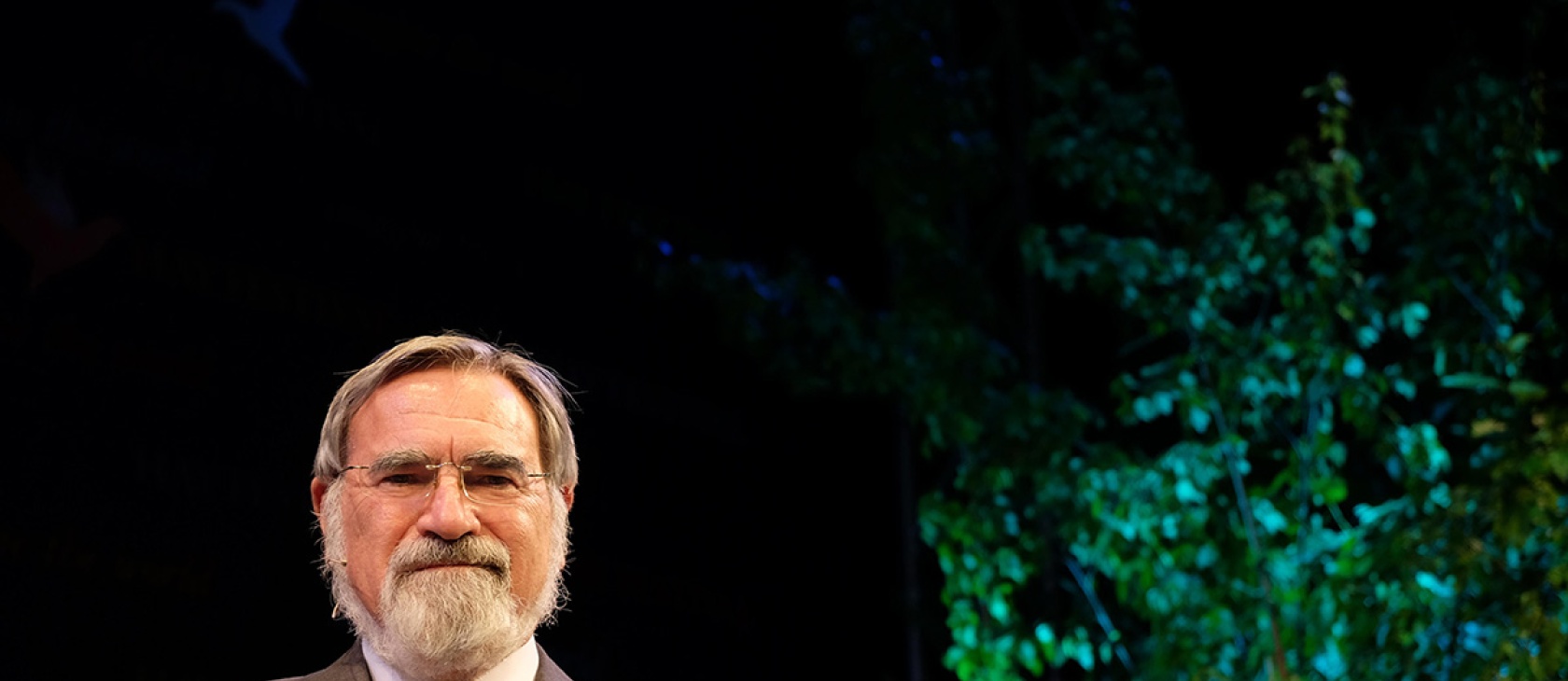
Rev. Robert A. Sirico is president of the Acton Institute for the Study of Religion and Liberty in Grand Rapids, Michigan.

Comments
Welcome to mreligion comments! Please keep conversations courteous and on-topic. To fosterproductive and respectful conversations, you may see comments from our Community Managers.
Sign up to post
Sort by
Show More Comments
RELIGION & LIBERTY
Earthkeeping through Markets
In 1977-78, a group of scholars gathered at Calvin College in Grand Rapids, Michigan, to produce an interdisciplinary book on environmentalism from a Christian perspective. Earthkeeping in the Nineties was a serious attempt at integrating Christian faith and the insights from several disciplines. That volume was revised substantially and reissued in 1991. The revised edition builds on the scholarship of the first and represents an important contribution to the ongoing discussion of environmental issues. The book is particularly strong...
The Cross and the Rain Forest
The most fruitful and majestic tree in the history of the world was the one on which hung its Savior, Jesus Christ. Today there is a growing trend among some environmentalists to look past the incarnate expression of God's love and see only a violated and barren tree. This trend toward reinterpreting symbols and the created order is an outgrowth of a larger crisis in the belief that God is both Creator and Father. Uncertainty about God also calls...
Good News for the Poor
The essence of what Jennings has extracted from Wesley is that the Christian ethic revolves entirely around providing for the poor. Moreover, the “rich” who do this are not just people living in great plenty but also those who have attained only sufficient shelter, food, and clothing to sustain life at a reasonable level fort–in other words, anyone in the lower middle class. Even reaching this modest level of prosperity, one runs the risk of falling into spiritual pride;...
His Holiness: John Paul II and the Hidden History of Our Time
Who munism? Western analysis (and not a munists) first pointed the finger at the economic incapacities of Marxist-Leninist states. In a world defined by silicon chips and fiber-optic munism–it was argued–just pete. This gimlet-eyed focus on the economic causes of the collapse always seemed, though, an oddly Marxist “answer” to the puzzle. Happily, more thoughtful analyses based on a better understanding of the cast of characters in the gripping drama of the Marxist crack-up are now available. That Pope...
No Longer Exiles
The book is actually pilation of papers that were delivered at a conference held in November, 1990, at the Ethics and Public Policy Center in Washington, D.C. Following a preface by editor Michael Cromartie, the book consists of four chapters. Each chapter contains a paper that was presented at the conference, followed by a formal response from another conference participant, which in turn is followed by more ments from other participants. The book concludes with an afterward by George...
John Wesley's Social Ethic
Marquardt begins by examining several areas of Wesley’s social praxis. They include slavery, economics and ethics, his work on aid to the poor, prison reform, and education. One of Wesley’s greatest strengths was his ability to organize. The Methodist Societies were established to provide forums in which the members could help one another in living the Christian life, and in which they could more effectively engage in social action. It is important to note that the organizations developed by...
Learning Charity from an Exemplar
In the past three years on visits to church-based urban ministries nationwide, I have interviewed dozens of down-and-outers who have e ers: ex-welfare recipients, victims of domestic violence, former drug addicts, ex-cons. When I asked them what helped them turn their lives around, almost all responded, “A friend who cared.” Effective ministries know that friendship is a powerful poverty-fighting tool. Tragically, though, many church benevolence programs modities—cash, clothing, and groceries—over relationships. In today’s welfare reform climate, as greater responsibility...
Patient Power: Solving America's Health Care Crisis
Some of Goodman’s and Musgrave’s premises seemed to be self-evident, although they are not usually included in the discussion of health care. For example, they reminded us that, in a market system, the pursuit of self-interest is usually consistent with social goals. With that statement considered, some of their other conclusions e a lot clearer: We cannot solve America’s health care crisis if 250 million Americans find it in their self-interest to act in ways that make the crisis...
Free Market Environmentalism
In the decade or so preceding her death this past spring, the noted scientist and occasional politician, Dr. Dixy Lee Ray, earned a reputation as the nation's most insightful critic of modern environmentalism. In a letter written three years before her death, she summed up what she had learned, observing that environmentalism, “as we e to know it in the waning years of the twentieth century,” is “anti-development, anti-progress, anti-technology, anti-business, anti-established institutions, and, above all, anti-capitalism.” Many in...
Eco-Sanity
The authors of Eco-Sanity have addressed a formidable challenge in bringing empirical analysis to the religious subject of environmentalism. By looking at a wide array of issues, they give readers a solid sense of the diversity of environmental problems as well as the recurrent similarities. They have done mendable job, and I admire their efforts. However, I encourage the authors and sympathetic readers to defer optimism about the impact of this book's important perspective. We should carefully separate our...
Related Classification
Copyright 2023-2025 - www.mreligion.com All Rights Reserved