



The current United States–Israeli war with Iran is intended, in part, to prevent that nation from acquiring a nuclear weapon. For Israel, a nuclear-armed Iran—sworn to the destruction of the Jewish state—is an existential threat. For the United States and its regional and European allies, an Iranian regime capable of launching intermediate-range ballistic missiles is untenable.
This war, however, should not be viewed only as a conflict with Iran but in the larger context of the status of nuclear-armed powers and nuclear arms control. For the first time since the 1970s, there exists no legally binding mechanism to limit the number of weapons in the US and Russian nuclear arsenals. The 2010 New Strategic Arms Reduction Treaty (START) has expired. Despite the avowed willingness of both countries to craft a replacement agreement, progress on a new treaty is glacial if not non-existent. In Beijing, the Xi regime is embarking on a long-term plan to modernize China’s nuclear weapons, upgrade its delivery capabilities, and grow its arsenal. Several nations—among them Iran and Iraq—have pursued clandestine nuclear weapons programs. North Korea, a rogue nation, abandoned its treaty agreements and pursued an aggressive program to field nuclear weapons and long-range missiles.
In this fraught environment, there is more at stake than to check the rise of another nuclear-armed state. US leadership has historically been at the forefront of efforts to manage nuclear non-proliferation, control, and arms reduction. Today, US interests would be best served if Washington were to come to the fore once again and lead the way to revitalize treaty arrangements, promote arms reductions, improve inspection and control regimes, and engage cooperatively in civil-use nuclear activities.
Proliferation and Nonproliferation
The United States became the world’s first nuclear weapons state (NWS) in 1945. With the atomic bombings of Hiroshima and Nagasaki, the United States became the only NWS to ever use these weapons in wartime. Yet, within days of the second atomic bombing, the Truman Administration grappled with the profound challenges of safeguarding atomic weapons technology and restricting its future use to peaceful ends. The administration hoped that the American monopoly of atomic technology would be a guarantor of future world peace. Later that year, Truman informed Congress of the need for “international arrangements looking, if possible, to the renunciation of the use and development of the atomic bomb,” and acknowledged that failure to disarm would launch “a desperate armament race which might well end in disaster.”
Truman’s words proved prophetic. In 1949, the Soviet Union acquired atomic weapons and launched the Cold War nuclear arms race. A year later, the outbreak of the Korean War shattered any illusions that a nuclear-armed United States could guarantee world peace. Moreover, the new Soviet capability spurred other nations—the United Kingdom (1952), France (1960), China (1964)—to develop their own programs. Then, Soviet deployment of missiles and nuclear warheads to Cuba (1962) brought the world to the brink of nuclear war.
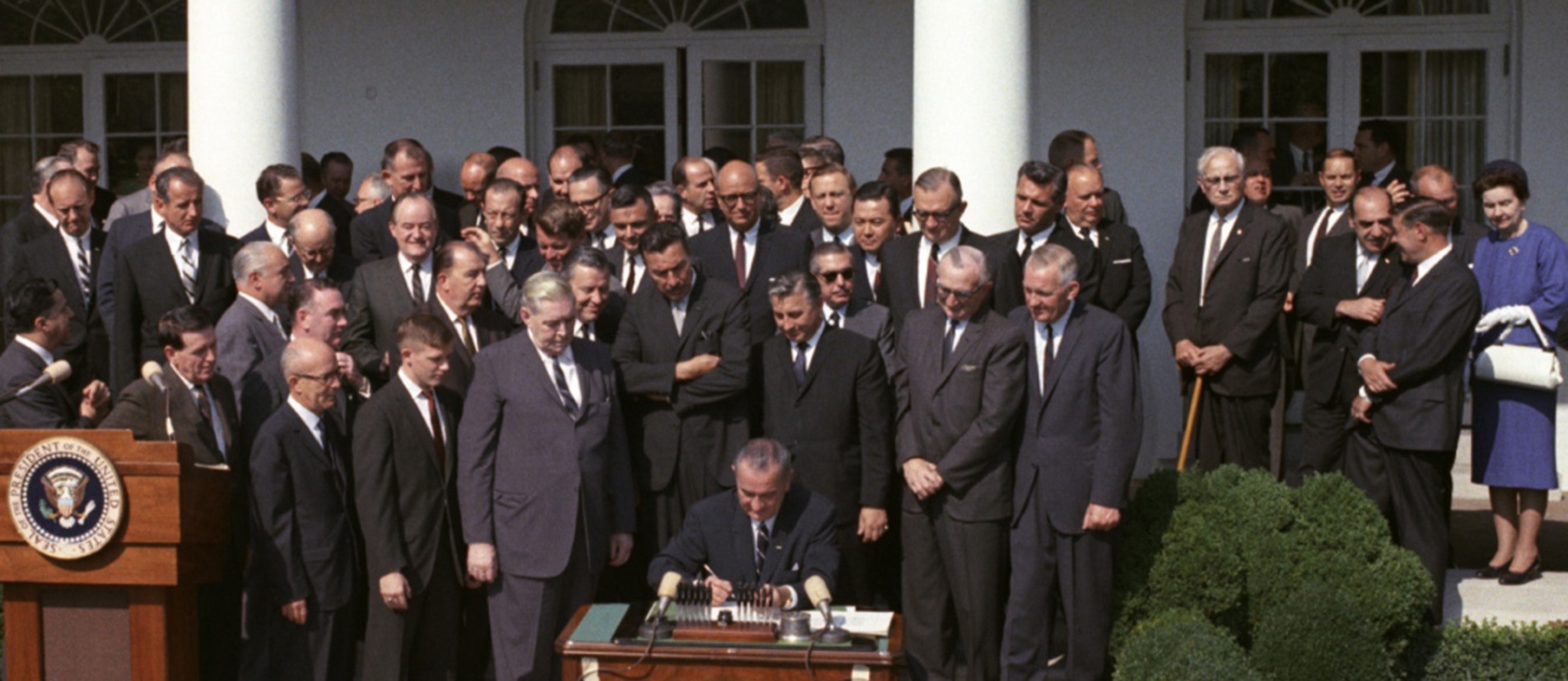
In the wake of the Cuban Missile Crisis and alarmed at the proliferation of NWS, the United States, during the Johnson Administration, led a multi-national effort to draft the 1968 Treaty on the Non-Proliferation of Nuclear Weapons (NPT). A groundbreaking international agreement, the NPT is flawed in that it did not include any provisions for disarmament. In addition, the treaty is unequal. Only those nations that acquired nuclear capability before 1968 are recognized as NWS and are permitted to retain their nuclear arsenals and development programs; they are prohibited from assisting non-nuclear-weapon states (NNWS) obtain nuclear capabilities. The remaining 56 original signatories in 1970 were obligated to forgo development of nuclear weapons.
The treaty—absent penalties for non-compliance and bereft of incentives—also did nothing to check the development of nuclear arms among nations that did not sign the pact, including India(1974) andPakistan(1998). Israellikely acquired its nuclear capability in 1967, a status Jerusalem has never confirmed nor denied. North Koreaaccededto the treaty in 1985, never came into compliance, and announced its withdrawal from the NPT in 2003—the only state to do so—and became a nuclear power in 2006.
The initial success of the NPT was attributable to US diplomacy, civil-use nuclear cooperation, and Washington’s security assurances. In the 1970s, countries with industrial and technical capabilities and the financial resources to develop nuclear arms programs—among them Canada, Japan, South Korea, and West Germany—ratified the treaty. Most of the nations in this later phase of accession to the NPT were beneficiaries of US security guarantees and the presence of forward-deployed US nuclear weapons. American allies around the world sheltered under the US “nuclear umbrella.” US capabilities—the robust nuclear triad of land-based, air-launched, and sea-strike weapons—provided global coverage, presence, and effective deterrence.
However, defense and deterrence did not undo the nuclear ambitions of other nations. Iran, Iraq, Libya, and Syria—all NPT signatories—pursued clandestine nuclear development programs. For Iran and Iraq, the lack of transparency, failure to yield to international inspection regimes, and violations of the NPT proved to be disastrous decisions. North Korea abandoned the NPT, produced and fielded nuclear weapons, and made itself an impoverished nation and an international pariah.
Diplomacy and Arms Reduction
US nuclear policy during the Cold War hinged on the strategy of deterrence. In practice, this led to stockpiling weapons to create a credible, survivable retaliatory response to a Soviet first strike. With the dissolution of the Soviet Union and the end of the Cold War, the United States took the lead in proposing nuclear arms reduction initiatives. The Reagan Administration’s 1991 START I treaty with the Soviet Union (later assumed by successor statesRussia,Belarus,Ukraine, andKazakhstan) eliminated, remarkably, nearly 80 percent of the estimated 70,000 weapons then in existence.
Both the Bush and Clinton Administrations then pursued Presidential Nuclear Initiatives (PNIs) for further arms reduction. This phase of American diplomacy reflected a change in US defense policy, moving from a threat-based to a capabilities-based nuclear posture. Simply put, while nuclear arms remained in Russia, the Soviet nuclear threat no longer existed. The PNIs, which included START II (1993) and the still-born START III (1997), were bilateral efforts with Russia. This tunnel vision diplomacy failed to envision a larger effort at nuclear arms reductions.
The United States today is in a unique position to leverage its current nuclear arms program for diplomatic gains.
The terrorist attacks of 9/11changed US policymakers’ threat perception calculus again. The security environment shifted to include the proliferation of weapons of mass destruction (WMD), terrorism, malign non-state actors, rogue nations, and disruptive emerging technologies. Those threats, but especially terrorist WMD attacks, became the proverbial “wolf closest to the sled” even in a nuclear multi-polar world. The promising START-style initiatives fell by the wayside. US policy shifted to a defense posture that excluded multilateralism, doubled down on conventional precision deep strike capabilities, renewed emphasis on theater missile defense, and recommitted to enhanced nuclear capabilities. Deterrence remained a part of the overall defense strategy, but in the future, it would play out as nuclear deterrence by denial and preemption.
Seen in this light, the war against Iran is a tangible demonstration of that policy and US resolve to check future nuclear proliferation, if need be, by force of arms. While Russia, China, and North Korea are unlikely to readily embrace overtures for nuclear arms control, they can no longer view such US initiatives as merely appeasement or signs of American retreat from its security commitments. That said, this has become an opportune time for the United States to send a strong signal that it is prepared to support new international treaties for arms reductions and effective counter-proliferation policies.
A Way Ahead
Washington could begin another round of nuclear arms reductions by renewing the recently expired New START. New START limited Russia and the United States to a total of 1,550 deployed warheads, 700 delivery vehicles, and capped missile tubes and bombers (deployed and non-deployed) at 800. Finding agreement with Russia to extend the 2011 limitations, however, only reinstates the status quo. While China is not a signatory to the New START, Beijing’s avowed goal of building its arsenal from 600 to 1,500 warheads by 2035 was very likely set to achieve parity with the United States and Russia. Any arms reduction built into a renewed and amended START agreement would send a signal to China, which could induce Beijing to lower its goals.
An arms reduction scenario might also lay the groundwork for the tri-lateral talks Beijing has long opposed. That doctrinaire opposition—rooted in Beijing’s public assertion that the United States, Russia, and China should have an equal number of warheads—would be undercut if the goals of three-way negotiations included elimination of existing warheads and limits on future production. Negotiation on this basis holds promise to level the playing field over time.
Inviting Beijing to the table as an equal partner and walking back the number of Russian and American weapons is a transparent initiative to achieve an overall reduction in the number of deployed nuclear weapons worldwide. In turn, China’s status as an NWS committed to growing its arsenal will shape the future of the world’s nuclear landscape, especially so in Asia. India views China’s nuclear capabilities as a strategic challenge. While Delhi maintains a no-first-use nuclear policy, India’s nuclear weapons are intended as a credible deterrent to both China and nuclear-armed Pakistan.
Effective counter-proliferation and arms reduction also hinge on the viability and scope of inspection and control regimes. With the advent of the NPT, the International Atomic Energy Agency (IAEA) took on the responsibility of monitoring compliance with that treaty via inspections and assessments. The IAEA, however, has no means to compel states to report the status of their nuclear programs or to permit inspections. This agency needs both new international authorization and powerful enforcement mechanisms, likely in the form of economic and other sanctions, to foster compliance with reporting and inspection requirements. An international agreement of this kind can never be foolproof. Yet repeated compliance failures, as is the case in Tehran’s refusal to admit inspectors or address IAEA concerns, now carries with it the risk of the preemptive use of force.
Multilateralism and Disarmament
US engagement and diplomacy have proved instrumental in promulgating the existing nuclear control regime and can pave the way for new international agreements. With the START agreements, the United States established a precedent for pursuing bilateral arms reduction on a sweeping scale. New agreements should provide the framework for the larger and admittedly daunting goal of significant arms reductions by all nuclear states.
In addition, the United States today is in a unique position to leverage its current nuclear arms program for diplomatic gains. Washington has undertaken plans to replace its land-based nuclear delivery systems—both silos and missiles. Replacements for the 1970s-era Minuteman III ICBMs, however, are more than a decade behind schedule. Cost overruns total more than $100 billion. A significant arms reduction proffer might take wholesale replacement of these systems off the table. Proposing a multi-lateral agreement to eliminate these weapons, or even acting unilaterally, would be a startling development, but very much in keeping with the Trump Administration’s proclivity for launching bold initiatives.
More than eight decades have passed since the United States launched the atomic era. The vexing problems of nuclear arms control, regulation, reduction, and, ultimately, worldwide nuclear disarmament may never be wholly resolved. That said, it is an effort that cannot be abandoned. The US track record is one of forward-leaning diplomacy, of initiating viable arms reduction initiatives, and of fostering counter-proliferation efforts. Simply put, the United States has a pivotal leadership role to play to ensure that Truman’s worst fears of a desperate arms race to disaster do not come to pass.









 zpostcode
 Recruit
 weather
 mreligion
 Yellowpages
 sport
sport constellation
 shopping
 name
name game
game directory
 literature
 Word
Word tour
tour furnish
 Lottery
 tftnews
 lyrics
 News
News digital
 car
car dir
dir Edu
Edu Finance


