Home
/
RELIGION & LIBERTY
/
The Light of the World
Mar 16, 2026 5:24 AM

  Saturday, January 11, 2025

  The Light of the World

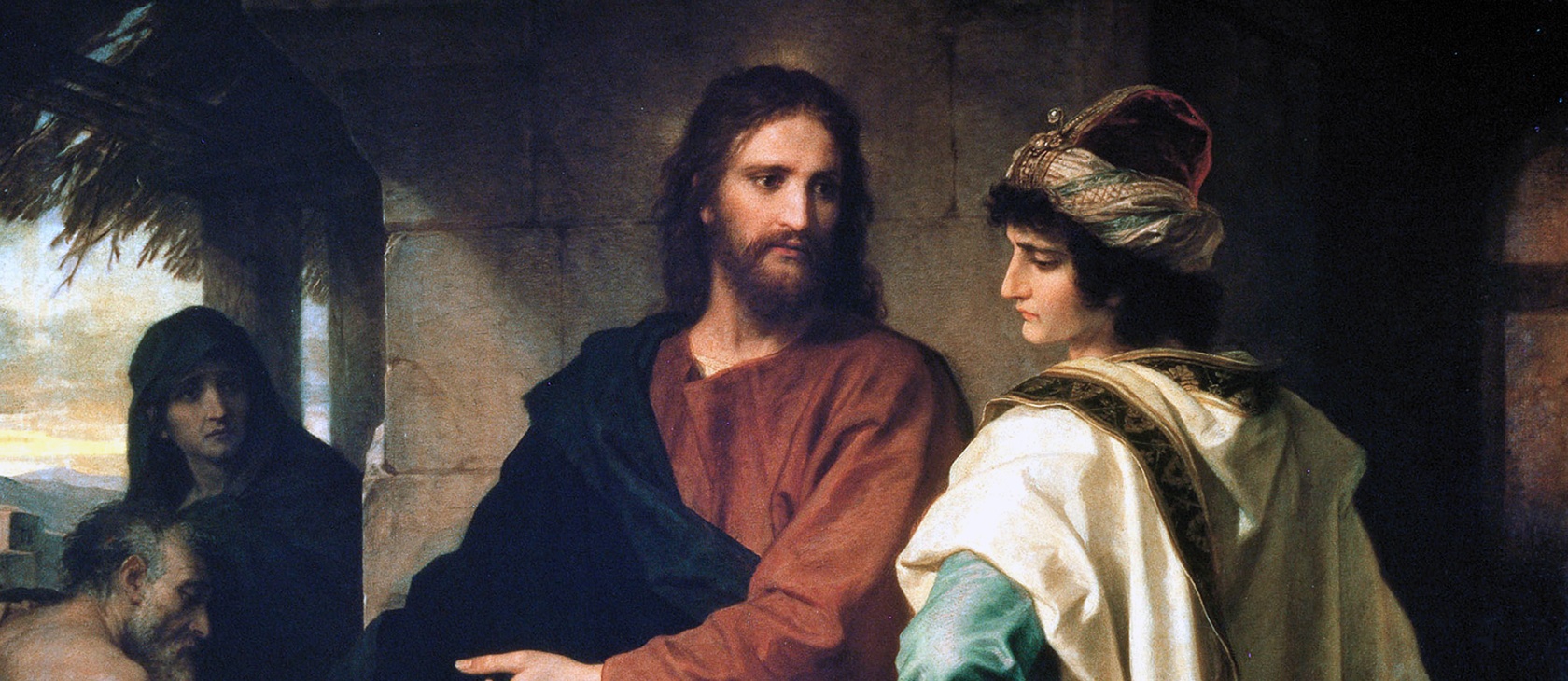
  “Jesus spoke to the people once more and said, ‘I am the light of the world. If you follow me, you won’t have to walk in darkness, because you will have the light that leads to life.’” (John 8:12 NLT)

  John 8:1-30

  The Jewish religious leaders wanted revenge on Jesus. He had exposed their hypocrisy and made them look foolish in front of a large crowd. They wanted to return the favor. They came up with a plan to embarrass Him in a public setting.

  They caught a woman who was having an adulterous affair and brought her to the temple, where Jesus was teaching during the Jewish Festival of Shelters. They asked Jesus what He thought they should do with her. This was a trap. Under Jewish law, a person could be stoned to death for adultery. However, the law was rarely enforced.

  If Jesus said, “Let her go,” He would be breaking Jewish law. If He said, “Stone her to death,” He would be breaking Roman law because the Romans didn’t allow Jews to carry out religious executions.

  Instead of passing judgment on the woman, Jesus turned the tables on her accusers. “All right, but let the one who has never sinned throw the first stone!” (verse 7NLT). The accusers had sinned by hatching the plot in the first place. And by bringing the woman to Him publicly to humiliate her. And by ignoring the man who had committed adultery with her. And by not really caring about her. They didn’t even try to argue with Jesus. Instead, they just slipped away, one by one. Defeated. Again.

  Jesus resumed His teaching with an amazing claim: “I am the light of the world” (verse 12NLT). His words had special significance during the Festival of Shelters. The Jewish people celebrated God’s pillar of fire that gave light to the Israelites on their way to the Promised Land. Jesus wanted the people to understand that the same light that guided their ancestors centuries before was available to them.

  And it’s available to us too. Anyone who follows Jesus will not walk in darkness. Jesus illuminates the way to God. The way to eternal life. The way to lasting joy, peace, assurance, and fulfillment.

  Not everyone appreciates that light. Certainly not the men who had just brought the woman to Jesus. There are certain things people prefer to do under cover of darkness. Things they want to keep hidden. Things that might change people’s opinion of them if they were discovered.

  So they resent the light. They stay as far from it as possible, for fear of being exposed. They don’t realize that having their sins exposed is the first step of a life-changing process. When we acknowledge our sins, we can ask God’s forgiveness for them. We can break free from their power over us.

  Everyone who chooses to walk in Jesus’ light, to turn away from darkness and put their trust in Him, will be saved. And they will walk with Him forever.

  Copyright © 2025 by Harvest Ministries. All rights reserved.

  Photo credit: Unsplash/Fachy MarinFor more relevant and biblical teaching from Pastor Greg Laurie, go to www.harvest.org

  and

  Listen to Greg Laurie's daily broadcast on OnePlace.com.

  Watch Greg Laurie's weekly television broadcast on LightSource.com.

  In thanks for your gift, you can receive a copy of theDiscipleship: The Road Less Taken.

  Following Jesus is more than a one-time decision—it’s a daily walk. In this book, Greg Laurie explores the true meaning of discipleship and how you can experience a life of purpose, growth, and joy. Get your copy ofDiscipleship: The Road Less Taken with your donation today.

  Click here to find out more!
Comments
Welcome to mreligion comments! Please keep conversations courteous and on-topic. To fosterproductive and respectful conversations, you may see comments from our Community Managers.
Sign up to post
Sort by
Show More Comments
RELIGION & LIBERTY
From the gulag to the killing fields
In a personal account of his internment in the Albanian gulag, Nika Stajka catalogued the fourteen types of torture munist authorities used against prisoners. These ranged from shooting by firing squad to sleep deprivation to the cutting of flesh with scissors and knives. In his memoir, published in 1980, Stajka recalls: We were all labeled as “enemies of the people,” reactionaries, traitors, saboteurs, criminals, villains ... that is why the “popular government” had no mercy for anyone of us,...
Rediscovering the natural law in reformed theological ethics
pleting Stephen J. Grabill's book on the natural law in the thought of the Protestant Reformers, I wished - briefly - that he did not work at the Acton Institute. He has written a very important book, and I didn't want my mendation of it to be tainted by favoritism toward a colleague and friend. That said, Grabill's book can more than stand on its own. It is a work of true scholarship; its origin as a doctoral thesis...
Emil Brunner
This inversion of the structure of the State which, instead of being built up from below, is organized from above, is the one great iniquity of our time, the iniquity which overshadows all others, and generates them of itself. The order of creation is turned upside down; what should be last is first, the expedient, the subsidiary, has e the main thing. The State, which should be only the bark on the life of munity, has e the tree...
Our Endangered Values: America's Moral Crisis
In the presidential campaign of 1992, George H. W. Bush's family values platform collapsed under the weight of a recession, and to many, the political discussion of morality retreated, taking refuge under the so-called Religious Right. But since the second election of George W. Bush, open talk of faith and morals has reentered the political arena with gusto. This is due partly to the reactive emergence of a Religious Left, such as is advocated in Jim Wallis's bestselling book,...
'There's No Such Thing as "Business" Ethics'
The wave of recent corporate scandals has spurred an increased interest in business ethics. As illegal and unethical behavior is exposed in the business world, society has demanded reform. In his book, There's No Such Thing as “Business” Ethics, John C. Maxwell firmly contends that there is no difference between business ethics and general moral behavior. “There's no such thing as business ethics,” writes Maxwell, “there's only ethics. People try to use one set of ethics for their professional...
J. Howard Pew
Born in Pennsylvania to a devout Presbyterian family, J. Howard Pew was taught at an early age the value of freedom. His father, Joseph Newton Pew, with Edward O. Emerson, established in 1876 what eventually became known as Sun Oil Company. After graduating from Grove City College, young Howard went to work for his father at Sun Oil and later became its President. Once retired, he continued to influence pany as member of the board, and later Chairman. Under...
Orestes Brownson
Orestes Brownson (1803-76) is not, at first sight, a philosopher of liberty but, rather, one who is concerned with ordered liberty itself ordained towards a higher good. He was, to put it paradoxically, more attentive to the many ways in which freedom goes wrong than in the ways in which it goes right. Or, to put it another way, liberty never just “goes right” by itself. It is the truth that makes us free, not the freedom that makes...
Frank S. Meyer
With this simple statement from his 1962 book, In Defense of Freedom: A Conservative Credo, Frank S. Meyer defined the goal of postwar conservatism: to create a society in which men are free to pursue virtue but not enforce virtue at the point of a gun. After World War II, when collectivism seemed triumphant, individuals who opposed the welfare state for different reasons banded together in order to fight it. Yet the tension between the traditionalists and libertarians threatened...
The Right To Be Wrong: Ending the Culture War over Religion in America
Mary Dyer was regarded as a “very proper ely young woman”—that is, before she broke the law and was hanged. Her crime: being a Quaker in Massachusetts Bay Colony. Laws against this were on the books and notice had been given. Everything was legal. Was it moral? Three hundred years later, Zach, a first-grade student, was excited to learn that his teacher was going to let him read in front of the class for the first time. She added...
John Henry Newman
John Henry Newman, perhaps the most prominent churchman of nineteenth-century England, was born in the City of London to a Huguenot mother and a father of religiously broadminded sentiments. While a member of the Church of England, his views began to move gradually from low-church evangelical to high-church catholic until his conversion to Roman Catholicism in 1845; soon after, he was ordained a Catholic priest, and was made a cardinal by Pope Leo XIII in 1879. While an Anglican...
Related Classification
Copyright 2023-2026 - www.mreligion.com All Rights Reserved