



In his biography of St. Thomas Aquinas, G. K. Chesterton said that “most men must have a revealed religion, because they have not time to argue.” The same might be true for political philosophy. In the Age of Information, most men do not have time to sift critically through the barrage of information es their way. So if most people do not have time to reason out their own political philosophy, how do they decide which to adopt as their own?
Sixty years ago, in a time of less noise, Friedrich Hayek offered an answer. His essay, The Intellectuals and Socialism, examined “the character of the process by which the views of the intellectuals influence the politics of tomorrow.” Ideas move, said Hayek, from the scholars to the masses via the Intellectual, the “secondhand dealer of ideas.” The “power [Intellectuals] wield in shaping public opinion” is therefore very great, and Hayek proved this by showing how socialism moved in precisely this fashion, from Scholar to Intellectual to mass implementation.
What was therefore necessary, said Hayek, was that classical liberalism pony up with its own intellectual project, and the last sixty years has seen Hayek get his wish in what monly known as the Conservative Movement. But this present essay has less to do with the intellectual project of classical liberalism and more to do with what has been, by and large, a failure to create “a new liberal program which appeals to the imagination”. While conservatism is now a powerful force in the American political landscape, it is still the underdog in a war of connotation. (This is evident in the fact that the phrase passionate conservative’ had to be invented.) And I think there are two reasons why conservatism, by and large, does not yet appeal to the heart as does “bleeding heart” liberalism.
Firstly, as Hayek says in his essay, the socialist program promises a utopia, very much an emotional idea. Since conservatives tend not to believe in utopian social structures, they are less likely to promise the grandiose, and more likely to prescribe practical, more foundational, less emotional policies.
However, this is not to say that the conservative movement does not have ideals which appeal to the imagination (and therefore to the hearts) of the masses – freedom and virtue are the stuff of our greatest stories. No, what is lacking is not the ideas, nor the imaginative capacity of those ideas. What is lacking in modern conservatism, in large part, is the mechanism municate the ideas in ways that capture both the Truth and Beauty of those ideas. What is missing, by and large, is the Art of Story.
To understand this, it is important to make a distinction between two types of logic. This distinction (given eloquent expression in the work of the Swiss theologian Hans Urs von Balthasar) is between narrative logic and syllogistic logic, or Story and Syllogism, and is explained concisely by David Yeago:
[T]he coherence of a narrative is of a different kind than the coherence of a syllogism. The latter sort of coherence is deductive; the conclusion is given in the premises and needs only to be drawn out of them. The coherence of a narrative, by contrast, has room for freedom and thus for surprise. It is a coherence which is not already given at the start, but only in and with the story's resolution, when the climactic events actually occur and draw together the threads of the plot into a unity. The coherence of a drama is established from the end of the story, not at its beginning, although that end is aimed at by the playwright from the beginning.
This is an important distinction because it offers a reason why those who argue with narrative logic, or Story, have easier access to the hearts and minds of the masses than those who rely solely on Syllogistic Logic. Scholars who form ideas largely use syllogistic logic, deduction. And while Syllogism is a critical tool ing to the truth of things, it isn’t necessarily the best tool in conveying the truth of things. Stories, on the other hand, contain a totality of an idea along with a unifying beauty, an emotional power that smuggles an idea into the head by way of the heart. Or to put it another way, an idea can be the corollary of an accepted artistic unity. This is why novelists and filmmakers can be such powerful convincers – they rely on the totality of their presentation to make their ‘argument.’ Both Story and Syllogism are important, but in the age of visual media, Story is increasingly important to convince those “who have no time to argue.”
Both Story and Syllogism
If anyone doubts that those who tell the better stories have the upper hand in the arena of ideas, let him consider the recent popularity of the ONE Campaign. Is it a flash of economic enlightenment that drives the masses to Bono like sinners to the Jordan? No. While his economic patron, Jeffrey Sachs, is by no measure a lightweight, Bono owes the success of his appeals to end poverty less to his economics and more to his formidable ability as an artist to highlight the human in humanitarianism, to appeal to the narrative and emotional sensibilities of young people, to take an idea from a scholar’s head to a citizen’s heart.
Imagine, then, if sound economic (or political or social) thinking were wedded not only with the intention to act, but with Beauty, the inspiration to act. This is what the Story artist can do, if he can be given the right ideas and the trust to manifest them in Art, not propaganda. Storytellers and Artists, whether they have right ideas or not, will create. But as Chesterton said, “poetry without philosophy has only inspiration, or, in vulgar language, only wind.” So it is best that the Beauty he creates also contain Truth.
So what must happen is that those with solid ideas, derived from Syllogistic Logic, must not only educate the Artists, but also allow them to translate Syllogisms into Stories, into unified presentations of the Truth in Beauty. It is this that will achieve long lasting change in the hearts of the finicky MTV generation. Unfortunately, this can be frightening for mitted to protect right ideas, because the “coherence of a narrative … has room for freedom and thus for surprise.” Communicating with Story means one has to allow for a dramatic tension, has to allow the audience the possibility of seeing the viability of the other side of the argument. And for some, this is too risky a venture.
But here we reach a very crucial point, the point where we see that handing ideas to the Artist is not the same as handing them to the Propagandist. For the Propagandist, the message is the focus, the party line is towed without falter, and as a result, the Propagandist seldom produces Art of lasting persuasive power. For the Artist, the vehicle of the message – that is, the Art itself – is the focus, and this is precisely why Artists are so much more convincing in their work than Propagandists: Propagandists so concentrate on the water that they attend less to the holes in the bucket.Artists concentrate on making great buckets, often concerning themselves less with the contents.
Likewise, conservatives may be more apt to produce propaganda when they attempt to create Art because their ideas are often more sound than the liberal (in the modern sense) alternative and they have less need for – and therefore less incentive to learn – Story. Liberals can indulge themselves in shoddy Syllogism, because they make up for the lack with good Storytelling. But this doesn’t excuse conservatives from falling off the other side of the horse.
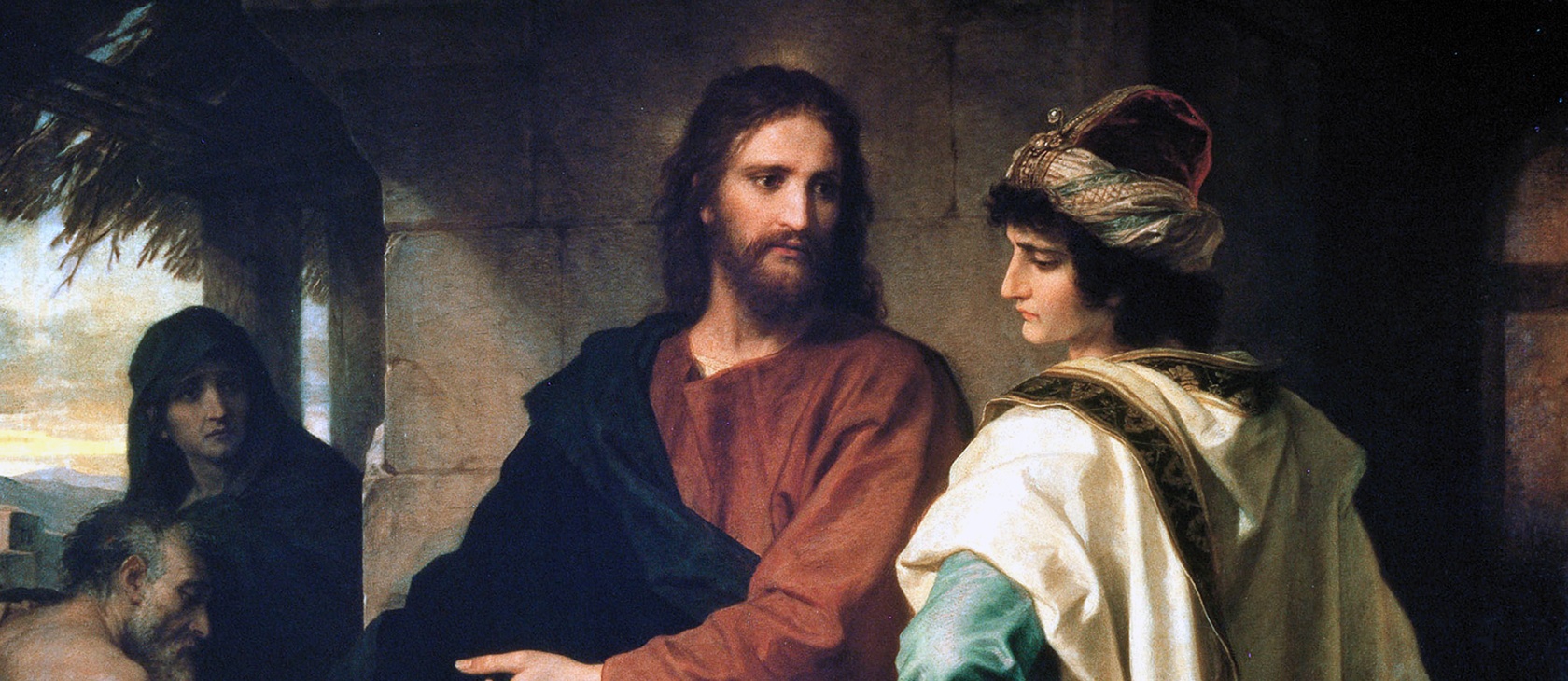
There a popular saying that suggests “If you are a liberal when you are young, you have no heart. If you aren’t a conservative when you are old, you have no head.” But I see no reason why must we lack one to have the other. We should have, and municate with, both. We must add Story to our Syllogism, adding emotional punch to our reason. After all, Socrates taught with syllogisms, and Jesus with parables.


 zpostcode
 Recruit
 weather
 mreligion
 Yellowpages
 sport
sport constellation
 shopping
 name
name game
game directory
 literature
 Word
Word tour
tour furnish
 Lottery
 tftnews
 lyrics
 News
News digital
 car
car dir
dir Edu
Edu Finance


