



Nowadays no one, I imagine, reads the novels of Edward Bulwer-Lytton, the immensely prolific and once popular Victorian writer, who is remembered principally for three things: first, for having tried to commit his wife to a madhouse; second, for having coined the phrase the pen is mightier than the sword and third for having inspired an annual prize given for the worst imagined opening line of a novel, in competition with the first line of his Paul Clifford, ‘It was a dark and stormy night …—though I confess that I do not see what is so extraordinarily bad about this that it deserved to be mocked repeatedly a century and a half later.
For the purposes of a literary project that will take me years to complete, I happened recently to be reading Bulwer-Lytton’s novel Lucretia. He was a very long-winded writer, and he rarely expressed in a sentence what could be expressed in a page, but I supposed that the novel-reading public in his day had more time at its disposal than, say, the TikTok generation of today.
He was far from devoid of intelligence, however, or even of aperçus. Here, for example, the rich landowner, Sir Miles St. John, writes on his deathbed to his legatee, advising the virtues of prudence and warning him against the dangers of indebtedness:
A needy man can never be generous without being unjust. How give, if you are in debt?
How give, if you are in debt? You cannot do so, at least not without running up more debt or (which is an injustice) failing to repay the debts that you have already run up.
Analogies between individual and governmental conduct are no doubt hazardous, and have often been deprecated, for example by the modern monetary theorists, who think they are wiser than Adam Smith when he said:
What is prudence in the conduct of every private family, can scarce be folly in that of a great kingdom.
Of course, differences spring to mind. The credit of a family is unlikely to extend as far as that of a state, all the more so if that state can issue debt denominated in its own currency, in the value of which lenders continue to have faith, even if it is only faute de mieux. No one, probably, would continue to lend to a family that had borrowed more than its annual income, mostly to continue to pay its current expenses, but there are large states where this has been the rule for many years.
There is also a large difference between the virtues of individuals and the virtues of states. Sir Miles was speaking of individual generosity, the kind of generosity that entails the expenditure of an individual’s time, effort, or wealth. I am being generous if I give a dollar to a beggar; I am not being generous if the government gives the beggar the dollar it extracts from me by compulsion.
But is the government that gives that dollar being generous? No, because generosity is a quality of individual persons, not of impersonal or collective organisations spending money that never belonged to those who make the decisions. A government may be wise or foolish, prudent or imprudent, perhaps: its policies may conduce to contentment or to misery, to wealth or to poverty, to justice or to injustice, to order or to squalor, though rarely having the same effects on everyone: but in any case it cannot be judged by the same moral criteria or characteristics as an individual is judged.
A government, moreover, has never to lose sight of the fact that its expenditure is that of the largely involuntary or forced contributions of taxpayers, which mostly represent the wages of their labour. Its redistributive generosity to some is therefore always at the cost of the labour of others, which is not to say that this generosity is never justified. Still, a government cannot in itself be kind or unkind; it can only achieve or fail to achieve its objectives, which themselves may be laudable or blameable—or, because of the tragic dimension of human life, may be both at the same time. But while the incontinent indebtedness of governments and individuals alike is imprudent, the kindness of individuals cannot be ascribed to governments.
The moral assessments of individual and governmental action, however, are often confused, and often for demagogic purposes. The pope’s decision to visit Lampedusa is a good example of both this confusion and demagoguery in action.
Lampedusa is the little Italian island which thousands of illegal migrants try to reach annually from Libya or Tunisia in order to gain entry into Europe. They have paid considerable sums, up to $10,000, to people-smugglers, to bring them.
If Europe has the moral duty to welcome those who arrive on Lampedusa, it must have the moral duty to welcome the millions, even the hundreds of millions, left behind.
Clearly, no very fortunately placed person would undertake such a hazardous journey, though those who pay for their passage, or have the passage paid for them, are by no means the poorest people of the countries from which they come—where women usually bear greater burdens of misery than men, though they are only one in nine of such migrants. More than two thousand people were drowned last year attempting to cross the Mediterranean, equal to 4 percent of those who reached Lampedusa, and the figure for the drowned may be considerably higher.
For some, this might go to show just how desperate the migrants are, and therefore how deserving of sympathy; and clearly, they will each have, individually, a sorry, or even a tragic, tale to tell, that will move the hearer. And yet they are not the most wretched of the wretched: they have left behind millions in worse, sometimes much worse, condition. If Europe has the moral duty to welcome those who arrive on Lampedusa, it must have the moral duty to welcome the millions, even the hundreds of millions, left behind.
The pope’s recent visit to Lampedusa revealed a mulish refusal to recognise the tragic dimension of human existence, and of the hardness of necessary choices. He visited the cemetery in which were interred the bodies of those who died trying to cross the Mediterranean, but failed to recognize that it is his brand of sentimentality that encourages migrants to make such a perilous journey and put their lives in jeopardy. Australia, for instance, did not record the drowning of a single person trying to reach its shores last year, because it has a very different policy from Europe’s with regard to boatloads of migrants. It will not allow them to land under any circumstances, and so they do not try; therefore, none is drowned.
He did, of course, call for European countries to allow migrants to migrate to Europe legally, thereby (supposedly) removing the incentive for illegal migration: without, apparently, noticing that they already do so. France, for example, issued more than 300,000 first-time residence permits last year, 89,000 from the Maghreb alone.
Needless to say, the pope did not descend to anything so lacking in compassion as a statistic: he did not give a figure for the correct number of migrants he thought Europe ought to welcome, integrate, and be compassionate to each year, though the logical corollary of his attitude would be that it should run into the hundreds of millions.
He did, however, suggest that the causes of poverty in the countries from which the migrants came should be corrected. For him, the causes of poverty, not of wealth, were what needed to be investigated, as if humanity were born wealthy but everywhere was poor. No doubt he had something in his mind like redistributive handouts, or at any rate of foreign aid that has always precisely the effects ostensibly desired.
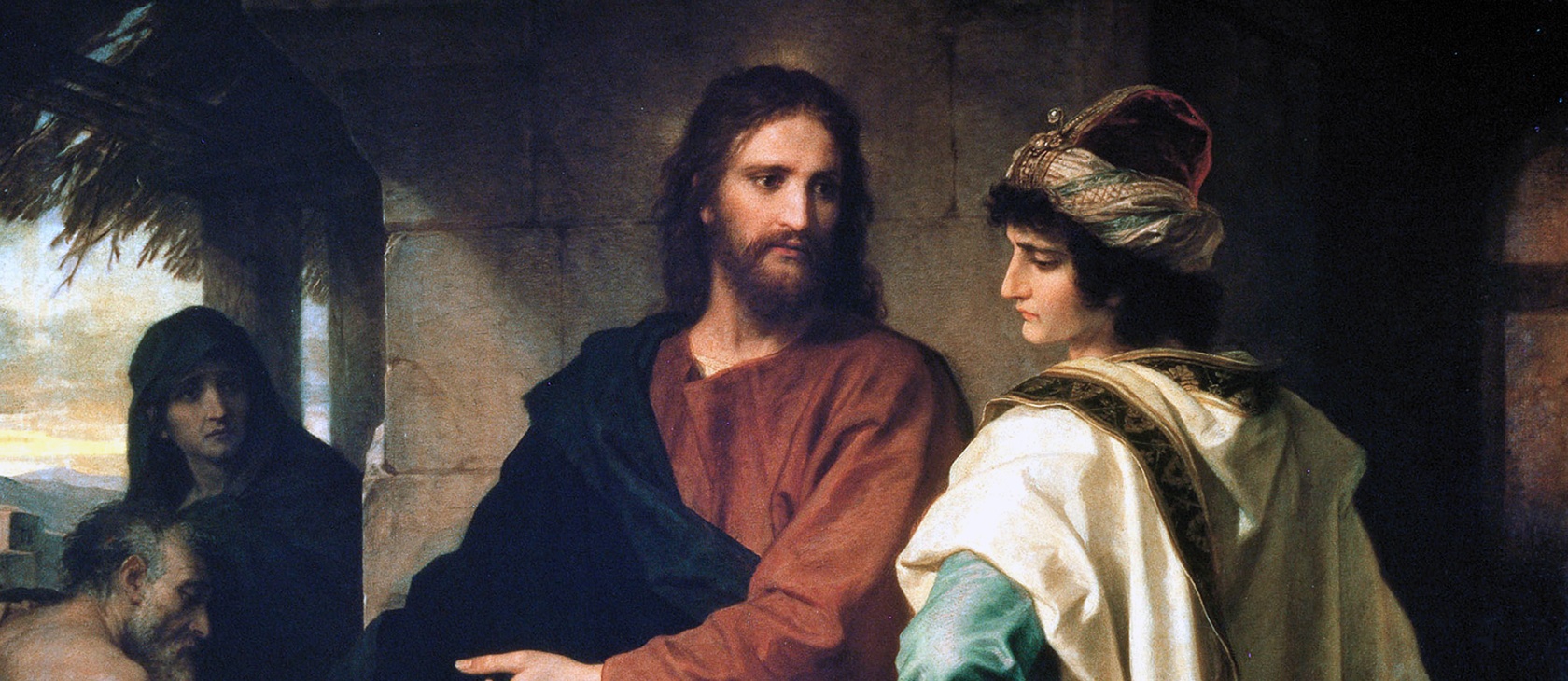
The parable of the Good Samaritan, referred to by the pope on Lampedusa, is a beautiful one, if taken rightly, but is destructive of proper thought if incontinently applied to politics and economics.





 zpostcode
 Recruit
 weather
 mreligion
 Yellowpages
 sport
sport constellation
 shopping
 name
name game
game directory
 literature
 Word
Word tour
tour furnish
 Lottery
 tftnews
 lyrics
 News
News digital
 car
car dir
dir Edu
Edu Finance


