



Is there an essential identity, “Americanness,” to which society might demand conformity, or is the essence of Americanness really the rejection of all such demands? For decades, the mainstream view has tended towards the latter as the answer.
Now, though, this mainstream view is being challenged. Texas, Louisiana, and Arkansas are each currently litigating laws that require the Ten Commandments to be posted in schools (and all government buildings, in the case of Louisiana). Foundational constitutional theory holds that the state cannot promote a favored religious creed. The states, therefore, sidestep creedalism to the greatest possible extent, and it is no accident that their efforts have coalesced around the Ten Commandments.
The Ten Commandments are a religious symbol shared by all Abrahamic faiths. They are understood to proclaim a universally applicable ethical standard alongside, at most, an abstract monotheistic claim. These laws, therefore, offer religion without content, religion as “ethics,” even religion as an identity marker. In the end, though, this kind of religiosity offers little more than an aesthetic alternative to our predominant pluralist conceptions of national identity.
The states mean to test the limits of Kennedy v. Bremerton, wherein the Supreme Court ruled that a public-school coach was within his rights to offer midfield prayers immediately after football games. That case abandoned the widely criticized Lemon Test, used to evaluate when state involvement in religious activities is acceptable, and replaced it with an analysis based on history and tradition. Following Kennedy, the states are aiming to overturn Stone v. Graham, a 1980 case that struck down a statute requiring the posting of the Ten Commandments in classrooms in Kentucky.
Such bills overreach and smother the American identity they attempt to propound under the veneer of religiosity. The Ten Commandments are reduced to a totem, their mere public presence sanctifying the nation. This overreach undermines the entire project, not to mention the genuine religious catechism that goes on outside the state.
By deciphering why these bills, as drafted, will fail to achieve both their stated and their implicit goals, we will be able to understand what is really at issue here and how laws might be more directly tailored to an achievable end. This understanding will allow states to affirm an American ethos that pays homage to our history, is more in line with the secular zeitgeist, and presents the public with a real, genuine choice between two competing visions for American identity.
Louisiana’s bill names the Mayflower Compact, the Declaration of Independence, the Ten Commandments, and the Northwest Ordinance as “documents [that] stand out as pivotal in the religious history of America and Louisianas legal system.” The addition of the Ten Commandments (or “Decalogue”) into an assemblage of otherwise early modern, American texts of primarily political purposes is striking. The Decalogue is an entirely different kind of document, one that purports to be God Himself speaking, rather than man.
The insistence upon religion in national identity is, in the end, a merely aesthetic argument.
The assertion that the Decalogue is foundational to American jurisprudence is likewise striking, at least insofar as this is in reference to the positive content of modern laws and constitutional theory. Those Commandments that are not explicitly unenforceable under the First Amendment are general moral imperatives, all of which are either universal in all legal systems or outside the scope of our law. No doubt the Decalogue, as a foundational statement of Western religion, has had its influence upon natural law thinking, but any influence upon the positive content of our laws here would have to be abstract, formative of ethical sensibilities.
Still, the bill says the goal is to “foster an appreciation for the role that religion has played in the legal history of America and the state of Louisiana.” On its face, it would seem that education directed towards this topic would better accomplish this goal, not to mention be far less likely to draw legal challenges. Few could object to a history lesson. But these bills don’t get the kids reading Sir William Blackstone, whose Commentaries lay out the Christian theological underpinnings of early-modern common law quite well.
The history of many Decalogue monuments as promotional pieces for Cecil B. DeMille’s Ten Commandments movie is well-documented. The re-invigoration of a sort of civic religion, patriotic and stripped of as much denominational flavor as possible, tied to the Cold War and the fight against “godless” communism, is similarly attested. Secularists take great joy in pointing out that the now-ubiquitous “In God We Trust” printed on paper money dates to only 1957 (though some faltering efforts saw the phrase added to the two-cent coin in 1864). “Under God” was added to the Pledge of Allegiance in 1954.
Despite all this, the whole tradition did not just pop out of Eisenhower’s head. Displaying the Ten Commandments goes back to at least the Reformation and Canon LXXXII of the 1604 Canons of the Church of England, where textual displays took the place of Roman Catholic statuary in the more icono-skeptical or even iconoclastic Protestant churches.
The states’ proposed laws today simply command that the Ten Commandments be displayed, much the same way that American flags are ubiquitously displayed in classrooms. And yet, teachers in the South will not be teaching the Ten Commandments as binding moral law. Chances are, the Ten Commandments will not even be discussed.
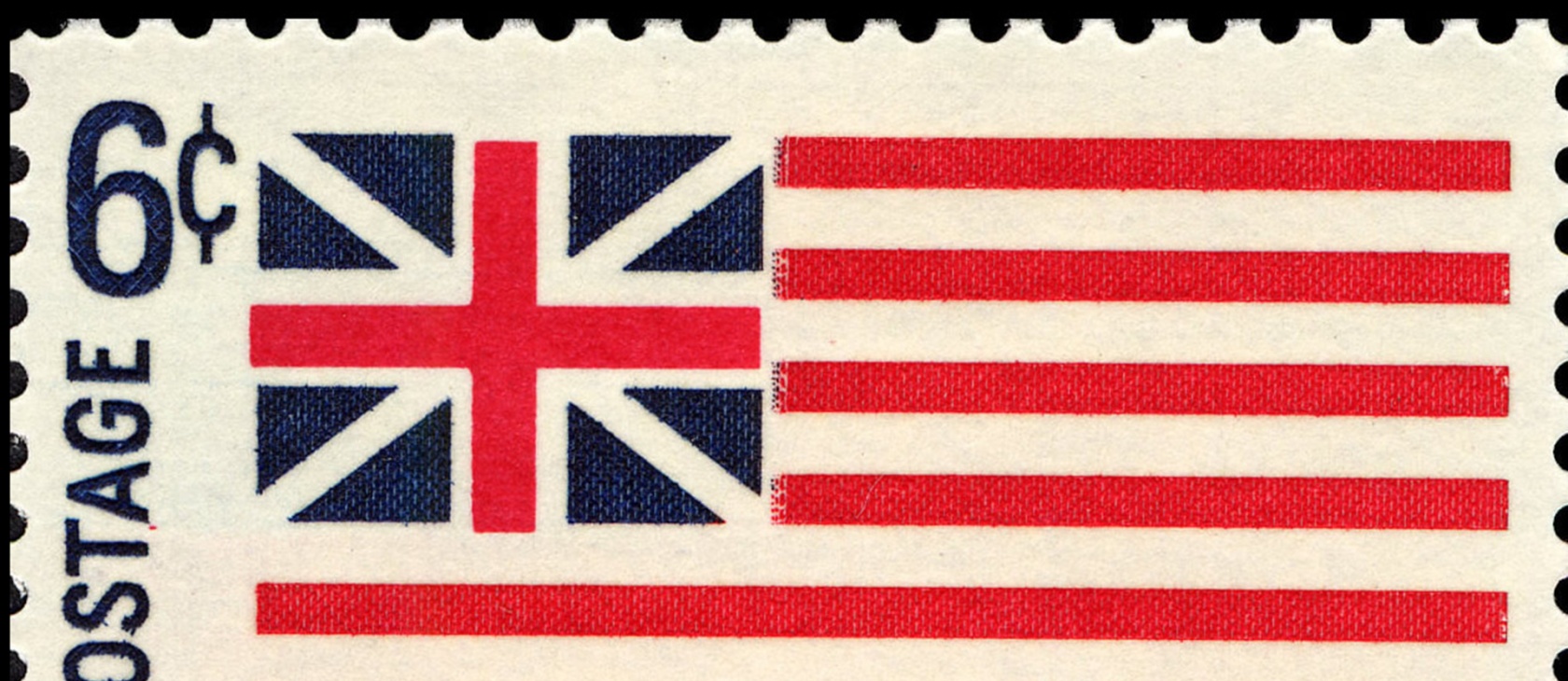
The comparison to the flag is fruitful. Much like the flag, the Decalogue is itself a symbol. The diptych shape with Roman numeral engraving is immediately recognizable. We encounter a visual symbol, like a flag or a cross, differently from how we encounter a written document. Text can have multiple meanings, but the meanings are closer to the surface and more translucent. A visual symbol, in contrast, contains a multiplicity of meanings and interpretations, often in tension with each other. The altar in a Catholic church, for instance, must speak for itself. Providing a placard that describes its historical importance is a tacit admission that the object no longer speaks such meaning out of its presence.
But the Ten Commandments are also text and can function as a historical document. This is the duplicity of these laws. By using a symbol that is also a historical document, as well as text, the states obfuscate their intent. Such a symbol can be displayed like the flag, perched authoritatively, on reverent display. But when challenged, either politically or in the courtroom, the text can be presented as text, as a document open to study and interrogation. A cross could not do this—as a non-textual symbol, it cannot escape its creedal context.
Despite the loaded symbolism of the Ten Commandments, the universalistic theism promoted by these states does not differ essentially from the secular universalism that has been the mainstream view of our civic religion and national identity for decades. This theism makes no actual claim upon anyone as it has no actual content.
The dominant national identity that these states are butting up against is one of universalism that asks only a minimal ideological commitment to nebulously defined values, where “anyone, from any corner of the Earth, can come to live in America and become an American,” as stated by President Ronald Reagan. This issue, though tied to immigration, is not reducible to it, for the question of national identity and acculturation applies to the native population as well, especially one as diverse (by any metric) as ours.
These states are choosing to fight a battle of superficial aesthetic preference—a contentless theism to replace a contentless secular humanism.
The laws in question confound three goals. First, they aim to carve out some protected space for religion in a rapidly secularizing public sphere. Second, they seek to pay homage to our nation’s history and culture, specifically the religious and Protestant elements thereof. Third, and most directly, they want to insist upon religion, or the idea of religion as such, as part of our national identity.
The first is a battle in the courts concerning the Free Exercise Clause—one that the conservatives in these states have been overwhelmingly winning. In moving from protecting religious practice by private actors to pushing what, nuances aside, will inevitably be perceived as a religious endorsement by the state, the movement is overreaching. This could well backfire.
The second goal, to pay homage to America’s history, goes to the broader cultural issues of national identity and is therefore naturally more entangled with the third, the insistence upon religion as part of our national identity; however, to the extent that the two can be kept separate, they should be. A deeper appreciation for America’s history could, at least as far as the schools are concerned, be handled pedagogically.
Ironically, for pluralism to persist, we must define and enforce boundaries within which everyone is an American first, and something else second, lest it collapse into identitarian civil war.
The third is the goal most directly advanced by these laws. The insistence upon religion in national identity is, however, ultimately a merely aesthetic argument. The states have selected the absolutely broadest symbol they could find, one that expresses widely accepted ethical imperatives and rather vanilla monotheistic presumptions. Indeed, Christians, Muslims, and Jews alike all honor Moses. In selecting the symbol they have, the states have implicitly conceded that they cannot posit any actual religious content.
Strategically, the judicial battle here will, even post-Kennedy, be an uphill slog with little actual payoff. Hanging religious material in silent exultation over the public-school classroom is well outside the Overton Window in modernity, even for many right-leaning people, and the courts are likely to tell the states as much in polished legalese. Another confused, eight-way split plurality opinion from Chief Justice Roberts would not be the win that supporters might think it is, even if it overrules Stone v. Graham.
These states could put themselves on much firmer ground for the third goal if the actual disagreement is argued openly. Can “Americanness” make a concrete demand upon us?
We can conceive of a national ethos that asks one not to be overtly hostile to the nation’s patrimony and historical faith traditions without wrapping the state up in religion. To conflate religiosity with national identity risks alienating otherwise sympathetic people.
What can our society demand of you to be an American? The previous consensus provided few particulars beyond broad-based tolerance. If the states want to show a genuine alternative, they must offer a viable, positive vision. This is hard to do in a pluralistic society, but there are models from which to draw. One example is French laïcité, with its strict commitment to public secularism. Another is Singapore, with its relative openness to religious and ethnic diversity—so long as newcomers play by the “house rules” of their society.
While someone cannot be forced to love their country, the expectation should be that citizens and permanent residents feel that their destiny is inseparably intertwined with their country’s. Pedagogy has its place, as do public displays of patriotism, like monuments, so long as neither is done one-dimensionally. An insistence upon language acquisition and greater social pressure for civic engagement and participation could provide a more solid basis for a shared identity, a national core beyond politics. The states could direct their attention to more defined and directed goals, such as these, to create a shared identity that exists at a fundamental level.
American society has been structurally pluralistic since its founding, with high degrees of individual autonomy and tolerance, religious and otherwise. If the states are to offer something counter to the idea of the propositional nation, they must operate within our pluralistic cultural identity as it actually exists. This is not to say that pluralism and tolerance are the extent of our civic identity. Rather, the task of the states and the public as a whole is to define where and when an American identity demands precedence over the plurality of creedal, ethnic, and other identities.
Language provides an example of how this might function generally. Perhaps the public decides that English is central to our American identity. In this case, our history of pluralism might stop us from going as far as the Toubon Law in France, but we might insist upon the use of English in all government and official channels. This would posit an affirmative, concrete element of a shared identity, while still making room for the plurality of other languages that are spoken in this country in both public and private. One can envision a similar, historically informed logic operating in other areas as well.
Ironically, for pluralism to persist, we must define and enforce boundaries within which everyone is an American first, and something else second, lest it collapse into identitarian civil war.





 zpostcode
 Recruit
 weather
 mreligion
 Yellowpages
 sport
sport constellation
 shopping
 name
name game
game directory
 literature
 Word
Word tour
tour furnish
 Lottery
 tftnews
 lyrics
 News
News digital
 car
car dir
dir Edu
Edu Finance


