Home
/
RELIGION & LIBERTY
/
Lester DeKoster
Lester DeKoster
May 3, 2026 12:47 AM

“God is a free enterpriser because he expects a return on His investments.”

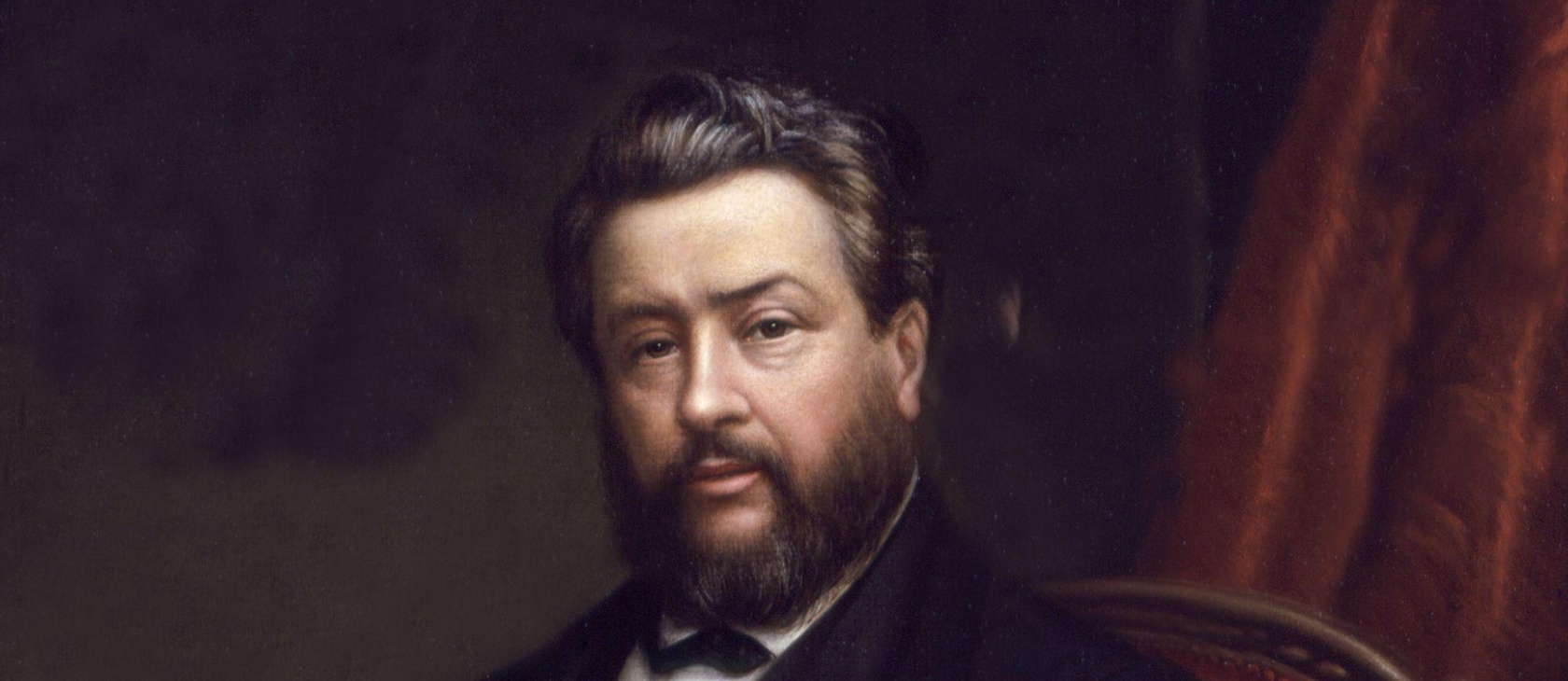
At once a father, professor, librarian, editor, publisher, and author, Lester DeKoster leaves a powerful legacy that resonates far beyond the borders of his school and denomination. In 1951 DeKoster became director of the library at Calvin College and Seminary, affiliated with the Christian Reformed Church in Grand Rapids, Michigan. During his tenure at the college, DeKoster was influential in expanding the holdings of what would e the H. Henry Meeter Center for Calvin Studies, one of the preeminent collections of Calvinist and Reformed texts in the world. DeKoster also amassed an impressive personal library of some 10,000 books, which includes a wide array of sources testifying to both the breadth and depth of his intellectual vigor.

DeKoster was a professor of speech at the college, and enjoyed taking up the part of historic Christianity and confessional Reformed theology in debates on doctrinal and social issues that pressed the church throughout the following decades. One target of his sharp wit lamented, “It’s been a long time ago that I was so chastised, and that publicly.” But both his public debates and private correspondence were marked by a spirit of charity that tempered and directed the needed words of rebuke.

One of the pressing issues of his time was the rise munism during the Cold War. In 1962 DeKoster authored a landmark volume, Communism & Christian Faith, in which he munism and Marxism as a religion, an alternative to petitor with Christianity. This book goes on to lay out the challenge presented by Marxism and the necessary steps for proceeding along an munist” and positively Christian program, characterized by a call to both “discern” and “love” enemies of the faith. As part of this project DeKoster fought the spread of Marxist economic ideology into Christian churches through liberation theology. To safeguard church leaders from this insidious threat, he authored Liberation Theology: The Church’s Future Shock, The Deacon’s Handbook, and The Elder’s Handbook. “The Lord God is a free enterpriser,” he wrote. “This is one reason why Karl Marx, who was not a free enterpriser, rejected God.” For DeKoster, the free enterprise system made possible good stewardship of God’s gifts because “all of God’s gifts to mankind are as a divine investment upon which the Investor expects full return.”

After his retirement from Calvin College in 1969, DeKoster labored for a decade as the editor of The Banner, the denominational magazine of the Christian Reformed Church in North America. This position provided him with another platform from which to critically engage the life of the church and the world. During this time DeKoster also launched, in collaboration with Gerard Berghoef (a longtime elder in the church) and their families, the Christian’s Library Press, a publishing endeavor intended to provide timely resources both for the church’s laity and its leadership.

In God’s Yardstick, first published in 1980, DeKoster describes the concept of stewardship as a governing concept in the Christian life. DeKoster contends that “basic stewardship is concerned with sweetening human relationships in our everyday world.” DeKoster would further identify the basic form of stewardship with the concept of work, intended to shape the soul of the worker to that of obedient righteousness. “While the object of work is destined to perish,” observes DeKoster, “the soul formed by daily decision to do work carries over into eternity.” It is prehensive and passing vision that characterizes the legacy of Lester DeKoster, a lifetime of stewardship in service of the King of kings and Lord of lords.

Comments
Welcome to mreligion comments! Please keep conversations courteous and on-topic. To fosterproductive and respectful conversations, you may see comments from our Community Managers.
Sign up to post
Sort by
Show More Comments
RELIGION & LIBERTY
Doing justice - Benedict's way
As the squabbling continues over various policy suggestions contained in Benedict XVI’s Caritas in veritate, there’s a risk that the deeper theological themes of the text will be overlooked. It’s also possible some of the wider implications for the Catholic Church’s own self-understanding and the way it consequently approaches questions of justice will be neglected. For historical perspective, we should recall that before, during, and after the Second Vatican Council there was—and remains—an intense theological debate within the Catholic...
Francis Schaeffer
We cannot deal with people like human beings, we cannot deal with them on the high level of true humanity, unless we really know their origin—who they are. God tells man who he is. God tells us that He created man in His image. So man is some- thing wonderful. Francis Schaeffer is one of the most influential Christians to have lived in the twentieth century. His life closely paralleled the rise and fall of munism in Europe. Schaeffer...
Acton FAQ
What role does blogging play into Acton’s communication mix? The Acton PowerBlog, the most popular feature of Acton’s growing web presence, marked its fifth year of faith-and-policy punditry in April. Written by a diverse group of scholars, writers, clergy, and businesspeople, the blog is a forum for a wide variety of social and economic topics. To date, Acton bloggers have published almost 3,000 posts and readers – who provide their own invaluable insights – have logged about ments to...
Repressions
The First freedom Twenty years on from the fall of the Berlin Wall, it is worth recalling the distinctly salvific promises of the inhuman ideologies munism and fascism that resulted in the deaths of tens of millions of innocent people during the 20th century. The utopian promises of murderous ideologues were panied by a vicious fury against those faiths that proclaimed freedom and human dignity. The despot persecutes the believer, who refuses to offer the totality of his life...
Debating the depression: An interview with Amity Shlaes
Your book, The Forgotten Man, has played a major role in challenging the consensus about the New Deal that prevails in the academy and in popular culture. I'm interested in what motivated you to write the book. We grew up with various versions of the 1930s. One version was that Franklin Delano Roosevelt took office and made it better. That Roosevelt cured the depression, in essence. A less simple version was: Roosevelt didn't cure our economic ailment in the...
'Money, Greed, and God'
The belief that the essence of capitalism is greed is perhaps the biggest myth Jay W. Richards tackles in his new book, Money, Greed, and God: Why Capitalism is the Solution and not the Problem. One reason for confronting this challenge is that many free market advocates subscribe to the thought that capitalism produces greed, and for them that’s not necessarily a negative. But for those with a faith perspective, greed and covetousness are, of course, serious moral flaws....
Alexander Solzhenitsyn
One word of truth shall outweigh the whole world. Toward the close of his 1970 Nobel Prize lecture, Alexander Solzhenitsyn affirmed the power of literature “to help mankind, in these its troubled hours, to see itself as it really is, notwithstanding the indoctrinations of prejudiced people and parties.“ In this, the great man affirmed the power of literature municate the moral truths of our lives, our societies, across all national and ethnic boundaries. Solzhenitsyn, perhaps known by most as...
Why is the Acton Institute partnering with the Stewardship Council?
Following the successful production of Acton Institute’s Effective Stewardship Curriculum, and with an eye to the launch of Zondervan’s NIV Stewardship Bible in the fall of 2009, we have formed a close partnership with the Stewardship Council, a five-year-old nonprofit that was established as an outreach to the broader munity. The Stewardship Council is a natural partner for the work that Acton has been doing now for almost twenty years. The Stewardship Council, a leader in the development and...
Double-edged sword: Psalm 94:14,15
For the LORD will not cast off his people, neither will he forsake his inheritance. But judgment shall return unto righteousness: and all the upright in heart shall follow it. So often in life we feel alone, neglected, and forgotten. Even in crowds an indi vidual can feel isolated, excluded, and supremely unimportant, sometimes through no fault of his or her own. Yet worse, often we are unfairly wronged by people who are supposed to be friends and loved...
A Christian perspective for health care reform
How should health care in the United States be reformed? The principles of social justice outlined in Catholic social teaching can be considered by all those of good will as guidelines for ethical health care reform. Those principles, are the dignity of the human person, mon good, solidarity, and subsidiarity. These four social justice principles provide a foundation for a virtuous and economically sound improvement in medical resource allocation; a Christian prescription for health care reform. It is clear...
Related Classification
Copyright 2023-2026 - www.mreligion.com All Rights Reserved