Home
/
RELIGION & LIBERTY
/
Alexander Solzhenitsyn
May 3, 2026 12:22 AM

One word of truth shall outweigh the whole world.

Toward the close of his 1970 Nobel Prize lecture, Alexander Solzhenitsyn affirmed the power of literature “to help mankind, in these its troubled hours, to see itself as it really is, notwithstanding the indoctrinations of prejudiced people and parties.“ In this, the great man affirmed the power of literature municate the moral truths of our lives, our societies, across all national and ethnic boundaries. Solzhenitsyn, perhaps known by most as a Soviet dissident, was nonetheless an artist of great distinction who heroically exposed the lies at the heart of Marxism-Leninism and the near destruction of traditional Russian society and munities at the hands of the Soviets.

Solzhenitsyn took a sledgehammer to the crumbling foundations of the Soviet system and, more than any other single person, was responsible for its collapse. Indeed, his artistic mission was to chronicle—in works such as One Day in the Life of Ivan Denisovich, Cancer Ward, The First Circle and The Gulag Archipelago—the catastrophe that the Bolshevik revolution and Soviet repression wrought on Russia. Solzhenitsyn never forgot the injustice of his own imprisonment in the Soviet Gulag and the stories of those he met there.

In his works, their sacrifices would not be forgotten. As he said in his powerful Nobel lecture (smuggled out of the Soviet Union in 1972 and published to a sensational reception all over the world), violence—both physical and spiritual—cannot ultimately stand against the truth. “And no sooner will falsehood be dispersed than the nakedness of violence will be revealed in all its ugliness—and violence, decrepit, will fall,“ he wrote. Exiled from the Soviet Union in 1974, Solzenitsyn soon settled in the United States. But the Western liberal elites, feeling the writer’s withering condemnation, were quick to turn on him. Scholars Edward E. Ericson and Daniel J. Mahoney recounted how journalist Jeri Laber, who in 1972 had praised Solzhenitsyn as a person and a writer, in 1974 declared his art dull and his politics reactionary. Her memorable generalization: “He is not the ’liberal’ we would like him to be.“

What would she have thought of Solzhenitsyn’s famous mencement address at Harvard where he catalogued the West’s failings, including rampant materialism, the superficiality of the media, and the moral cowardice of intellectuals? Standing before the cream of the Cambridge intelligentsia, Solzhenitsyn accused the West of leaving behind “the moral heritage of Christian centuries with their great reserves of mercy and sacrifice.“ He took the political and intellectual elites to task for cowardice, a “lack of manhood“ in its dealings with international aggressors and terrorists. He lamented the “boundless space“ that the West had provided for human freedom without making any distinctions for human decadence. “The West has finally achieved the rights of man, and even to excess, but man’s responsibility to God and society has grown dimmer and dimmer,“ Solzhenitsyn told the Harvard crowd.

As a boy, Solzhenitsyn was deeply influenced by his Aunt Irina, who instilled in him a love of literature and of Russian Orthodoxy. But he drifted away from the Christian faith under the spell of state indoctrination in Marxism-Leninism. It was his experience with the realities of the labor camps that brought him to his metanoia, the change of mind that put him on the road to repentance. “He returned with adult thoughtfulness to the Christian worldview of his rearing,“ Ericson and Mahoney wrote. “Solzhenitsyn’s mature articulation of Christian truths was deeply informed by his experience in the prison camps. There he witnessed human nature in extremis and learned about the heights and depths of the human soul.“

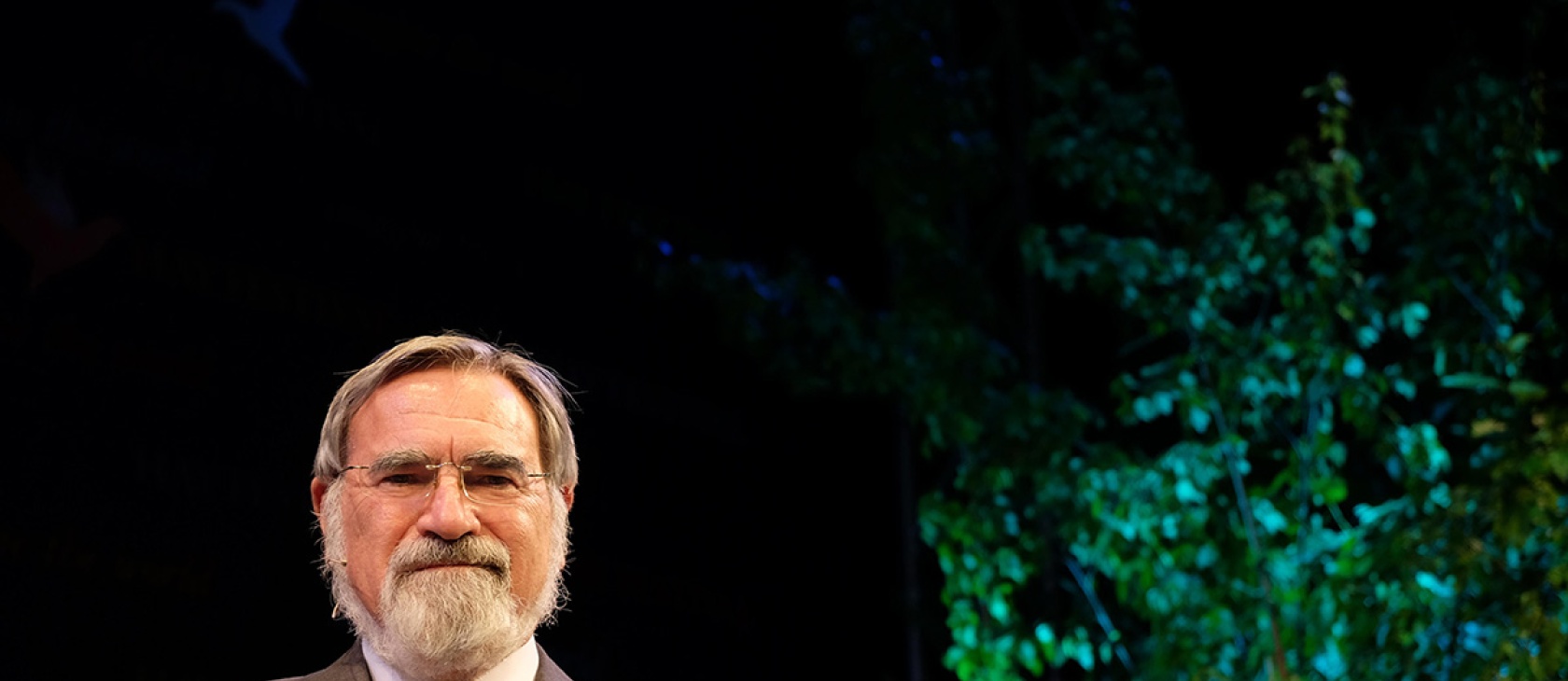
Hero of Liberty image attribution:Verhoeff, Bert / Anefo [CC BY-SA 3.0 nl], via Wikimedia Commons

Comments
Welcome to mreligion comments! Please keep conversations courteous and on-topic. To fosterproductive and respectful conversations, you may see comments from our Community Managers.
Sign up to post
Sort by
Show More Comments
RELIGION & LIBERTY
'Money, Greed, and God'
The belief that the essence of capitalism is greed is perhaps the biggest myth Jay W. Richards tackles in his new book, Money, Greed, and God: Why Capitalism is the Solution and not the Problem. One reason for confronting this challenge is that many free market advocates subscribe to the thought that capitalism produces greed, and for them that’s not necessarily a negative. But for those with a faith perspective, greed and covetousness are, of course, serious moral flaws....
A Christian perspective for health care reform
How should health care in the United States be reformed? The principles of social justice outlined in Catholic social teaching can be considered by all those of good will as guidelines for ethical health care reform. Those principles, are the dignity of the human person, mon good, solidarity, and subsidiarity. These four social justice principles provide a foundation for a virtuous and economically sound improvement in medical resource allocation; a Christian prescription for health care reform. It is clear...
Acton FAQ
What role does blogging play into Acton’s communication mix? The Acton PowerBlog, the most popular feature of Acton’s growing web presence, marked its fifth year of faith-and-policy punditry in April. Written by a diverse group of scholars, writers, clergy, and businesspeople, the blog is a forum for a wide variety of social and economic topics. To date, Acton bloggers have published almost 3,000 posts and readers – who provide their own invaluable insights – have logged about ments to...
Debating the depression: An interview with Amity Shlaes
Your book, The Forgotten Man, has played a major role in challenging the consensus about the New Deal that prevails in the academy and in popular culture. I'm interested in what motivated you to write the book. We grew up with various versions of the 1930s. One version was that Franklin Delano Roosevelt took office and made it better. That Roosevelt cured the depression, in essence. A less simple version was: Roosevelt didn't cure our economic ailment in the...
Francis Schaeffer
We cannot deal with people like human beings, we cannot deal with them on the high level of true humanity, unless we really know their origin—who they are. God tells man who he is. God tells us that He created man in His image. So man is some- thing wonderful. Francis Schaeffer is one of the most influential Christians to have lived in the twentieth century. His life closely paralleled the rise and fall of munism in Europe. Schaeffer...
Repressions
The First freedom Twenty years on from the fall of the Berlin Wall, it is worth recalling the distinctly salvific promises of the inhuman ideologies munism and fascism that resulted in the deaths of tens of millions of innocent people during the 20th century. The utopian promises of murderous ideologues were panied by a vicious fury against those faiths that proclaimed freedom and human dignity. The despot persecutes the believer, who refuses to offer the totality of his life...
Doing justice - Benedict's way
As the squabbling continues over various policy suggestions contained in Benedict XVI’s Caritas in veritate, there’s a risk that the deeper theological themes of the text will be overlooked. It’s also possible some of the wider implications for the Catholic Church’s own self-understanding and the way it consequently approaches questions of justice will be neglected. For historical perspective, we should recall that before, during, and after the Second Vatican Council there was—and remains—an intense theological debate within the Catholic...
Double-edged sword: Psalm 94:14,15
For the LORD will not cast off his people, neither will he forsake his inheritance. But judgment shall return unto righteousness: and all the upright in heart shall follow it. So often in life we feel alone, neglected, and forgotten. Even in crowds an indi vidual can feel isolated, excluded, and supremely unimportant, sometimes through no fault of his or her own. Yet worse, often we are unfairly wronged by people who are supposed to be friends and loved...
Why is the Acton Institute partnering with the Stewardship Council?
Following the successful production of Acton Institute’s Effective Stewardship Curriculum, and with an eye to the launch of Zondervan’s NIV Stewardship Bible in the fall of 2009, we have formed a close partnership with the Stewardship Council, a five-year-old nonprofit that was established as an outreach to the broader munity. The Stewardship Council is a natural partner for the work that Acton has been doing now for almost twenty years. The Stewardship Council, a leader in the development and...
Alexander Solzhenitsyn
One word of truth shall outweigh the whole world. Toward the close of his 1970 Nobel Prize lecture, Alexander Solzhenitsyn affirmed the power of literature “to help mankind, in these its troubled hours, to see itself as it really is, notwithstanding the indoctrinations of prejudiced people and parties.“ In this, the great man affirmed the power of literature municate the moral truths of our lives, our societies, across all national and ethnic boundaries. Solzhenitsyn, perhaps known by most as...
Related Classification
Copyright 2023-2026 - www.mreligion.com All Rights Reserved