Home
/
RELIGION & LIBERTY
/
K. Wilhelm Freiherr von Humboldt
Dec 23, 2025 6:05 PM

Described by Lord Acton as the “most central figure in Germany,” Wilhelm von Humboldt began his public career in 1802 as the Prussian envoy to the papal court. He returned to Berlin in 1808 to accept his appointment as the Minister of Public Instruction. In this position, he became the architect of the Prussian educational system and the founder of the University of Berlin; he served in a variety of other governmental offices until his retirement from public service in 1819.

While Humboldt's public career was distinguished, he made his greatest impact through his varied contributions to political philosophy, history, literature, and linguistics. (For example, his political ideas anticipated and were drawn upon by John Stuart Mill in his On Liberty.) Humboldt's expansive humanism is evident in the high value he placed on personal development in the free society.

In his Limits of State Action, Humboldt described his concept of the human person as a social animal striving for cultivation and improvement in the context and with the support of society. Humboldt, therefore, was opposed to large states, believing they impeded the full development of citizens. In his words, “Reason cannot desire for man any condition other than that in which not only every individual enjoys the most absolute, unbounded freedom to develop himself out of himself, in true individuality, but in which physical nature, as well, need receive no other shaping by human hands than that which is given to her voluntarily by each individual, according to the measure of his wants and his inclinations, restricted only by the limits of his energy and his rights.”

In addition to this emphasis on the individuality of the human person, Humboldt maintained the person's necessary rootedness in society munity. This dual emphasis, according to one scholar, is Humboldt's unique contribution. Rather than seeing “the individual as essentially the proprietor of his own person and capacities, owing nothing for them,” in which “the individual was seen neither as a moral whole, nor as part of a larger social whole, but as an owner of himself,” Humboldt manifested an “Aristotelian sense of the ways in which human beings enrich each other's lives in society, together with a quite non-Aristotelian sense that one can neither predict nor set limits to human moral and cultural experimentation.”

Sources: The Limits of State Action by Wilhelm von Humboldt (Liberty Fund, 1993) and European Liberalism edited by Massimo Salvadori (John Wiley and Sons, Inc., 1972).

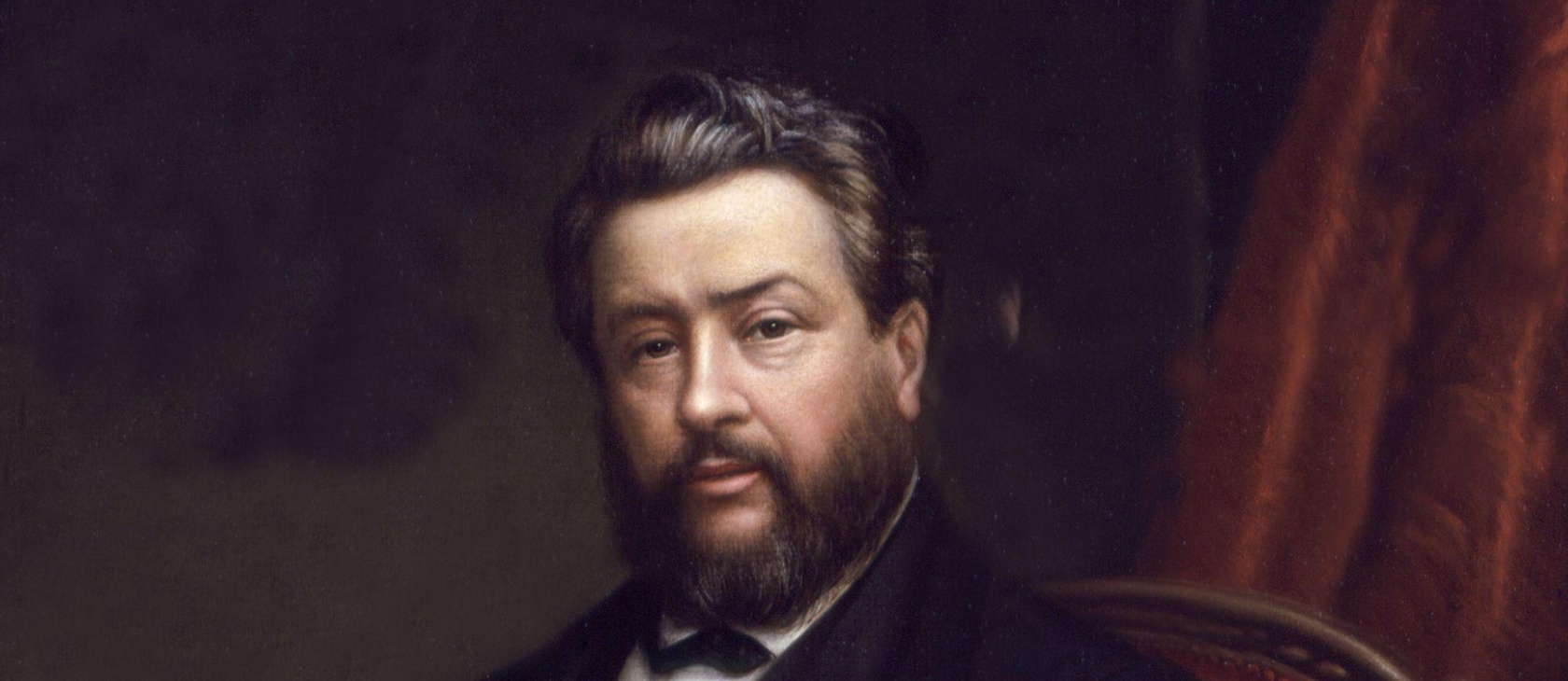
Hero of Liberty image attribution:Joseph Karl Stieler [Public domain], via Wikimedia Commons

Comments
Welcome to mreligion comments! Please keep conversations courteous and on-topic. To fosterproductive and respectful conversations, you may see comments from our Community Managers.
Sign up to post
Sort by
Show More Comments
RELIGION & LIBERTY
Christian Glass Ceilings
Why are we here on earth? What did God intend when he created us and placed us on this planet? And what is the purpose of the human race's continued existence? These questions may never be fully answered. And even if they are, we may never prehend the answers with our Finite minds. However, there is no reason we should not explore some possible answers. In fact, many people have already done so and e to different conclusions. Sadly,...
Islam, Past and Future
Islam is a vast religion, boasting millions of adherents, spanning large areas of the globe, and passing thirteen centuries of history. Muslims are united in their belief in the one transcendent, immanent God of pure singularity. They hold the Qur'an to be the literal word of God, eternally coexisting with God, and transmitted to all the prophets beginning with Adam, but only purely, undefiled, pletely to Muhammad, the Seal of the Prophets. Islam spread by the sword, proselytization, spiritual...
Multinational Corporations: Myths and Facts
Many religious leaders are increasingly troubled by the growing presence of multinational corporations around the world, especially in poor and developing nations. In truth, such concern is warranted, but only if the allegations against multinational corporations are true. Such allegations include the charge that profit-motivated multinational corporations are engaging in petition and insidious plots to economically and politically manipulate entire economies. Further, multinational corporations are perceived to be methodically eliminating domestic firms in order to exploit their monopoly powers,...
'Almighty God Hath Created the Mind Free'
Lord Acton, the great historian of freedom, understood that “liberty is the delicate fruit of a mature civilization.” The liberty of which he spoke embraced a broad scope of human freedom, including dimensions political, intellectual, economic, and, especially, religious. The civilization of which he spoke was the West, whose heritage of Greek philosophy, Roman law, and Christian faith indelibly marked it and inexorably pushed it toward the full panoply of liberties we enjoy today and to which the rest...
Capitalism Must Seize the High Ground
If economic liberty is valued today, it is rarely because it is considered more just or more proper than any alternative. It is valued primarily on managerial and technical grounds. We feel free to argue about how many jobs this or that piece of legislation creates, but we remain squeamish about asking whose property will be used to create these jobs. An argument over whether there ought to be ceilings on corporate remuneration centers on whether high salaries are...
Ethical Reasoning in Business
On September 30, 1982, three people in the Chicago area died from cyanide introduced into Extra-Strength Tylenol capsules. The link between the deaths and the tainted capsules was made with remarkable speed, and authorities notified Johnson and Johnson. As the number of deaths grew—the final total was seven—the firm faced a crisis and, indeed, potential disaster. Tylenol, a leading pain-reliever, was Johnson and Johnson's single largest brand, accounting for almost 18 percent of the corporation's e. The executives involved...
Letting the World Pass Us By
Resting is no small matter. It is not simply collapsing when everything else is done. In fact, it is at the heart of our relationship with God, and is a fundamental reflection of our faith. Rest is close to the heart of faith. Under God, we find our ultimate fullfilment not in what we achieve but in freely receiving what God has given. The Bible certainly teaches the goodness and importance of work. This teaching stands out like a...
The Biblical Case for Entrepreneurship
Those who consider the entrepreneurial vocation a necessary evil should realize that Scripture lends ample support to entrepreneurial activity. In Matthew 25:14­30, we find Jesus' parable of the talents. As with all parables, its meaning is multi-layered. Its eternal meaning relates to how we use God's gift of grace. With regard to the material world, it is a story about capital, investment, entrepreneurship, and the proper use of economic resources. I do not pretend to build an entire ethic...
'We Hold These Truths'
Lord Acton, the great historian of freedom, understood that “liberty is the delicate fruit of a mature civilization.” The liberty of which he spoke embraced a broad scope of human freedom, including dimensions political, intellectual, economic, and, especially, religious. The civilization of which he spoke was the West, whose heritage of Greek philosophy, Roman law, and Christian faith indelibly marked it and inexorably pushed it toward the full panoply of liberties we enjoy today and to which the rest...
Frank Talk and Fiscal Responsibility
When I hear the way citizens talk about government these days, I am reminded of young married couples who lack proper marriage preparation. People frequently speak of all the things that government does–and will do–for them. We even vote according to an assessment of which candidate will do the most for us. As for the realities of governmental finance–especially the cold, hard one that the government has nothing to give us that it does not also take from us–most...
Related Classification
Copyright 2023-2025 - www.mreligion.com All Rights Reserved