



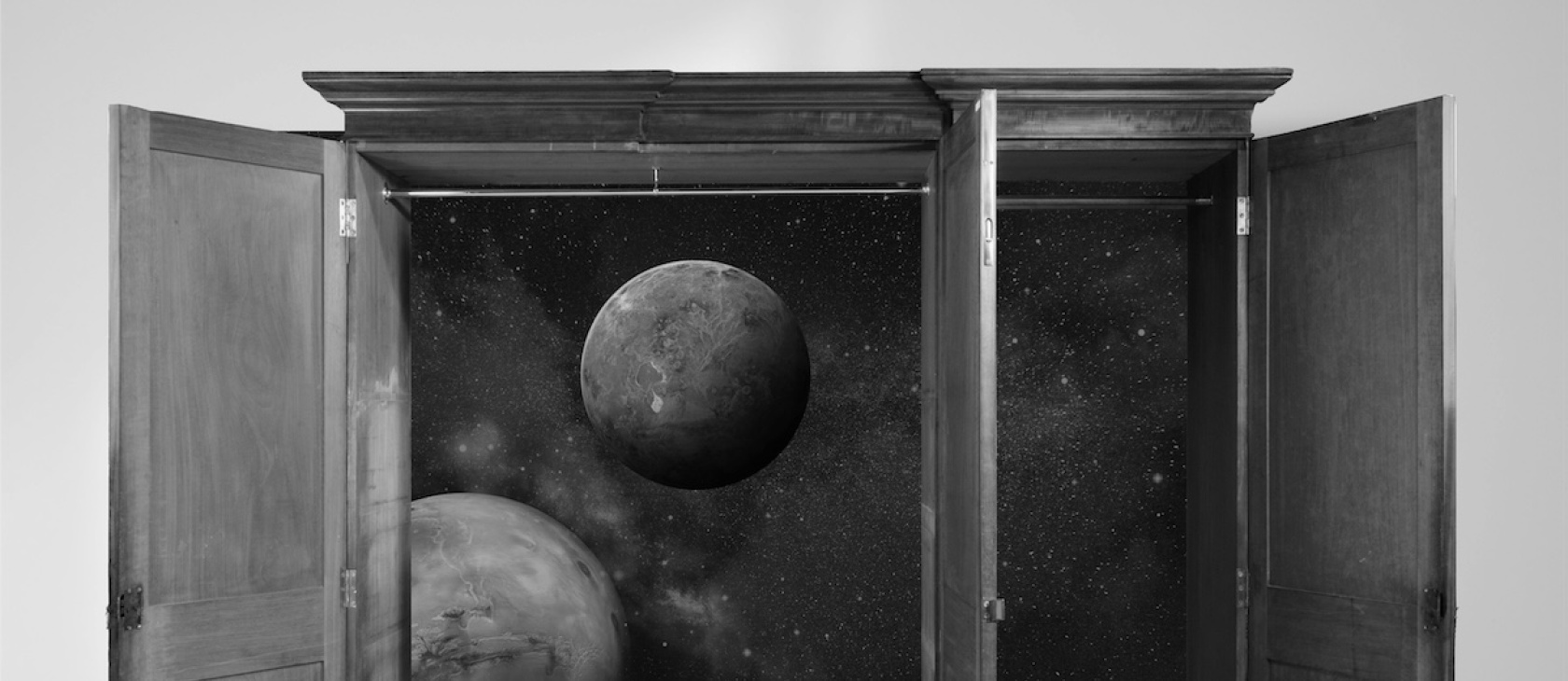
Americans are falling in love with Project Hail Mary, a movie about an astronaut who finds himself alone at the end of the universe, with perhaps no hope of ever returning among mankind. He then has to figure out how to save mankind in very difficult circumstances, by his wits and his technical know-how. A man a lot like the navigator-turned-shipwreck Robinson Crusoe, so much so that it’s worth comparing them, their stories, and why they matter to modern society.
Robinson Crusoe was published in 1719 and instantly became a bestseller, making Defoe famous far beyond his politicking circles—he was a journalist, pamphleteer, as well as spy and political agent. The novel started a genre of survival stories of which perhaps the only famous one nowadays is the 1812 novel Swiss Family Robinson by Johann David Wyss, which had a number of sequels by other authors (including Jules Verne), was adapted several times in Hollywood, and inspired a number of TV series, of which Lost in Space (1965–68) is most famous (and was recently remade by Netflix).
Eventually, this kind of survival story inspired Andy Weir, the author of science fiction novels including 2014’s The Martian, in which a scientist is spaceship-wrecked on Mars and has to survive there until NASA can retrieve him. (In reality, when two astronauts were stranded on the International Space Station in 2024—an eight-day mission turning into 286 days off-planet—NASA had to ask Elon Musk to send a rocket to get them.) The novel was very successful, and it was then quickly adapted to a similarly successful movie of the same name in 2015. So in 2021, Andy Weir came back to the survival story and offered a variation: Project Hail Mary. Now, it’s already on screens, and it’s a big hit, having made more than $160M in its first ten days.
A couple of aspects of the stories are reversed. The scientific protagonist of The Martian was stranded and in need of saving, whereas the protagonist of Project Hail Mary is himself on a mission to save the world and, instead of wrecking, he may be said to be marooned. Our world, and in fact a large part of the galaxy, is in danger because of an astrophage, which, as the name suggests, means “star-eater.”
The thing eating the stars is a life form, indeed a microorganism. A global scientific mission is needed to gather the resources, the scientists, and the plans to investigate and solve the problem before the sun goes dark and cold and mankind is extinguished. That global effort soon turns out to need Ryland Grace (Ryan Gosling), a molecular biologist who turns out to be a very clever engineer, too. He’s our protagonist, of course.
Weir introduces another change from the earlier novel. The titular Martian was all by himself, whereas Grace finds a friend on his space mission, and they work together to save their planets. Grace dubs the alien Rocky, because he looks like a bunch of rocks put together by a kid who doesn’t quite know what a spider is supposed to look like. Together, the two Weir stories, which may also be the two most successful new sci-fi movies of the last decade, give us Robinson Crusoe’s 28 years on his island. At first, Crusoe survives by himself, but in the last couple of years, he saves a cannibal from other cannibals and dubs him Friday. They work together and so, once no longer alone, the trouble of escaping his fate becomes manageable for Crusoe.
Weir’s novels, just like Defoe’s, suggest what we have come to call rugged individualism, a distinctly American character, a quality of self-reliance that allows a man to defy his fate. It’s a mix of return to nature and the conquest of nature. For Defoe, Crusoe is a way to investigate the state of nature, the distinctive theory of human origins that underlies liberal politics. And if one wanted to exaggerate for the sake of example, one could say that Defoe wrote a novelization of his contemporary John Locke’s Second Treatise of Government, or at least its famous fifth chapter: “Of Property.”
Grace, unlike Crusoe, has nothing to teach his companion—neither civilization nor Christianity.
But then there is the problem of Friday. When Crusoe saves his life, he not only gives him a name, but also tells Friday to call him Master. This reminds us that Crusoe was himself a slave in Morocco, after which he saved a slave boy’s life only to sell him into slavery; and that he later got himself shipwrecked because he wanted to sail from his plantation in Brazil to Africa to buy slaves. Throughout his isolation on the island, Crusoe indeed dreams of getting a servant—and then that dream is realized in Friday.
Project Hail Mary, though, does not involve slaves! There is nowadays no need for it. All the work Crusoe gets out of slaves is done in our present age by technology. One of Crusoe’s impediments is that he cannot work metal, and so his tools are always quite bad. He is a hunter at first, then a farmer, rehearsing the stages of mankind. Weir’s scientific protagonist can take all that for granted. Grace, however, does need a technical assistant, and Rocky turns out to be a natural engineer and very docile. The two meet on terms of equality—or in a way, Rocky does more to help Grace, since he is more skillful. But Grace soon assumes leadership, because he’s more intelligent and imaginative, without instituting any inequality.
One could call the meeting of the two aliens providential or merely a matter of chance. Each interpretation has consequences for how one thinks about life and human life especially, which we’ll explore. First, let’s consider religion. Crusoe becomes a Christian in his time of isolation, reading the Bible, but more importantly reflecting on the miseries and suffering of his life, thinking himself to blame, and looking to set wrong things to right in his soul. So he also teaches Christianity to Friday, whose existence poses problems. How can God be God and yet allow cannibalism?
It goes without saying, Grace, despite his name, has no thought of God and doesn’t entertain the idea of explaining Christianity to Rocky, even as an amusing question. We may say Grace has to take a leap of faith when Rocky asks him to take off his spacesuit helmet. Grace is afraid he’ll suffocate, yet he puts his life in his new friend’s hands. We never find out what basis there is for that trust; perhaps there is none—perhaps because there is no ground of trust, whether in providence or nature or something else.
Now, Crusoe and Friday are of the same species, potentially dangerous to each other, but also able to think about life and human life in very similar ways. Grace and Rocky have the same enemy: the astrophage. They want the same thing: to save their respective species. So they somehow establish, to speak like Locke, the right to life, the fundamental part of modern politics. But Project Hail Mary is silent on whether that right depends on being human or perhaps any living being has it. Is a rock-like spider human if it is technically capable, able to communicate (through a translation device), and willing to live or die together in trust?
Put otherwise, does the form of the human being matter, or would any form do so long as one is able to manipulate matter for technical purposes? The very existence of the alien from another solar system—indicating there is no immediate competition or enmity between these two alien species, with another atmosphere and another biology—suggests that life is somehow a matter of chance. Project Hail Mary suggests we may all be creatures of circumstances, and we just have to make the best of them.
Self-reliance and the investigation of humanity in the state of nature have therefore transformed tremendously in the three centuries since Defoe wrote. The friendship of Rocky and Grace has replaced religion, even as technological advances have made incredible new powers available and a new knowledge of being alive in a dangerous universe. This is why Rocky and Grace are equals, whereas Crusoe thought of himself as master of Friday. Grace, unlike Crusoe, has nothing to teach his companion—neither civilization nor Christianity.
In other words, Project Hail Mary cannot give an account of being human through the encounter with the alien it depicts. This is a very worrisome transformation. Perhaps as a society we are not progressing after all. At least, it seems, our stories are not.


 zpostcode
 Recruit
 weather
 mreligion
 Yellowpages
 sport
sport constellation
 shopping
 name
name game
game directory
 literature
 Word
Word tour
tour furnish
 Lottery
 tftnews
 lyrics
 News
News digital
 car
car dir
dir Edu
Edu Finance


