



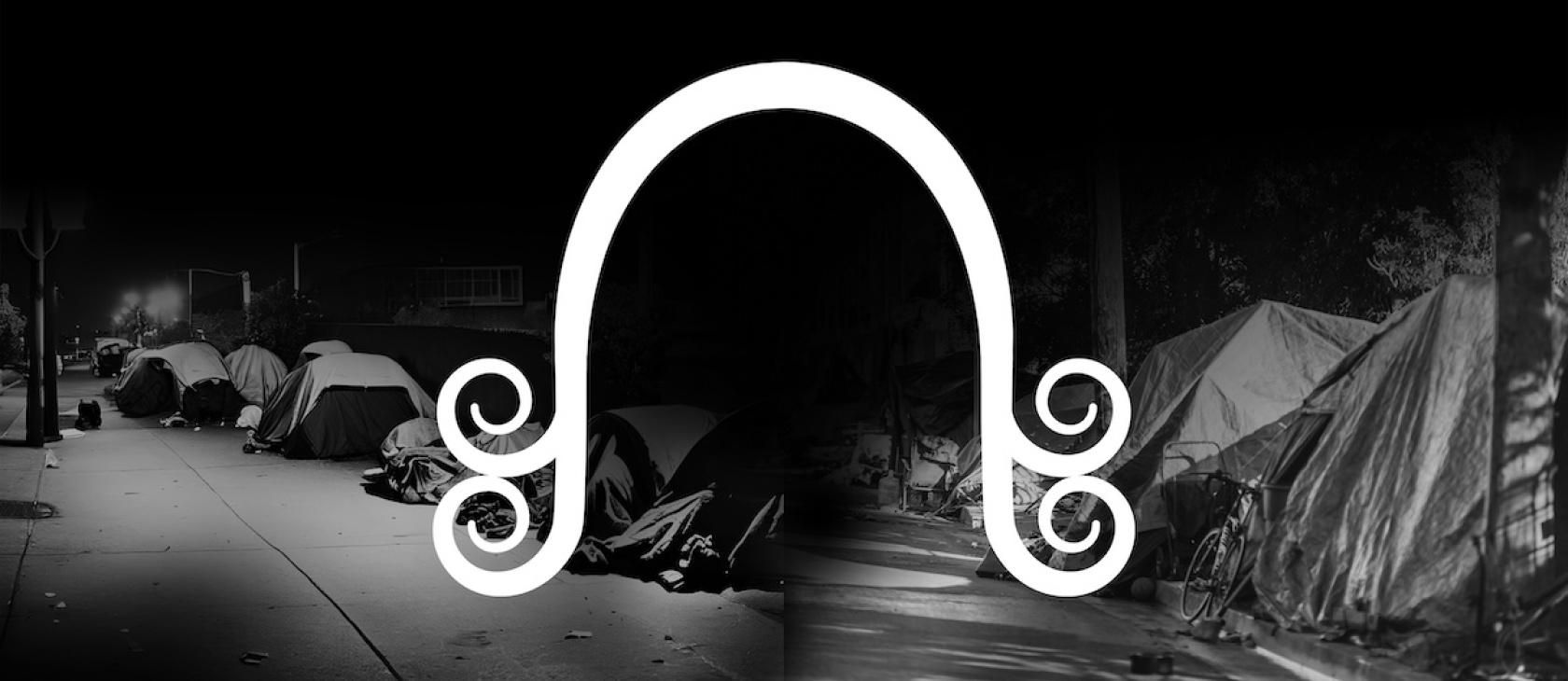
On March 8, 2022, police officers in Bullhead City, Arizona, arrested Norma Thornton for serving home-cooked meals in a park near her home. The city charged her with violating an ordinance that essentially prohibits anyone from sharing food on public property for charitable purposes. Under that ordinance, individuals may share food on public property for any purpose whatsoever, so long as their motivations are not charitable or they are charging money. Thornton was not trying to profit in any way. She was motivated only by a desire to feed the hungry. That made her a criminal.
Although still uncommon, similar ordinances have appeared in several American towns and cities since the 1980s. As cities grapple with homelessness and broken families, several of them have tried to contain the most obvious symptoms. Bullhead City’s ordinance explains that when homeless and impoverished people gather in public places to obtain food from people such as Norma Thornton, the city is “called to address public nuisance and other illegal behavior, clean-up human waste, litter, trash, and other debris.” The city found that charitable food-sharing causes a “deterioration” of public parks.
Cities own public property in trust for the whole community. They have obligations to protect health and safety, and food-sharing ordinances may be constitutionally valid as applied in certain cases. But direct prohibitions on the selfless use of property, especially when employed to feed the hungry, burden the right to make charitable uses of one’s property. In a forthcoming law review article, we argue that this right is fundamental and that courts may protect it where constitutions secure private property and other fundamental rights. The right is implicated when governments place burdens on the charitable activities of individual persons and non-profit organizations.
A Long and Venerable Tradition
The right to make charitable uses of one’s property is deeply rooted in the history and tradition of Anglo-American law. It therefore qualifies as a fundamental right under the test used by the US Supreme Court in Washington v. Glucksberg and other cases. We do not make this claim lightly.
In our forthcoming article, we demonstrate that there is a very long history and tradition of enforcing and protecting the right of individuals to engage in acts of charity using their property. Affirmation of the righteousness of personal generosity extends back to ancient Greece and Rome is prevalent in the Hebrew Scriptures, and is a central teaching of the Christian New Testament. The right to charitably dispose of one’s property—especially to feed the hungry—has long been protected as a matter of English and American law. Indeed, it is common for governments to pass laws encouraging such activities. And though governments throughout history have occasionally placed incidental burdens on charitable activities, it is almost unheard of for them to attempt to restrict charitable uses directly. A few illustrative examples should help to establish the point.
The right of charitable uses has always survived attempts by political sovereigns to infringe on it. Throughout the history of the common law from the time of the Norman Conquest until the seventeenth century, the occasional efforts by the crown to wrest rights of charitable uses from nobles, the Church, and others eventually ended in failure.
The Normans brought primogeniture to English soil in the eleventh century. This doctrine prohibited most charitable uses of land because it required succession of the entire estate to the eldest son. The crown would recognize no testamentary devise of any property right greater than a term of years. And while primogeniture prohibited devises of freeholds in land, the jurisdiction of Church courts over the movable property of dead men imposed limitations on charitable bequests.
To solve those problems, lawyers invented two legal tools, which became and remain today part of our fundamental law: the use and the trust. The “use” was a particular legal right whose chief benefit was to make property rights alienable. Being outside the common law, uses were unenforceable in the crown’s courts. But from early in the fourteenth century, the Church enforced them in ecclesiastical courts, which provided justice when secular, common law did not. Later, the Chancellor assumed the role of providing justice when law fell short. An owner would entrust to a friend the task of making a charitable donation, and the court of chancery enforced such uses in equity. Thus, the trust was born. In the centuries since, countless property owners have established trusts large and small for the benefit of other people.
The next property dispute to burden charitable uses was the battle between the nobles and the Church over Church ownership of land. Feudal lords fought hard to prevent the Church from acquiring real property rights. The decisive contest was waged between 1279 and 1301. By Edward I’s Statute of Mortmain in 1279, the king and Parliament attempted conclusively to prevent donations of land to the Church without royal consent. This law indirectly affected charitable uses because the Church was the center of charitable activity in England and the enforcer of the general obligation to act charitably. Indeed, Englishmen were sometimes prosecuted in ecclesiastical courts for not making adequate contributions to relieve the suffering of the poor.
Note that the purpose of this law was not to prevent charitable uses of property. Instead, the goal was to prevent rights in land from falling into the hands of corporations, especially religious corporations. In the end, even this limited attack on charitable uses failed. While Edward was waging an unpopular war, the Church joined with a number of aggrieved subjects and successfully persuaded Edward to affirm the ancient liberties of the Church and other property owners. He reaffirmed Magna Carta in 1298, and again in 1299, 1300, and 1301, confirming repeatedly that the Church’s liberty and its property rights were the fundamental, common law of the land.
Later attacks on property rights, especially by Henry VIII, also failed to destroy the right of charitable uses. Confiscation of church property made private charity more important. Laws prohibiting almsgiving were not enforced, and the backlash resulted in the most definitive statement of the right to act charitably—the Charitable Uses Act 1601. The Act identified uses of tangible and intangible property entitled to enforcement in equity because they were deemed to be charitable, due to their alleviation of poverty, illness, and other misfortunes, or for their promotion of education and other public goods. The very first use on the list is “for Releife of aged impotent and poore people.” Under the Act, even a devise to a corporation is valid as long as it is for charitable uses.
Virtually all colonies and later states had laws protecting the Christian Sabbath, and almost without exception they exempted from these statutes works of “charity” or “mercy.”
Since the seventeenth century, English and American courts have continually taken it for granted that charitable uses of property are lawful and shall be enforced according to the intentions of the donor absent fraud or other violation of fundamental law.
Development of the Right in America
From the earliest settlements in Jamestown and Plymouth through the present day, American civic and religious leaders have emphasized the importance of helping those in need. Indeed, before he even stepped foot in America, John Winthrop preached a sermon aboard the Arbella entitled “Christian Charity: A Model Hereof” (1630), wherein he reminded his fellow Puritans that relations between the rich and the poor must be governed by the rules of “justice and mercy.” Notably, he specifically encouraged his fellow believers to “deale thy bread to the hungry and to bring the poore wander into thy house, when thou seest the naked to cover them.”
Exhortations by early American political and religious leaders to care for the poor may be multiplied almost indefinitely, and we give numerous examples in our full-length article. But here we want to focus on ways that legislators protected the right to make charitable uses. Early Americans of European descent were very religious people, specifically Christian, and even more specifically Protestant. Many were committed to following biblical admonitions, including the Fourth Commandment: “Remember the Sabbath day, to keep it holy.” But colonial officials, from north to south, did not rely on citizens to voluntarily keep the Sabbath; they required them to do so.
Virtually all colonies and later states had laws protecting the Christian Sabbath, and almost without exception they exempted from these statutes works of “charity” or “mercy” (the two terms are interchangeable in this context). So, for instance, the colonies of Massachusetts, Rhode Island, and South Carolina exempted from Sabbath legislation works of “necessity and charity,” Maryland “Works of absolute necessity and Mercy,” New Hampshire “works of Necessity and Mercy,” and Delaware “Works of Necessity, Charity, and Mercy.” Later, the states of Massachusetts, Georgia, North Carolina, Rhode Island, New York, New Jersey, Delaware, Virginia, Georgia, Florida, Alabama, Mississippi, Tennessee, Kentucky, Missouri, Ohio, and Michigan exempted acts of “necessity and charity” and Pennsylvania, Connecticut, and New Hampshire exempted acts of “necessity and mercy.” Requiring respect for the Christian Sabbath was very important for early American legislators, but not important enough to prohibit charitable acts on the Lord’s day.
In the centuries since, states and then the federal government have made pro-active efforts to protect other acts of charity and mercy. For instance, a rise in civil litigation in the mid-twentieth century precipitated concerns that private citizens would not attempt to help their fellow citizens facing a medical emergency for fear of being held liable. To address this concern, California legislators passed the nation’s first Good Samaritan law in 1959. Every state has since followed its lead. So has the United States Congress. California’s current law expresses the “intent of the Legislature to encourage other individuals to volunteer, without compensation, to assist others in need during an emergency, while ensuring that those volunteers who provide care or assistance act responsibly.” Note the intent is to encourage individuals to help others in need.
Similarly, Congress passed the Volunteer Protection Act of 1997. Like California’s Good Samaritan Statute, it clearly affirms that:
The purpose of this Act is to promote the interests of social service program beneficiaries and taxpayers and to sustain the availability of programs, nonprofit organizations, and governmental entities that depend on volunteer contributions by reforming the laws to provide certain protections from liability abuses related to volunteers serving nonprofit organizations and governmental entities.
Americans have long been concerned with alleviating hunger, but in the twentieth century, farmers, businesses, restaurants, and other individuals and organizations that produce or process food hesitated to donate excess food to the needy for fear of being held liable should someone get sick or die after consuming it. To address these concerns, California passed the nation’s first Good Samaritan food donation law in 1977. The law limits donors’ liability except in case of “gross negligence” or willfully harmful acts. Within a decade, every state passed a similar law, although there were significant differences between them. Congress standardized these protections with the Bill Emerson Good Samaritan Food Donation Act (1996). According to the USDA, the act:
establishes Federal protection from civil and criminal liability for persons involved in the donation and distribution of food and grocery products to needy individuals … [who] donate in good faith apparently wholesome food or apparently fit grocery products to a nonprofit organization for ultimate distribution to needy individuals. The Act also provides protection against civil and criminal liability to the nonprofit organizations that receive such donated items in good faith.
States may give additional protections to donors, but not detract from the federal standard. By protecting farmers, gleaners, restaurants, grocers, manufacturers, and other food suppliers, the act has undoubtedly encouraged many donations of food.
The laws discussed in this section provide exemptions to otherwise neutral laws of general applicability that might keep people from engaging in charitable activities. State and national legislators obviously believed they advanced important interests when they passed laws protecting health and safety, but they understood that there is an even greater interest in permitting citizens to fulfill what they consider to be their moral or religious duty to help others. The state and national governments also incentivize charitable giving in many ways (e.g., permitting such gifts to be deducted from income taxes).
Anglo-American law has long encouraged the ability of private citizens and organizations to engage in acts of charity, especially the ability to feed the hungry and provide for the needy. As with any right, the right of charitable uses is not unlimited. But outright bans on the charitable preparation and serving of food in public places infringe the right of charitable uses even more directly than the anti-almsgiving laws of the fourteenth and sixteenth centuries. Other laws that interfere with charitable uses less directly may be less obviously unconstitutional. But the right itself is deeply rooted in our nation’s history and tradition.
Editors note: An expanded version of this essay will appear in the Mississippi Law Journal, a draft of which may be viewed here.





 zpostcode
 Recruit
 weather
 mreligion
 Yellowpages
 sport
sport constellation
 shopping
 name
name game
game directory
 literature
 Word
Word tour
tour furnish
 Lottery
 tftnews
 lyrics
 News
News digital
 car
car dir
dir Edu
Edu Finance


