



Everyone with a plan to fix Congress wants to help it legislate again by making it easier for lawmakers to compromise. Some call for electing more moderates to serve in the House and Senate. And others want to empower party leaders to impose deadlines, block amendments, and limit debate. But they all share the same underlying goal: produce consensus before the conflict begins.
The problem with this approach is that it doesn’t work. Agreement in the legislative process is not an input that lawmakers supply in advance. It is an output. And the process that makes it possible generates the conflict this approach tries to engineer away. Moderates are the driving force behind shutting deliberation down precisely because they dont want to take votes/positions. Clarity on their part makes it harder—in their mind—to appeal to their purple constituencies. That is why they empower party leaders to shut the process down. Gridlock is a real phenomenon. But it is not caused by two sides who cant agree. That is not possible in a place like Congress. Legislative gridlock is not traffic gridlock. It only arises when lawmakers are unwilling to expend the effort required to legislate.
Political conflict does two things in Congress that nothing else can. It reveals the information that makes compromise possible, and it confers the legitimacy that makes the result hold. Suppress the conflict, and you forfeit both. That is why the conventional cure of Congress’s ills keeps failing. The problem was never that Americans disagree too much, or that Congress contains too much conflict. The problem is that the House and Senate have stopped letting their members fight out their disagreements. A legislature that cannot host conflict cannot produce either of the things conflict is for.
Start with Congress’s role in the federal government. The House and Senate are not machines designed to ensure the efficient production of legislative widgets. They are places where representatives of different people, places, and interests argue over what the government should do, and in arguing discover what compromises are possible. James Madison helped design the Constitution around that function. The regulation of these various and interfering interests, he wrote in Federalist #10, forms the principal task of modern legislation—a task that necessarily draws the spirit of party and faction into the necessary and ordinary operations of the government. Conflict was not a flaw in the design that Madison tried to eliminate or begrudgingly tolerated. It was the design.
Consider first what conflict reveals. Before a debate begins, lawmakers do not know how determined their opponents are or what concessions those opponents will accept. They don’t even fully know how much effort their own allies will spend before they fold. Lawmakers can’t know these things in advance of a debate. This is because lawmakers posture constantly. And their commitment to prevailing in a contest isn’t knowable until it is tested. It surfaces only during a real fight—and it is exactly the information that makes a deal possible.
Take the Senate. A senator may insist he will never accept a given compromise. However, that claim is far harder to sustain once he must hold the floor, defend his position in public, and vote on his colleagues amendments. As the debate wears on, one side may discover that its opponents care about the issue more than it initially assumed. A senator may discover that his own allies are unwilling to keep fighting. Both sides may conclude that total victory would cost more than the matter is worth. The room for compromise does not sit waiting at the outset to be found; it takes shape as the argument proceeds. Compromise is not what happens when conflict stops. It is what conflict makes possible.
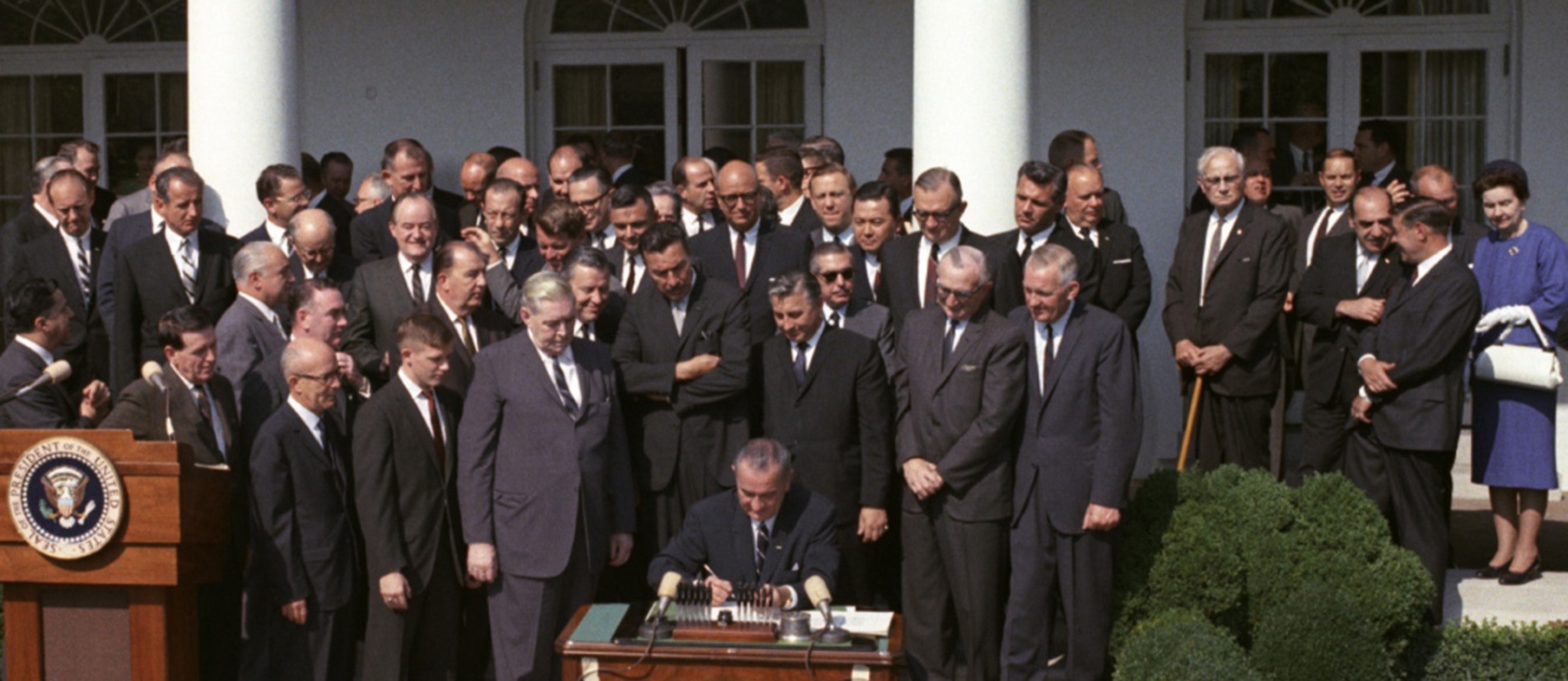
Consider next what conflict confers. In America, citizens do not accept an act of Congress because it is correct—many will continue denying that it is long after its passage. They accept it because they recognize the authority of the institution that produced it, and they recognize that authority because they, through their elected representatives, had a meaningful opportunity to take part in the process that made it possible. In that process, lawmakers had a chance to show up, make their case, offer amendments, try to persuade their colleagues, and negotiate a compromise when they realized they couldn’t get 100 percent of what they wanted at the debate’s outset. Even the losing side in a debate can live with the result when they had a meaningful opportunity to participate. It was precisely this kind of conflict which made possible landmark legislation like the Civil Rights Act of 1964, the Voting Rights Act of 1965, and virtually all of the major legislation in the 1960s and 1970s.
Despite the innovations in party leadership implemented by Johnson, Mansfield, Dirksen, and Byrd, majority and minority leaders did not assume a more centralized role in the legislative process until the 1990s and early 2000s during the tenures of men like George Mitchell, Harry Reid, Bob Dole, and Mitch McConnell. In addition to facilitating procedural decision-making like the leaders before them, these leaders now played a central role in developing and managing the substance of their party’s agenda inside the Senate. They also assumed a larger role in the development and implementation of each party’s communications strategy outside the Senate. For example, both parties formed new communications operations within the official leadership structure during the 2000s in order to respond rapidly to claims made by the other party and to facilitate the development of a unified party message. Members are now equipped with talking points covering controversial issues developed by the party leadership prior to returning to their states for long recesses.
A process that shuts lawmakers out rarely earns the assent that makes a decision durable.
The nature of issues on the congressional agenda involves party leaders with the development and management of the substance of their party’s legislative program in the Senate. For example, issues such as climate change and comprehensive health care reform frequently transcend committee jurisdictions and complicate the committee referral process. Climate change legislation considered in the 110th Congress involved the Committee on Energy and Natural Resources and the Environment and Public Works Committee. Health care reform in the 111th Congress involved the Committee on Health, Education, Labor, and Pensions and the Finance Committee. In both cases, the majority party leadership had a central role in combining the versions produced by each committee in a way that would ensure the support of the largest number of Democrats. Such a role inevitably involves party leaders in the substantive side of decision-making. Party leaders have become increasingly involved in their colleagues’ campaigns. They attend fundraisers on their behalf, helping to raise money. Leaders also maintain large political action committees and give generously to their colleagues. On occasion, leaders may even intervene in primary elections to influence the race directly.
Party leaders may also utilize committee assignments to induce support from particular members. The Democratic and Republican leaders both play an influential role in this process. As already noted, the Republican Conference adopted rules to go into effect in the 109th Congress that would allow the Republican leader to fill half of the vacancies of A committees at the beginning of a Congress. The only limitation was that every member was guaranteed to receive two A committees. This gave the Republican leader considerable leverage over new and returning members. The Democratic leader also has significant influence over committee assignments. Committee vacancies are filled by the Democratic Steering and Outreach Committee, of which the Democratic leader is one member. Nevertheless, he appoints its chairman and members and the Democratic Conference perfunctorily ratifies his decisions.
Limiting that participation takes away any reason for lawmakers—and their constituents—to accept the outcome. Even in cases where an important bill written secretively behind closed doors with little input from rank-and-file lawmakers and presented to them as a fait accompli becomes law, the process used to advance the legislation doesn’t resolve the underlying disagreement. And a process that shuts lawmakers out rarely earns the assent that makes a decision durable—so the dispute it papered over doesn’t end. It resurfaces later, or it migrates somewhere else.
That is the paradox of today’s Congress. Party leaders have acquired extraordinary control over the legislative process at the very moment the institution has become less able to resolve major disputes and pass significant laws. The two facts are connected. The more leaders try to suppress conflict to make legislating predictable, the less information the process generates—and the harder legislating becomes. When a controversial bill moves through the legislative process today, it is usually negotiated in advance by leaders and a handful of members behind closed doors and unveiled at the last minute as a take-it-or-leave-it proposition. Floor debate is perfunctory, and amendments are restricted. The process is engineered in advance to be frictionless. It can still shove a bill across the finish line, but it cannot settle the conflict underneath it, which is why lawmakers have the same fights year after year.
No other part of the federal government can perform Congress’s role. Administrative agencies bring expertise to carrying out the law, and courts bring legal authority to resolving disputes that arise under it. Neither can bring representatives of a divided people together as political equals to settle their differences through persuasion, negotiation, and compromise. So, when Congress declines the task, the conflict does not subside. It moves somewhere else—to presidential elections, to the regulatory process, to the courts, and into a political culture in which every election feels existential because capturing the government looks like the only remaining way to stop the other side. The country does not get less conflict. It gets conflict without the institutions designed to turn it into legitimate decisions.
Lawmakers can’t compromise on controversial issues that divide Americans while refusing to participate in the deliberative and free-wheeling process that makes it possible in the first place. For years, lawmakers have tried to insulate the House and Senate from political conflict so they can legislate. If they want Congress to work, they will have to do the opposite—and let it fight.







 zpostcode
 Recruit
 weather
 mreligion
 Yellowpages
 sport
sport constellation
 shopping
 name
name game
game directory
 literature
 Word
Word tour
tour furnish
 Lottery
 tftnews
 lyrics
 News
News digital
 car
car dir
dir Edu
Edu Finance


