



During a recent lecture at Loyola University New Orleans, Michael Novak argued that for centuries individuals have been asking the wrong questions. Up until around 1776, he said, people inquired, “What is the cause of poverty?” Novak suggests they should have been asking what Adam Smith asked—that is, “What is the cause of the wealth of nations?” Or in other words, why are the rich rich?
In Personal Character and National Destiny, Harold B. Jones, Jr. takes up Smith's question and proposes that a rise in the “need for achievement” leads to a rise in economic progress. Jones delves into the historical continuum of the rise and fall of nations to show the factors that lead to economic prosperity. Far from conducting a typical neo-classical economic study that uses numerous charts, graphs, and tables, Jones uses a person-centered approach filled with historical backgrounds and case studies of real individuals. Those people who are achievement-oriented “feel that they must be in control of their lives.… They do not expect to advance by demanding more from 'society,' but by demanding more from themselves.” A nation filled with these types of individuals can expect prosperity.
In Chapter 3, titled “The Appearance of Character,” Jones makes a fascinating parallel between the Rule of Saint Benedict and the Protestant work ethic. Benedict of Nursia, in reforming monasticism, proposed the three disciplines of poverty, chastity, and obedience. Each monk regarded his specific job as a mandate from God and as a means to personal holiness. Since the Rule did not allow the monks to indulge in the fruits of their labor, they produced more than they consumed and gradually accumulated wealth. Similarly, the Protestant reformation brought about a renewed sense of individual work ethic. Religious leaders emphasized the importance of time management and the fulfillment of ordinary daily activities, including business ventures. In doing so, a person was fulfilling God's calling. German sociologist, Max Weber, saw the appearance of a strong work ethic as “the first step in the creation of petitive economy.”
Self-reliance, faith, honesty, perseverance, and victorious achievement were the cornerstone beliefs for early American settlers. They departed Europe in hopes of more freedom, opportunities, and a better life. These brave men and women did not expect “hand outs” upon arriving to a new homeland and instead embraced the challenge of providing for themselves. American heroes like Benjamin Franklin and Horatio Alger, Jr. wrote about the attainment of personal character. In Poor Richard's Almanac Franklin testified that a life of industry and frugality were the way to climb up the social ladder, while Alger captivated the nation through rags-to-riches tales of Andrew Carenegie and John D. Rockefeller. People believed that both the biggest roadblock and grandest highway to success lay in their personal initiative and work ethic. They acknowledged that life is a difficult journey and nothing good is gained without sacrifice.
By the turn of the twentieth century, America was a developing nation. Its standard of living largely increased due to new technologies brought about by the industrial revolution. These developments, however, began to corrupt the American psyche. Babies were born into a life of economic prosperity and missed out on the sense of character formation, self-sacrifice, and independence that was so much a part of their predecessors' success. In many ways, this new generation was spoiled. Jones says in Chapter 6, “[t]hey had been born fort, and the thought of fort terrified them.” A new generation of authors eventually “looked out on the world around them, discovered that beside its increasingly widespread abundance there remained a great deal of poverty, and decided that those who had created the abundance must be responsible also for the poverty.” Therefore, successful figures like Andrew Carnegie and John D. Rockefeller went from being hailed as heroes to being hated as villains. Many Americans bought into the zero-sum game fallacy (that is, the idea that the rich are rich because the poor are poor) promoted by intellectuals like Elbert Hubbard, Upton Sinclair, and John Dewey. Jones concedes that the rich were getting richer, but, as a result, the poor also were ing richer. The poor and middle class of the early twentieth century, for example, lived at material standards greater than the upper class of the eighteenth and nineteenth centuries. People failed to see that a person in a free society tends to amass wealth by making other people better off.
Over time, the achievement-oriented personality took a back seat to a new personality—the need for affiliation. The primary motivator no longer was success, but rather was the desire to be liked by others. John Dewey, a catalyst to this new mindset, advocated that “the individual is better conceived of as a product of his environment than of his own goals, effort, and thought.” In other words, being a part of a group and dependent on someone else bodes better than acting as an individual. The problem with Dewey's assumptions, Jones says, is anthropological in nature. If a person is strictly culturally conditioned by his or her surroundings, then he or she has no ability to rise above whatever malady may be present in those surroundings. The achievement-oriented individual (and Christianity I might add) prioritizes the dignity and freedom of the human person, not the munities in which a person might live. No one denies that environmental influences are important aspects for human development. But as Jones points out, the greatness of humanity lies in our ability to e obstacles and control our own destiny.
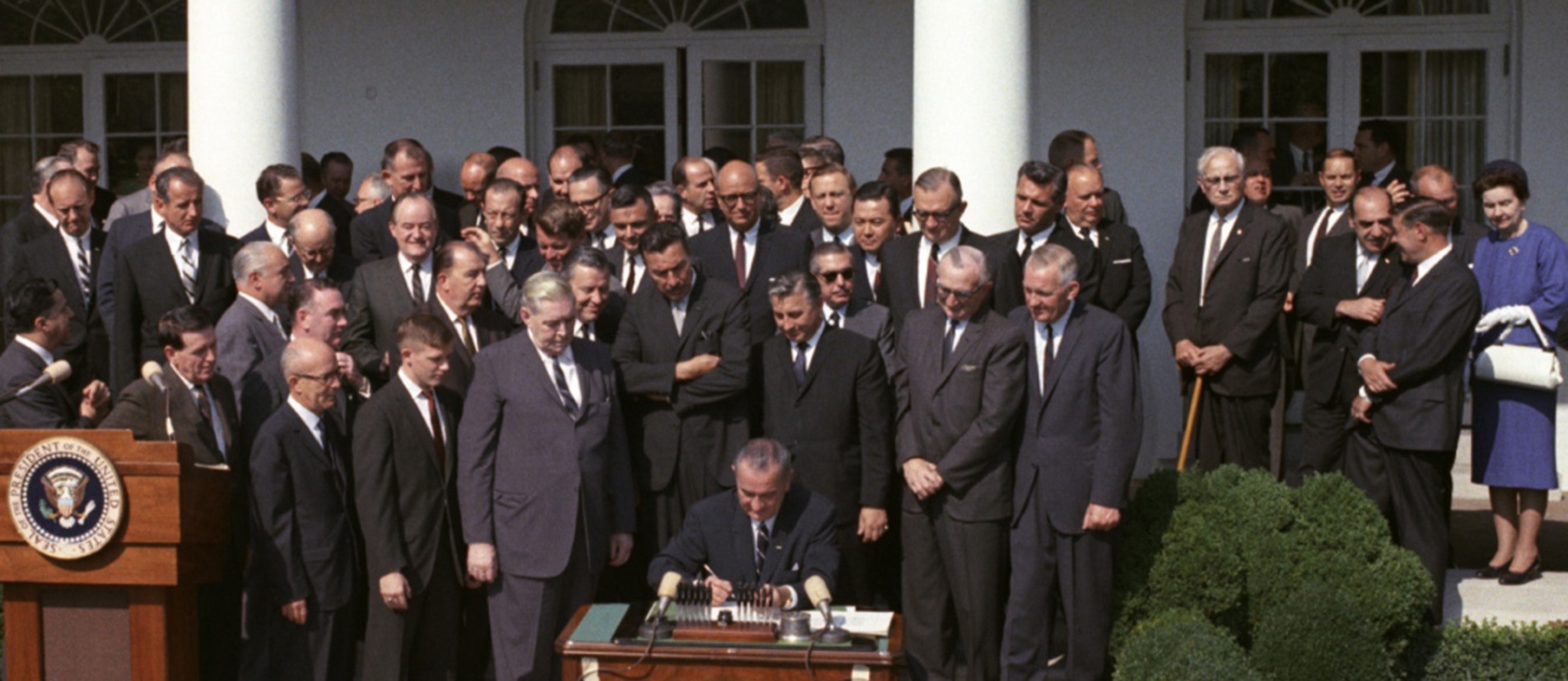
By the late 1920s, the affiliation mentality had e dominate. When the economy hit a recession and the stock market crashed, people looked outside themselves for answers to the country's economic downturn. Politicians began to run on platforms that promised to bring economic prosperity. In turn, voters elected officials who promised to “fix” the market through governmental intervention. Jones writes that Americans “elected leaders who claimed to do for them what they should have known they could do only for themselves. And in choosing such leaders, they took the first steps toward surrendering control of their own lives.” Beginning with president Hoover and continuing with presidents Roosevelt, Kennedy, Johnson, and Clinton, the United States has taken a form that resembles more of a welfare state than a free society. People today see prosperity as a right, something handed to them, instead of a goal that is earned through character formation and hard work. This “entitlement mentality” proves dangerous because it deters individual responsibility, creativity, and ingenuity, and it fosters a state of dependence.
Jones speculates that just as a religious revival transformed both England and America, a new religious revival is needed to revive twenty-first century America. Religious principles have the power to form habits, alter mindsets, and instill objective truths that testify to the greatness of the human person. Jones states that in the eighteenth century, people “saw for the first time that the way they lived and the way they raised their children had a lasting significance. They saw for the first time that the immediate was less important than the eternal. Bolstered by their newfound confidence, they set out to do great things in the world.” Could it be that by advocating the timeless truths of human freedom, responsibility, hard work, and religious faith we can help usher in a new wave of thinking for the twenty-first century? Jones would hope so.







 zpostcode
 Recruit
 weather
 mreligion
 Yellowpages
 sport
sport constellation
 shopping
 name
name game
game directory
 literature
 Word
Word tour
tour furnish
 Lottery
 tftnews
 lyrics
 News
News digital
 car
car dir
dir Edu
Edu Finance


