



Now seems to be an especially precarious time for American colleges and universities. In recent months, American institutions of higher learning have been confronted with near-constant disruptions that threaten both their short-term operations and long-term stability. From Congress’s passage of a new endowment tax to the White House’s revocation of millions in research funding, the Department of Justice’s announcement of investigations over alleged racial discrimination, and the publication of dossiers about the paucity of intellectual diversity among university faculty, American colleges and universities are under greater pressure than ever before.
To critics, many of these developments are welcome; to university faculty and administrators, however, they have enabled external forces to improperly intrude on their institutions’ core truth-seeking missions. What everyone agrees on is that the Trump Administration has driven many of these developments.
Conservatives in Washington now seek to leverage their newfound power over American higher education more decisively than ever before. But not-too-distant history reveals that reform efforts led principally by the executive branch may come with unintended consequences. Indeed, that is the lesson of one major clash involving race, religious liberty, and Bob Jones University that unfolded less than 50 years ago before the US Supreme Court. By recalling the circumstances under which Bob Jones University v. United States reached the Court, both conservatives and progressives will find lessons about the perils that accompany the aggressive use of executive power to reform American colleges and universities.
The Bob Jones Controversy
In 1975, the Carter Administration revoked the 501(c)(3) tax exemption of Bob Jones University, a fundamentalist (Protestant) institution located in Greenville, South Carolina. For decades, Bob Jones had prohibited Black students from attending the school and still prohibited interracial dating in the mid-1970s. The White House saw Bob Jones as part of a broader ecosystem of religiously affiliated primary and secondary schools that emerged in southern states in the wake of Brown v. Board of Education to circumvent court-ordered racial integration. To be sure, the schools in this system rejected accusations that they were motivated by racial animus, but the IRS insisted that so-called “segregation academies” posed such a threat to the promise of Brown that they should no longer be able to claim charitable tax exemptions. As the lawyer defending the IRS’s policy before the Supreme Court would later put it, “the Bob Jones case was the natural culmination of many years of hard work persuading the Supreme Court that school segregation based on race—at any level and in most any form—violated the fundamental principles of our nation’s governing documents.”
The leaders of Bob Jones University argued that its dispute with the Carter Administration was mainly about religion, not race, because the school’s ban on interracial dating was a divine command. Thus, when the university filed suit against the IRS, it not only claimed that the IRS lacked statutory authority to engage in civil-rights policymaking, but also argued that the IRS’s doing so violated the First Amendment. And while Bob Jones initially prevailed in federal district court, it was subject to an adverse judgment in the US Court of Appeals for the Fourth Circuit that was later appealed to the Supreme Court.
Bob Jones Inside the Reagan Administration
Although the Bob Jones litigation began during the Carter Administration, it continued after Ronald Reagan’s victory in 1980. With a conservative in the White House, the university and its allies attempted to persuade the Reagan Administration to reverse the IRS’s tax-exemption policy. To do so, they relied on specific claims about the university’s religious free-exercise rights, and channeled broader themes in late-twentieth-century conservative legal thought about the threat that unelected federal bureaucrats posed to individual liberty. In a May 1981 letter to the White House, in fact, Senators William Armstrong, Jesse Helms, and Strom Thurmond expressed deep concern about the IRS’s investigation of religious schools in the South, arguing that the agency was exceeding its statutory mandate to merely “collect[] taxes.” On this view, the IRS seemed to be exercising a civil-rights policymaking authority that Congress had never intended it to possess, and was instead attempting to leverage unilateral executive power to foist its vision of “equality” on the nation.
In the months that followed the senators’ letter about the “financial ruin of hundreds of church-owned schools … through the enforcement of bureaucratic fiat,” the Reagan White House thought carefully about when (and how) executive power should be used to exert pressure on private institutions like Bob Jones. Reagan had run his presidential campaign against what he called the evils of “big government,” and in June 1981, one White House staffer remarked characteristically that the IRS should “get out of this judgmental area that is unrelated to tax collection.” In reply, an attorney-advisor in the Treasury Department proposed that an “appropriate civil rights agency” might be better suited than the IRS to undertake investigations of allegedly discriminatory schools. And by the fall, the Supreme Court’s decision to grant certiorari in Bob Jones University v. United States seemed likely to resolve the scope of the IRS’s authority to do so.
From the Court to Congress
Once the Court granted certiorari in Bob Jones, the pressure on the Reagan Administration to reverse the IRS’s tax-exemption policy only grew, as members of the electoral coalition that had supported Reagan’s candidacy for the White House criticized the president for failing to deliver on his promise to protect religious liberty and to shrink the size of politically unaccountable federal agencies. And their expectation that Reagan would fulfill these promises was not entirely unreasonable given that then-candidate Reagan had courted traditionally Democratic Southern voters by, among other things, praising states’ rights. In an October 1981 letter to Solicitor General Rex Lee, Mississippi Congressman Trent Lott therefore sarcastically observed that the “last time” he had read the Constitution, “it provided that the Congress is to make the laws—not appointed officials.”
That the Reagan White House had not reversed the IRS’s tax-exemption policy seemed like a betrayal to many southerners, including and especially Lott.
Bob Jones continues to haunt our national debates over executive power and higher education reform.
Ultimately, the White House abandoned the IRS’s position in Bob Jones and requested that the Court dismiss the case as moot. This was in no small part due to the fact that legal advisors within the Reagan Administration were wary that, should the IRS prevail in Bob Jones, the Court’s authorization of very broad IRS authority would allow later (and likely Democratic) presidential administrations to use that authority imprudently. Indeed, when the Treasury Department announced that the IRS would “no longer revoke or deny tax-exempt status for religious, charitable, educational or scientific organizations on the grounds that they don’t conform with certain fundamental public policies,” it did not rationalize its position on First Amendment grounds. Rather, channeling broader themes in the Reagan Administration’s approach to legal interpretation, the Treasury Department argued that elected representatives in Congress, not unelected bureaucrats in an administrative agency, should determine the federal government’s tax exemption and civil rights policies.
But striking a balance between racial equality and religious liberty was anything but politically simple. Democrats and some civil rights organizations argued that Reagan had turned a blind eye to racial discrimination in education; more than one hundred lawyers in the Department of Justice signed a letter protesting the administration’s about-face.
The Reagan Administration responded to these concerns by proposing legislation to Congress that would more clearly authorize the IRS to revoke the tax exemptions of racially discriminatory schools. Administration officials stressed the dangerous precedent that the executive unilateralism of the Carter Administration would have set if maintained by the White House and green-lighted by the Supreme Court. In the future, one White House fact sheet warned, the IRS could have “announce[d] that it was revoking the tax exemption of schools which will not admit men, or hospitals which perform (or refuse to perform) abortions, or environmental groups which interfere with national energy policy.” “No administrative agency should have this power,” this fact sheet concluded, as “these judgments are fundamentally judgments for Congress.” Thus, the Reagan Administration took care to note that its proposed bill would not prohibit “discrimination based on sex, religion, or other matters,” for “whether a school may admit only women, or a church only admit those who follow its particular religious beliefs, is a much more difficult question.” And those, too, were certainly not questions that could be answered from the Oval Office or an administrative agency acting under ambiguous congressional authorization.
Even as the White House had withdrawn from Bob Jones, the litigation proceeded at One First Street after the Supreme Court appointed an independent attorney to defend the IRS’s former legal position. On behalf of Bob Jones appeared William Bentley Ball, a prominent First Amendment litigator who had by then argued, among other landmark cases, Wisconsin v. Yoder. Ball’s thinking about Bob Jones was described succinctly in a letter to one evangelical ally just days before oral argument. In this correspondence, Ball observed that Bob Jones did not raise legal questions about the propriety or wisdom of federal civil rights laws, but rather “profoundly involv[ed] the separation of powers,” the “unconstitutional delegation of legislative power,” and “whether all religions in order to be tax exempt … must lock step their doctrinal practices with a non-congressionally enacted ‘federal public policy.’”
As conservatives in Washington contemplate how to leverage their newfound power over American colleges and universities, they ought to proceed cautiously.
And at least some at the Supreme Court came to oral argument in Bob Jones with a similar view that the litigation fundamentally concerned the scope of executive power. In a memorandum for Justice Lewis F. Powell prepared shortly before oral argument, for example, one law clerk wrote that the type of “broad agency discretion” that the IRS claimed should be approached skeptically, especially when “the agency is not a regulatory agency given a mandate to promote the ‘public interest,’ but an agency created for the purpose of collecting tax revenues.” “Critical questions of public policy should be decided by Congress, not by agencies—and in particular not by the IRS, whose expertise lies in tax policy, not race-discrimination law,” the memorandum observed (and on top of which Justice Powell added annotated emphasis).
In a much-debated 8-1 decision, however, the Court ultimately ruled otherwise, reasoning that the IRS did not exceed its congressional authorization when it determined that Bob Jones was not a “charitable” institution and did not interfere unconstitutionally with Bob Jones’s religious free-exercise rights.
The Legacy of Bob Jones
Today, most Americans would find the bottom-line holding of Bob Jones unremarkable. In fact, in 2008, even the university officially apologized for embracing “the segregationist ethos of American culture” instead of “the principles and precepts of the Scriptures.” But the Court’s decision in Bob Jones becomes somewhat more difficult to defend when inspected closely. As two legal scholars presciently wrote in the Supreme Court Review shortly after the decision was handed down, the reasons that the Court articulated for its holding seemed unlikely to “withstand scrutiny,” and might instead “haunt and discomfit future cases.”
They were right: Bob Jones continues to haunt our national debates over executive power and higher education reform, for as Shep Melnick has written in these pages, attempting to remake American colleges and universities in the executive branch’s image is always perilous business.
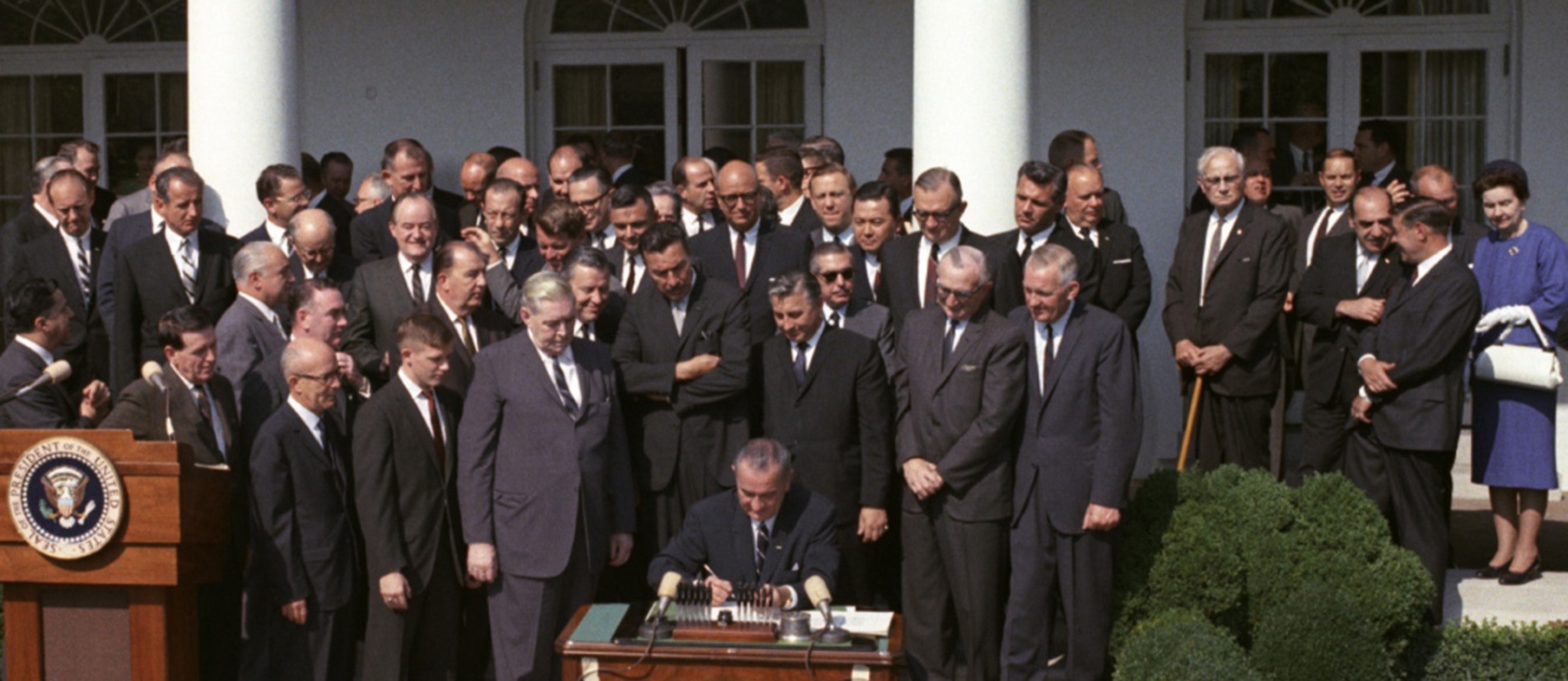
For progressives, the legacy of Bob Jones is one of irony. When the Carter Administration’s IRS took action against Bob Jones and other racially discriminatory schools to advance the laudable goal of racial equality, it did so not by turning to Congress and attempting to build the type of broad-based political coalition that enabled the 1964 Civil Rights Act to be such a remarkable triumph. Instead, the Carter Administration reinterpreted a preexisting statutory provision to delegate to the IRS broader authority than, in fact, Congress had likely sought to delegate when it enacted Section 501(c)(3) of the Internal Revenue Code. This choice of executive unilateralism created serious mistrust of the federal government among millions and inflamed longstanding fears of rule by executive fiat.
More recent presidential administrations have continued in the same direction. As Melnick noted in a 2023 working paper, for example, the Obama Administration’s Department of Justice issued more “Dear Colleague” letters than all previous presidential administrations combined to radically reshape the effect of several federal civil rights laws on the operations of American colleges and universities. When Donald Trump was inaugurated as president in 2016, these letters were rescinded or replaced, making whatever temporary triumphs they had seemed to achieve in such areas as racial equality on campus ultimately pyrrhic victories.
Perhaps worse still from a progressive standpoint, the precedent set by such examples of presidential education reform laid the groundwork for conservatives, once elected, to use the executive authority expanded by progressives to advance far different policy objectives. By way of example, consider the Trump Administration’s efforts to strip Harvard University and several other elite Ivy League institutions of their tax exemptions for alleged racial discrimination (among other alleged violations of federal civil rights laws). As has been reported, President Trump has predicated these threatened revocations on the fact that institutions like Harvard are no longer acting in the “public interest,” which appears to be a nod towards what the Supreme Court in Bob Jones termed “public policy.”
Although there is widespread agreement that reform in American higher education is needed, and that observers across the political spectrum can find some things to agree with in the Trump Administration’s recent moves, too aggressively wielding executive authority to pursue higher education reform might hamper the White House’s ability to make its reforms last. Most obviously, one president can undo another’s reforms with the stroke of another’s pen—a move with which President Trump is himself personally familiar after revoking several prior Democratic presidents’ “Dear Colleague” letters.
But the precarity of presidential education reform counsels against executive unilateralism for a second reason: the downstream effect on everyday Americans’ relationship to the federal government. As Ross Douthat has argued, choosing to embrace executive unilateralism instead of legislative negotiation, persuasion, and compromise will undermine the Trump Administration’s ability to build the types of broad coalitions necessary to create lasting change. So, as conservatives in Washington contemplate how to leverage their newfound power over American colleges and universities, they ought to proceed cautiously. In the long run, pyrrhic presidential education reform will ultimately please no one.








 zpostcode
 Recruit
 weather
 mreligion
 Yellowpages
 sport
sport constellation
 shopping
 name
name game
game directory
 literature
 Word
Word tour
tour furnish
 Lottery
 tftnews
 lyrics
 News
News digital
 car
car dir
dir Edu
Edu Finance


