Home
/
RELIGION & LIBERTY
/
At the Heart of Every Fall
Aug 14, 2026 7:09 PM

  Weekend, July 6, 2024

  At the Heart of Every Fall

  Meanwhile, Peter followed him at a distance and came to the high priest’s courtyard. He went in and sat with the guards and waited to see how it would all end. (Matthew 26:58 NLT)

  Peter had no idea that a storm was brewing. He never realized that his world was about to change within minutes.

  Jesus was praying in anguish in the Garden of Gethsemane. The Bible tells us He “was in such agony of spirit that his sweat fell to the ground like great drops of blood” (Luke 22:44 NLT).

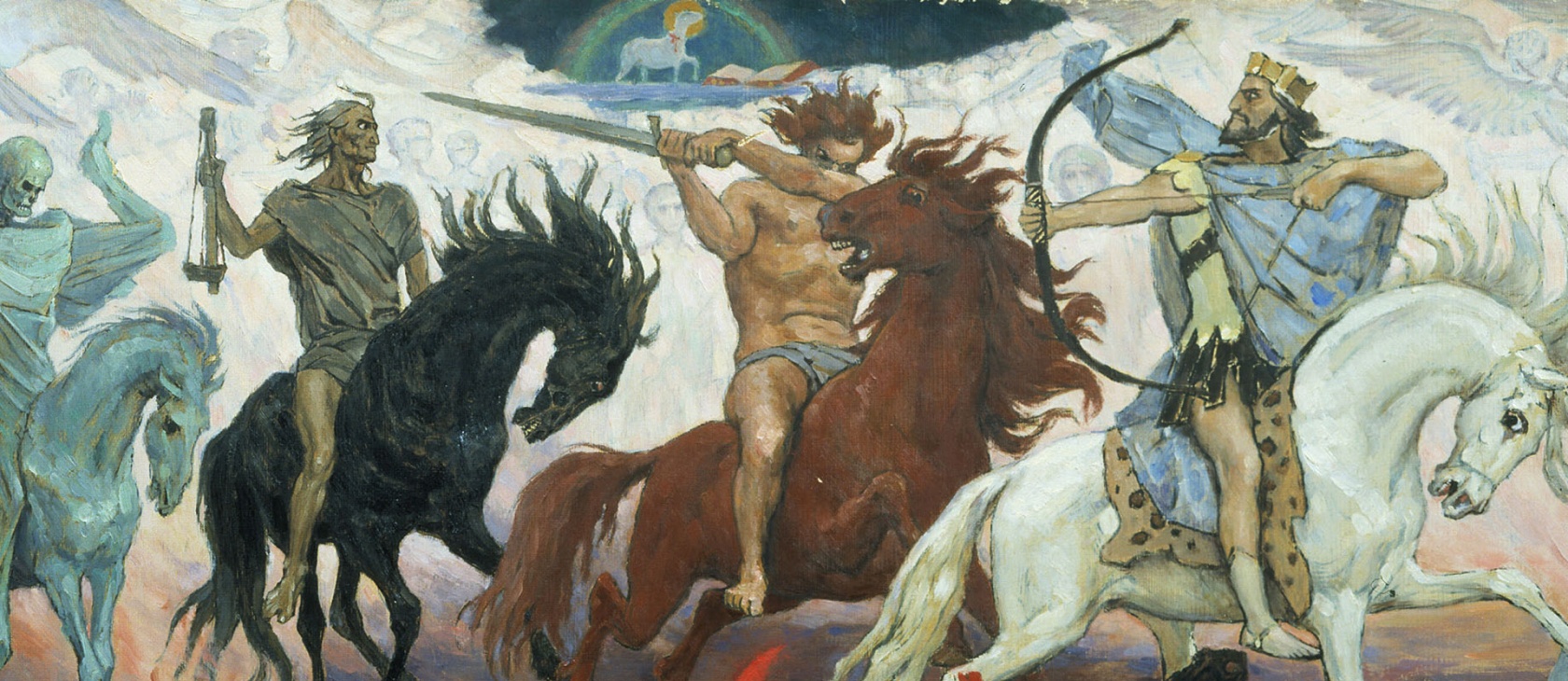
  Then along came Judas Iscariot, followed by the temple guard and Roman soldiers with spears, shields, swords, and torches. There was one very zealous guy leading the charge: Malchus, the servant of the high priest.

  So, Peter pulled out a sword, took a swipe, and cut off the man’s right ear. Peter probably was trying to cut off his head. But he was a fisherman, not a swordsman.

  Then Jesus told him to put away the sword, saying, “Those who use the sword will die by the sword. Don’t you realize that I could ask my Father for thousands of angels to protect us, and he would send them instantly? But if I did, how would the Scriptures be fulfilled that describe what must happen now?” (Matthew 26:52-54 NLT).

  Peter got things turned around. He was sleeping when he should have been praying and fighting when he should have been surrendering.

  As for Malchus, Jesus healed him. The last miracle of Jesus was healing the ear of the man who came to arrest Him. That showed the Lord’s love to the very end.

  Sometimes, like Peter, we forget to pray. And failure to pray actually can be a sin. Sin isn’t just breaking a commandment, though it includes that. There is also the sin of omission. James 4:17 reminds us, “Remember, it is sin to know what you ought to do and then not do it” (NLT). And 1 Thessalonians 5:17-18 says, “Never stop praying. Be thankful in all circumstances, for this is God’s will for you who belong to Christ Jesus” (NLT).

  Peter fell because he trusted in human effort instead of God’s power. He also followed Jesus at a distance. Matthew 26:58 tells us, “Peter followed him at a distance and came to the high priest’s courtyard. He went in and sat with the guards and waited to see how it would all end” (NLT).

  Take, for example, a marriage that is falling apart. A couple can cite various reasons, from money problems to parenting problems to a lot of arguments. But where it broke down was in their communication. Something happened. The friendship and companionship they built their marriage on isn’t what it used to be. And then other things found their way into a fractured marriage.

  The same is true of our relationship with God. We drift away from the Lord in closeness. We’re no longer starting the day with Bible study and prayer. We’re too busy doing other things. Then other problems develop. And we find ourselves following Him at a distance.

  That is what happened to Peter. And this distance from the Lord in closeness and fellowship is at the heart of every fall.

  Copyright © 2024 by Harvest Ministries. All rights reserved.

  Photo credit: ©Getty Images/g-stockstudioFor more relevant and biblical teaching from Pastor Greg Laurie, go to www.harvest.org

  and

  Listen to Greg Laurie's daily broadcast on OnePlace.com.

  Watch Greg Laurie's weekly television broadcast on LightSource.com.

  In thanks for your gift, you can receive a copy ofBen Born Again's New Believer's Growth Bookby Greg Laurie

  Cartoon companions Ben Born Again and YellowDog teach kids how to read the Bible, how to pray, how to know the will of God, how to resist temptation, and much more in this engaging resource written for children. A copy will be sent to you for a gift of any amount to Harvest Ministries this month.

  Click here to find out more!
Comments
Welcome to mreligion comments! Please keep conversations courteous and on-topic. To fosterproductive and respectful conversations, you may see comments from our Community Managers.
Sign up to post
Sort by
Show More Comments
RELIGION & LIBERTY
Founding a Republic of Letters
Beyond Tenebrae: Christian Humanism in the Twilight of the West Bradley Birzer | Angelico Press | 2019 | 258 pgs Bradley Birzer’s Beyond Tenebrae: Christian Humanism in the Twilight of the West recounts the narratives of the men and women of the previous century who dared to embrace the “permanent things.” In an age where confusion reigns about the most basic of human assumptions, Birzer writes of those who sought permanence. Beyond Tenebrae follows the pattern of Russell Kirk’s...
The antidote to fear
What differentiates a Christian view of the environment from a secular one? Too often, even confused Christians don’t know. Reading putatively faith-based attempts to address the environmental debate often leaves one none the wiser. Many writers simply recycle the same premises, and conclusions, as secularists, sometimes tacking on Bible verses which otherwise seem not to affect the substance of their thought. Others make a tentative start by basing their discussion of Christian environmental stewardship on a citation of the...
President James A. Garfield
The life of President James Garfield, one of the nation’s forgotten presidents, exemplifies the transformational power of hard work, classical scholarship, and sound economics. James Abram Garfield was born on November 19, 1831, in Cuyahoga County, Ohio. His father, Abram, died fighting a fire that threatened their farm when James was a toddler. Although Abram’s widow, Eliza, raised their children in poverty, James’ genius shone so early that she insisted he focus on his studies. Garfield paid for tuition...
Renewing the face of the Earth
The most reported remarks from September’s United Nations Climate Action Summit in New York were not from a scientist, an economist, or any of the world leaders present. They were the words of 16-year-old Greta Thunberg: “People are dying. Entire ecosystems are collapsing. We are in the beginning of a mass extinction.” Her remarks were passionate, full of anger, frustration, and fear. They were not grounded in any sound science, economic analysis, or political realism. They announced a sort...
Pope Francis ties foreign aid to corruption
Much has been written about the unintended consequences of foreign aid flowing from the West to developing countries. Economists such as Dambisa Moyo, William Easterly, and Angus Deaton have mented on the downright pernicious effects of government-to-government aid. Not too long ago, a new voice joined this distinguished chorus of foreign aid critics: Pope Francis. During his recent visit to the East African nation of Mozambique, Pope Francis made ments which suggested a link between foreign aid and corruption....
The myth of the young entrepreneur
When I tell people the average of age of entrepreneurs is not in their twenties but around 40, they are surprised. Yet it is true; the young success stories that capture media attention, like Mark Zuckerberg, are outliers. The idea that most entrepreneurs are young is a myth. Once we think about it, it makes sense that people with experience, business skills, and insight would be more likely to start a business than a twenty-something with fewer skills and...
The faith of the secularist
This Life: Secular Faith and Spiritual Freedom Martin Hägglund | Pantheon Books | 2019 | 450 pgs In his newest book, Martin Hägglund turns religious faith upside down. This Life constitutes a full-scale denial of the transcendent – on any level of human perception – and a declaration that religion is “unnecessary, ”“boring,” and worst of all, obsessed with “eternity.” Hägglund finds this last feature particularly odious, because religious faith calls people’s attention away from the values that he...
Beyond the apocalypse
Getting serious about climate and conservation. The apocalyptic, “end of the world” story is a staple of popular culture. There seems to be an unlimited appetite for the quasi-religious unveiling (ἡ ἀποκάλυψις in the Greek) of humanity’s inexorable doom and hellish end. Maybe part of that appeal is the mainstreaming of science fiction, once a pulp subgenre and available now wherever movies, videos, and books are digitally streamed. Or maybe the culture is just mired in childish fantasies. “The...
Editor's Note: Winter 2020
“Almighty God hath created the mind free,” wrote Thomas Jefferson. Others believe that leaves too much to chance. The desire to shape news coverage, and the proper response, frames this issue. When “the owners of these platforms suppress or delete content they deem objectionable,” writes Acton Institute co-founder Rev. Robert Sirico, this should not properly be called censorship but “censureship.” This insight should guide all discussions on this topic. Ed Morrow notes how search engines disadvantage right-of-center news and...
Earth’s greatest resources: human creativity and economic freedom
In 1980, despite slow and steady progress in the race against poverty and human immiseration, 44 percent of the world’s population still lived in extreme poverty. In 1820, that number was 94 percent. Despite these massive economic gains, many were worried about the future of planet Earth. In 1980, two of the most significant thinkers of their day, biologist Paul Ehrlich and economist Julian Simon, brought their insights to bear on the problem. These academics came from vastly different...
Related Classification
Copyright 2023-2026 - www.mreligion.com All Rights Reserved