



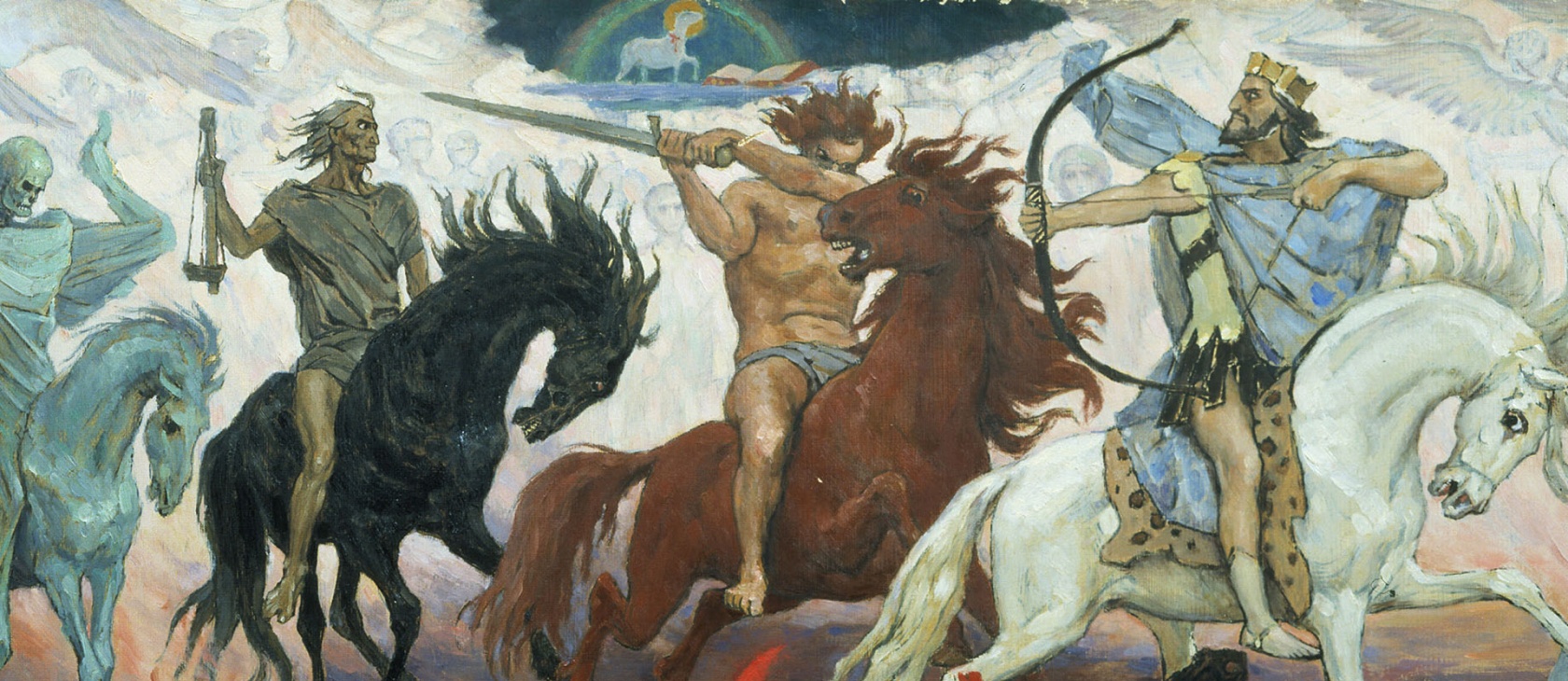
In his 1889–90 fictional portrait of aspiring Victorian artists grasping for success, Henry James observed that novels of the age were “large, loose, baggy monsters, with their queer elements of the accidental and the arbitrary.” Science, technology, and imperial expansion encouraged Enlightenment thinkers and popular broadsides to rhapsodize about the steady march of “progress” and the supposedly rational, modern subjects beating its drum. Nevertheless, beyond the edges of Europe’s known world, mapmakers sketched a bubbling abyss brimming with serpents and devils. The friendly figurines of princes, monks, soldiers, and peasants plotted on maps would dare not tread into the unknown. There lie monsters, which the novel, as a form, was perfectly suited to capture in full color. But the “monstrous” was never some far-flung figure. Monsters lived at home.
“Was I then a monster, a blot upon the earth, from which all men fled, and whom all men disowned?” So utters rogue scientist Victor Frankenstein’s “creature” in Mary Shelley’s Frankenstein; or, The Modern Prometheus, published in 1818. Shelly’s work explores the power and hubris of scientific knowledge, the ethics of experimentation, what we would call transhumanist possibility today, and the contours of consciousness itself. Few works of fiction have had a greater influence on the history of film and, perhaps, the modern cultural imagination. Frankenstein’s Creature appears in some form in at least 175 works of film from 1910 through 2023. For all the fanfare, few of Frankenstein’s manifestations on the silver screen hold a candle to Shelly. It is perhaps telling that for all the true cinephile, Frankenstein’s most famous face is probably still that of Boris Karloff in 1931.
Enter Poor Things, the latest film by the Greek director Yorgos Lanthimos. Lanthimos’s film retells Frankenstein through the female figure of Bella Baxter, played by Emma Stone. More than most fodder in the monster genre, Poor Things probes the viewer with hefty philosophical questions: Are science and technology component parts of something we might call “progress”? If we grant that noble dream of progress conceptual grounds, who decides what counts as its component parts? How, when we inevitably stray from our aspirations and designs, do we get back on track?
Viewers are introduced to Baxter as a grown woman with a childlike mind. Baxter is the ward of renowned surgeon Godwin Baxter, whose face heaves with heavy prosthetics of monstrous scars but is no less emotive thanks to the masterful maneuvers of Willem Defoe. The circumstances that brought Bella to Godwin, whom she calls “God,” remain, for a while, mysterious. (Not coincidentally, Mary Shelley’s father was William Godwin, a well-regarded philosopher in eighteenth-century England.)
In dialogue, we learn that Godwin’s father conducted cruel experiments on his son. In an early scene, Godwin recalls how his father once “pinned my thumbs into a small iron case to see whether he could retard the growth cycle of bones.” Defoe delivers the sentence without emotion, as a record of scientific knowledge. His companion is horrified, but Godwin, having seemingly accepted his suffering as a necessary sacrifice in the pursuit of science, merely concludes, “He was a man of unconventional mind.”
In time, Godwin reveals his actions and motives to be that of an ambitious but misguided scientist. As Godwin admits to Max McCandles, one of his medical students played by a dewy-eyed Ramy Youssef, the woman viewers were introduced to as Bella was a pregnant woman from England’s high society who committed suicide by leaping off a bridge. When the woman washed up, Godwin was nearby. Though the woman died in the trauma, the baby survived—and Godwin replaced the brain of the deceased with the brain of the unborn. Thus, Bella Baxter was born in a Victorian laboratory in a new twist on the creation of Frankenstein’s Creature.
Followers of Lanthimos will find his latest film a new venture into familiar territory: intimate psychological portraits of people swimming against or submitting to the currents of grand human tragi-comedy. Readers and viewers may be most familiar with Lanthimos’s unexpected 2015 absurdist hit, The Lobster, a dystopian romantic comedy starring Colin Farrell and Rachel Weisz in a race to find love or be transformed into animals. Older work, like Dogtooth (2009), depicts the compounding effects of a bizarro suburban world created by deranged humans. Streaks of the absurd touch Poor Things, too, as the plot seamlessly transports viewers through scenes featuring classically Victorian facades, steampunk laboratories, Mediterranean locales reimagined as colorful playgrounds, a Parisian brothel featuring picaresque window frames in the shape of a penis, and an impressive English estate that would just as well draw Barry Keoghan’s envious gaze in Saltburn (2023). Scene-by-scene, Bella Baxter stands out: insatiably curious, unmistakably colorful, or crowned with a ruffled collar, always searching.
As today’s discourse on AI, automation, and new digital technologies grows with each day, it often enforces unhelpful dichotomies between science and technology on the one hand and humanity on the other.
The film depicts Bella’s discovery of the world—its pleasures, and a good deal of its pain. As she says early on, after Godwin fabricates a story about her parents dying as explorers in South America, “Explorer blood’s in me.” Bella’s exploring begins with compulsive sex and misguided romance, first from an innocent and awe-struck McCandles, then from a philandering, epicurean, and ultimately controlling lawyer, Duncan Wedderburn (played by a whimsical Mark Ruffalo), and then General Alfie Blessington, the husband of the woman who was Bella (brought to life with menacing effect by Christopher Abbott).
In more ways than one, Bella ends up on top. By the film’s end, Bella replaces Godwin as a paradigmatic scientist pursuing questions on the frontiers of human understanding.
Some viewers and critics expressed concern about the way the film represents mental health and disability, childhood psychology, consent, and sexuality and sex work in its characters. As a critic in Vulture wrote, “IsPoor Thingsthe Best We Can Do for Female Sexuality Onscreen?” Or as a columnist in The Guardian asked, “Is Poor Things a feminist masterpiece—or an offensive male sex fantasy?” These are reasonable questions to ask of specific scenes. At the start of the film, for example, McCandles refers to Baxter as a “very pretty retard.” In other scenes early on, Bella’s sex drive can appear to be her only driving motive.
Critics cannot help inserting themselves in a work of art, but the scenes and themes viewers interpret as problematic are unmistakably not intended to reify particular norms about gender, sex, or disability. They are pivotal plot points in Bella’s character arc. Bella draws from experience to build critiques: critiques of how Godwin treated her mind and how other men coveted her body.
As Bella “ages” mentally and develops an intelligence to be reckoned with, she becomes a ruthless interrogator of the conventions and individuals who seek to control her. This is a quintessential quality of the Creature’s self-awareness in Frankenstein. In fact, Shelley’s father, William Godwin, wrote extensively on “reason” as the faculty humans exercised to interrogate accepted categories, hierarchies, and ideas. In his 1793 Enquiry Concerning Political Justice, Godwin wrote, “Where I make the voluntary surrender of my understanding, and commit my conscience to another man’s keeping, the consequence is clear. I then become the most mischievous and pernicious of animals.”
Victorian novels like Shelley’s Frankenstein, Charles Dickens’s The Old Curiosity Shop, and Lucas Malet’s The History of Sir Richard Calmady grappled with the appearances of the different, deviant, and devilish in European metropoles. As Andrew Mangham argues in We Are All Monsters, the nineteenth-century’s fascination with monsters was not merely special curiosity or novelty alone. Rather, the monstrous was understood by scientists, physicians, naturalists, surgeons, taxonomists, and “men of science,” such as Erasmus Darwin or Godwin Baxter in Poor Things, as the product of the ceaseless change in the natural world. Bella’s arc from bumbling experiment to masterful scientist suggests social evolution and, perhaps, progress.
At their best, scientific practice, technological design, and academic pursuit are just more rigorous ways to inquire about the human condition, to grapple with our corporeality and consider what it means.
If some writers criticized Poor Things as regressive, others praised it as a new representation of female liberation. It was not the only film to receive such praise. Similar comments were made about Greta Gerwig’s Barbie in the summer. In turn-of-the-century steampunk laboratories and Mattel’s plastic pink world wrought to life in human form, viewers witness women discovering the world on their own terms. Baxter, bursting with curiosity, cannot be content to live within the parameters of someone else’s experiment, and eventually supplants her creator as a paragon of scientific inquiry. As Rachel Altman observed in The New Atlantis, Barbie quickly bursts the transhumanist bubble of Barbieland, where beings remain unblemished for eternity, by choosing the frail but wonderful beauty of the human form over plastic paradise. Though Barbie walloped Poor Things at the box office, it is telling that, at the Oscars, Baxter’s tale left Barbie’s riffing on “Kenough.”
Tallying up the golden statues, 2023 was something of a banner year for searching stories about the tools, ideas, and individuals who drive scientific and technological change. In their own ways, Poor Things and Oppenheimer invited viewers to consider weighty questions about the nature of progress.
As today’s discourse on AI, automation, and new digital technologies grows with each day, it often enforces unhelpful dichotomies between science and technology on the one hand and humanity on the other. Science and technology, especially since ChatGPT was unveiled in 2022, are discussed as if they were autonomous forces, agential beings driving at unknown ends. Technologists who cheer on the “acceleration” of scientific and technological progress ironically erase their own efforts in catalyzing that change, to say nothing of the countless component parts, invisible labor abroad, abundant energy flows, and many government subsidies that make scientific and technological change possible. All too often, the rest of humanity appears in these discussions as excess matter, devoid of relevance and close enough to the dustbin of history.
Fortunately, science and technology are human inventions, guided by human hands. Their history is filled with frightening missteps, but the future of our relationship to science and technology is never a foregone conclusion.
Like Shelley’s Frankenstein, Poor Things reminds us that science, technology, and “Enlightenment” virtues like rationality are not necessarily opposed to wonderfully mysterious and even Romantic interpretations of the human condition. At their best, scientific practice, technological design, and academic pursuit are just more rigorous ways to inquire about the human condition, to grapple with our corporeality and consider what it means, and to contest those meanings with our fellow travelers in discovery—in Bella’s world and in ours, we should view anyone who takes a dictatorial approach to knowledge with extreme skepticism.
Near the end of Poor Things, Baxter asks her betrothed, Max McCandles, “Do you believe people improvable?” Max thinks yes, and replies that “as a human body can be cured of illness, so can men and women be cured of aspects.”Recognizing that improvement or progress is a category of human action and experience, perhaps even one worthy of emulation, is not the same thing as resigning ourselves to what someone else presents as progress. What I deem worthy of improvement will always be shaped by the culture of the community and society I live in, but only I can weigh and choose between competing alternatives.
It is only when we withdraw from the conversation, the contest of ideas about what counts as progress, that its shape morphs into something altogether unfamiliar. Bella remarks that, “In some ways, it would be a relief to be rid of my questing self.” The search for progress is never final, only iterative. Frustration is the inevitably bitter fruit of effort, but the steadfast commitment of the questing self, and the questing society, is to try, and try again.



 zpostcode
 Recruit
 weather
 mreligion
 Yellowpages
 sport
sport constellation
 shopping
 name
name game
game directory
 literature
 Word
Word tour
tour furnish
 Lottery
 tftnews
 lyrics
 News
News digital
 car
car dir
dir Edu
Edu Finance


