



Just over 100 days into President Joe Biden’s administration, whatever hopes we held out that he would govern as a moderate are gone. The president seems determined to transform American society from the top down. Candidate Biden promised national unity and the restoration of lawful government. President Biden has, thus far, given us budget-busting spending packages, interference in the courts, and a flurry of executive orders of dubious constitutionality. These are not just bad policies; Biden’s program strikes at the heart of self-government itself. Americans must be alert: We’re in the midst of a constitutional revolution.
President Biden’s legislative agenda is both dangerous and dishonest. The $1.9 trillion American Rescue Plan was sold to the public as a COVID-19 relief act, but less than 10% of that bill was directly devoted to fighting the virus. The vast majority of the bill was a payout to longstanding progressive constituencies. Bailouts for profligate state governments and insolvent pensions might be good politics, but they have nothing to do with stemming the pandemic.
The same applies to the president’s $2.3 trillion infrastructure proposal, the American Jobs Plan. “Infrastructure” is defined so broadly that it’s e an internet meme: “Everything is infrastructure!” When most Americans hear about an infrastructure bill, they think of things like roads, bridges, harbors, and airports. They don’t think of housing, climate change, and childcare, all of which the bill funds to the tune of billions of dollars. Biden is using infrastructure investment as an excuse to politicize the allocation of valuable capital.
Citizens’ vigilance may not be enough to fix things. But it’s the only option we’ve got left.
The president’s designs for the Supreme Court are even worse. Biden recently announced an mission for increasing the number of Supreme Court justices. Democratic legislators in both the House and Senate introduced a bill to expand the court from nine to 13 seats. It’s unclear whether Democrats seriously want to pack the courts or merely to bully the sitting justices into submission. While the former is particularly appalling, both are flagrant challenges to the separation of powers, supposedly an ponent of the American constitutional system.
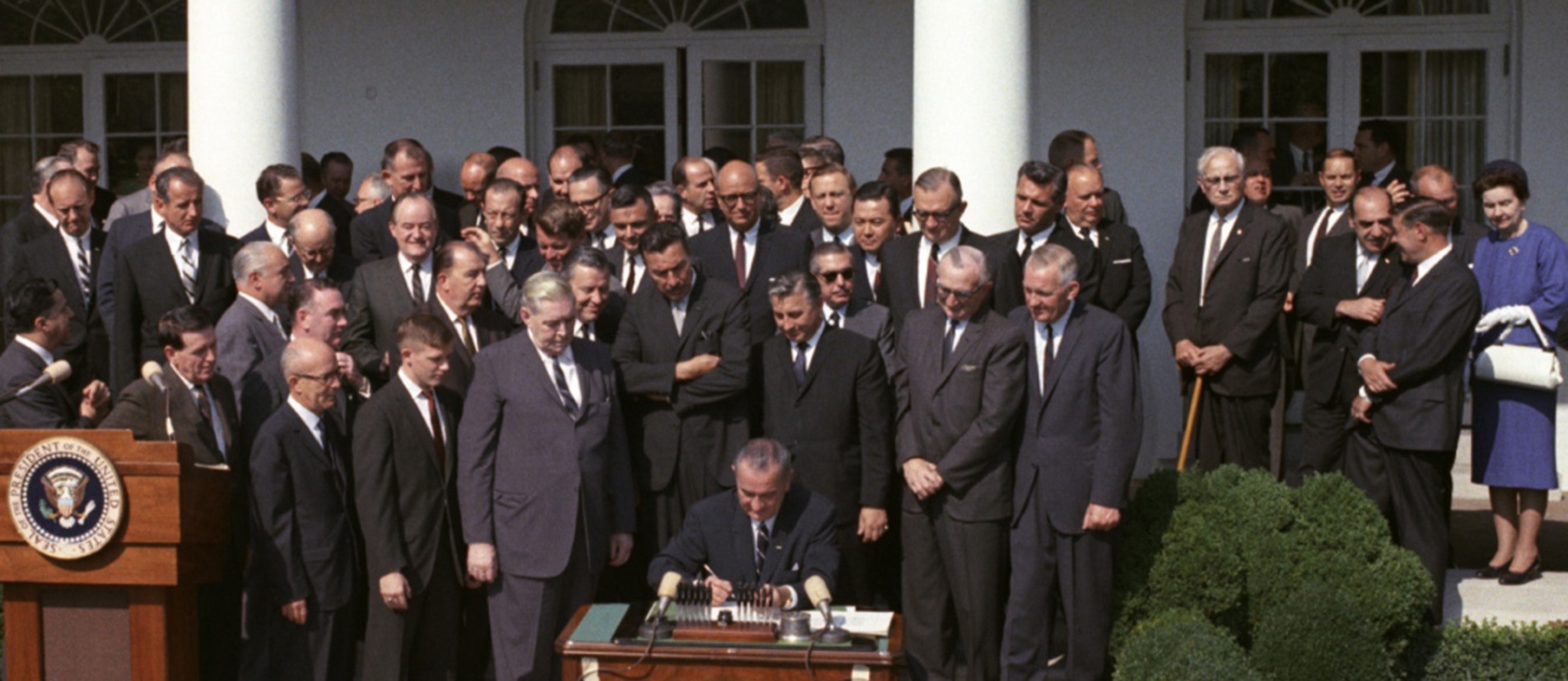
As for executive orders, Biden has acted as a de facto legislator, without any of the traditional checks on legislative processes. By April 15, the president signed more than 60 executive orders, a greater number than any president over the same period in their administrations: 23 of these specifically targeted the policies of his predecessor. When major policies can be reversed by presidential whim, the stability of American government suffers. Citizens won’t know what to expect from the state if dueling factions nullify each other’s policies every time one captures the White House. Furthermore, governance by executive fiat clearly usurps power intended to rest with Congress alone. This isn’t what the rule of law looks like.
While Biden’s actions are undoubtedly calculated to advance Democratic interests, it would be a grave mistake to regard these policies as mere partisanship. Instead, Biden’s executive overreach should be understood as a symptom of a systemic problem in American politics: The Biden administration is giving us a real-time view of constitutional drift. This has been an issue long before Biden, and in all likelihood will be a problem long after him. If we have any hope of preventing constitutional drift, we must understand how it works.
Constitutional drift refers to the tendency for de facto government to diverge from de jure government. In other words, it means there’s a widening gulf between the paper Constitution and the real constitution. The procedures and immunities enshrined in America’s governing charter no longer reflect the realities of political power. This is especially pernicious given Americans’ reverence for the Constitution and, hence, constitutional means for addressing government abuses. If citizens think the Constitution is one thing, whereas politicians know it’s something else, the people won’t be able to discipline those who govern them.
Americans sometimes have a hard time understanding constitutional drift because of their attachment to formal constitutionalism. We think the way to get lawful government is to write down a set of rules for rule-making – the Constitution – and then tell public officials to follow them. Unfortunately, this rests on a narrow and parochial understanding of constitutions. Philosophers of politics have been writing about constitutions for millennia. For Aristotle, a constitution meant the balance of forces among holders of political power, which determined how the state made decisions. On this view, all constitutions are de facto constitutions.
Prior to the Enlightenment, political philosophers would have regarded writing down a specific blueprint for government as silly. Either the formal constitution would match the informal constitution, in which case the formal constitution is redundant, or the formal constitution would not match the informal constitution, in which case the formal constitution is useless. Thus, the lacuna in Americans’ beloved formal constitutionalism: We mistakenly think we can make politics algorithmic. Unfortunately, power follows a logic of its own. We erred when we assumed the legislative branch would zealously guard its powers from the executive branch. In reality, Congress seems happy to fork over as much of its remaining prerogatives as the president wants.
Tragically, Joe Biden is a consummate constitutional politician, with a lower-case c. Those of us who dread the inevitable consequences of his policies must learn that plaints about unlawful government are full of sound and fury, signifying nothing to those who know first-hand that the real law is something quite different than we imagine. I, too, wish Congress were a meaningful policymaking organ, that elected officials exercised restraint in disbursing public revenues, and that the Ninth and Tenth Amendments were regarded as more than mere curiosities. If only wishing made it so.
How, then, can citizens participate in their government and hold it accountable? What we, the people, must learn is that the only way to anchor a drifting constitution is to punish those who set it adrift. This is the citizen’s role in a democratic republic. We aren’t supposed to be passive spectators of the latest Washington boondoggles. The willingness of citizens to impose costs on executive branch adventurers, as well as those who aid and abet them in Congress, is a crucial part of the American system. Unfortunately, our electorate has a habit of excusing political overreach when their team is in power. Until and unless a critical mass of voters proves itself willing to discipline politicians who do the wrong thing for the right reason, the Constitution will remain lost at sea.
It’s probably too late to restrain the forces President Biden has unleashed. Although it will be masked by the post-coronavirus recovery, the massive increase in the scale and scope of government will eventually cause political-economic sclerosis. “Only a crisis – actual or perceived – produces real change,” Milton Friedman warned. “When that crisis occurs, the actions that are taken depend on the ideas that are lying around.” This time, “the ideas that are lying around” better be more substantive than market liberalization. Economics is important, but it’s downstream from politics. We must prepare now to right the ship of state when the opportunity presents itself. The longer the constitution drifts, the harder it is to set it back on course.
F. A. Hayek famously extolled the virtues of a “constitution of liberty.” Because of constitutional drift, these constitutions are exceedingly hard to ordain or keep. Citizens’ vigilance may not be enough to fix things. But it’s the only option we’ve got left, and ordered liberty is always worth a try.








 zpostcode
 Recruit
 weather
 mreligion
 Yellowpages
 sport
sport constellation
 shopping
 name
name game
game directory
 literature
 Word
Word tour
tour furnish
 Lottery
 tftnews
 lyrics
 News
News digital
 car
car dir
dir Edu
Edu Finance


