Home
/
RELIGION & LIBERTY
/
The Hard Truth about Jesus’ Sacrifice
Mar 27, 2026 3:16 AM

  “He told them,‘My soul is crushed with grief to the point of death. Stay here and keep watch with me.’”(Mark 14:34 nlt)

  Haveyoueverfeltlonely?Haveyoueverfeltasthoughyourfriendsandfamilyhad abandonedyou?Haveyoueverfeltlikeyouweremisunderstood?Haveyoueverhad a hard time understanding or submitting to the will of God for your life? Ifso,thenyouhaveanideaofwhattheLordJesuswentthroughwhenHeagonizedat Gethsemane.

  The book of Hebrews tells us, “This High Priest of ours understands our weaknesses, for he faced all of the same testings we do, yet he did not sin.So let us come boldly to the throne of our gracious God. There we will receive his mercy, and we will find grace to help us when we need it most”(4:15–16 nlt).

  Thebook of IsaiahtellsusthatJesuswas“amanofsorrows,acquaintedwithdeepestgrief”(53:3 nlt).ButthesorrowHeexperiencedinGethsemaneonthenightbeforeHiscrucifixion seemedtobetheculminationofallthesorrowHehadeverknown andwouldaccelerateto aclimaxthefollowingday. TheultimatetriumphthatwastotakeplaceatCalvarywasfirst accomplished beneath the gnarled, old olive trees of Gethsemane. Jesus shared His agony with His disciples. “He told them,‘My soul is crushed with grief to the point of death. Stay here and keep watch with me’”(Mark 14:34 nlt).

  It’s interesting that the very word Gethsemanemeans “olive press.” Olives were pressed there to make oil, and truly, Jesus was being pressed from all sides that He might bring life to us.Idon’tthinkwecanevenbegintofathomwhatHewasgoingthrough.Isaiah53:5says, “But he was pierced for our rebellion,crushed for our sins.He was beaten so we could be whole. He was whipped so we could be healed” (nlt). That’s the hard truth of our salvation: Jesus had to suffer and die in our place. He had to endure the punishment that we deserved. He was crushed and beaten for our sake. He could have walked away, but He submitted to His Father’s will so that the plan of salvation could be accomplished.

  Hiscrushing and beating brought about your salvationandmine.BecauseofwhatJesuswentthroughatGethsemaneandultimatelyatthecross, wecancallonHisname.ThoughHis suffering and deathwereunfathomablyexcruciating,they were necessary for God’s ultimate goal.

  Maybeyou’reatacrisispointinyourliferightnow—apersonalGethsemane,ifyou will.Youknowwhat youwant, yetyoucansensethatGod’swillisdifferent.WouldyoulettheLordchooseforyou?Wouldyoubewillingtosay,“Lord,Iamsubmittingmywillto Yours.Notmywill,but Yoursbedone”? Youwillnever regretmaking thatdecision.

  Reflection question: How would you explain the hard truth about Jesus’ sacrifice to an unbeliever?

  Copyright © 2026 by Harvest Ministries. All rights reserved.

  Photo Credit:©GettyImages/BlackSalmon

  Greg Laurieis the pastor and founder of the Harvest churches in California and Hawaii and of Harvest Crusades. He is an evangelist, best-selling author, and movie producer. His latest film ‘Jesus Revolution,’ from Lionsgate and Kingdom Story Company, is now available on-demand worldwide.

  For more relevant and biblical teaching from Pastor Greg Laurie, go to www.harvest.org

  and

  Listen to Greg Laurie's daily broadcast on OnePlace.com and weekly podcast on LifeAudio.com.

  Watch Greg Laurie's weekly television broadcast on LightSource.com.

  In thanks for your gift, you can receive a copyof The Jesus Discoveries by Jeremiah Johnston

  Did Jesus really exist? Can we trust the Gospels? What does archaeology say about the resurrection? In The Jesus Discoveries, apologist and scholar Dr. Jeremiah Johnston unpacks 10 remarkable findings that support the New Testament and strengthen our understanding of who Jesus is. It’s accessible, engaging, and perfect for believers who want to be better equipped to answer tough questions with truth and compassion. Request your copy this month with your gift to Harvest Ministries.

  Click here to find out more!

Comments
Welcome to mreligion comments! Please keep conversations courteous and on-topic. To fosterproductive and respectful conversations, you may see comments from our Community Managers.
Sign up to post
Sort by
Show More Comments
RELIGION & LIBERTY
C.S. Lewis and the Apocalypse of Gender
From very nearly the beginning, Christianity has wrestled with the question of the body. Heretics from gnostics to docetists devalued physical reality and the body, while orthodox Christianity insisted that the physical world offers us true signs pointing to God. This quarrel persists today, and one form it takes is the general confusion among Christians and non-Christians alike about gender. Is gender an abstracted idea? Is it reducible to biological characteristics? Is it a set of behaviors determined by...
How Dispensationalism Got Left Behind
Whether we like it or not, Americans, in one way or another, have all been indelibly shaped by dispensationalism. Such is the subtext of Daniel Hummel’s provocative telling of the rise and fall of dispensationalism in America. In a little less than 350 pages, Hummel traces how a relatively insignificant Irishman from the Plymouth Brethren, John Nelson Darby, prompted the proliferation of dispensational theology, especially its eschatology, or theology of the end times, among our ecclesiastical, cultural, and political...
Creating an Economy of Inclusion
The poor have been the main subject of concern in the whole tradition of Catholic Social Teaching. The Catholic Church talks often about a “preferential option for the poor.” In recent years, many of the Church’s social teaching documents have been particularly focused on the needs of the poorest people in the world’s poorest countries. The first major analysis of this topic could be said to have been in the papal encyclical Populorum Progressio, published in 1967 by Pope...
Up from the Liberal Founding
During the 20th century, scholars of the American founding generally believed that it was liberal. Specifically, they saw the founding as rooted in the political thought of 17th-century English philosopher John Locke. In addition, they saw Locke as a primarily secular thinker, one who sought to isolate the role of religion from political considerations except when necessary to prop up the various assumptions he made for natural rights. These included a divine creator responsible for a rational world for...
Conversation Starters with … Anne Bradley
Anne Bradley is an Acton affiliate scholar, the vice president of academic affairs at The Fund for American Studies, and professor of economics at The Institute of World Politics. There’s much talk about mon good capitalism” these days, especially from the New Right. Is this long overdue, that a hyper-individualism be beaten back, or is it merely cover for increasing state control of the economy? Let me begin by saying that I hate “capitalism with adjectives” in general. This...
Mistaken About Poverty
Perhaps it is because America is the land of liberty and opportunity that debates about poverty are especially intense in the United States. Americans and would-be Americans have long been told that if they work hard enough and persevere they can achieve their dreams. For many people, the mere existence of poverty—absolute or relative—raises doubts about that promise and the American experiment more generally. Is it true that America suffers more poverty than any other advanced democracy in the...
Lord Jonathan Sacks: The West’s Rabbi
In October 1798, the president of the United States wrote to officers of the Massachusetts militia, acknowledging a limitation of federal rule. “We have no government,” John Adams wrote, “armed with power capable of contending with human passions unbridled by morality and religion. Avarice, ambition, and revenge or gallantry, would break the strongest cords of our Constitution as a whale goes through a net.” The nation that Adams had helped to found would require the parts of the body...
Spurgeon and the Poverty-Fighting Church
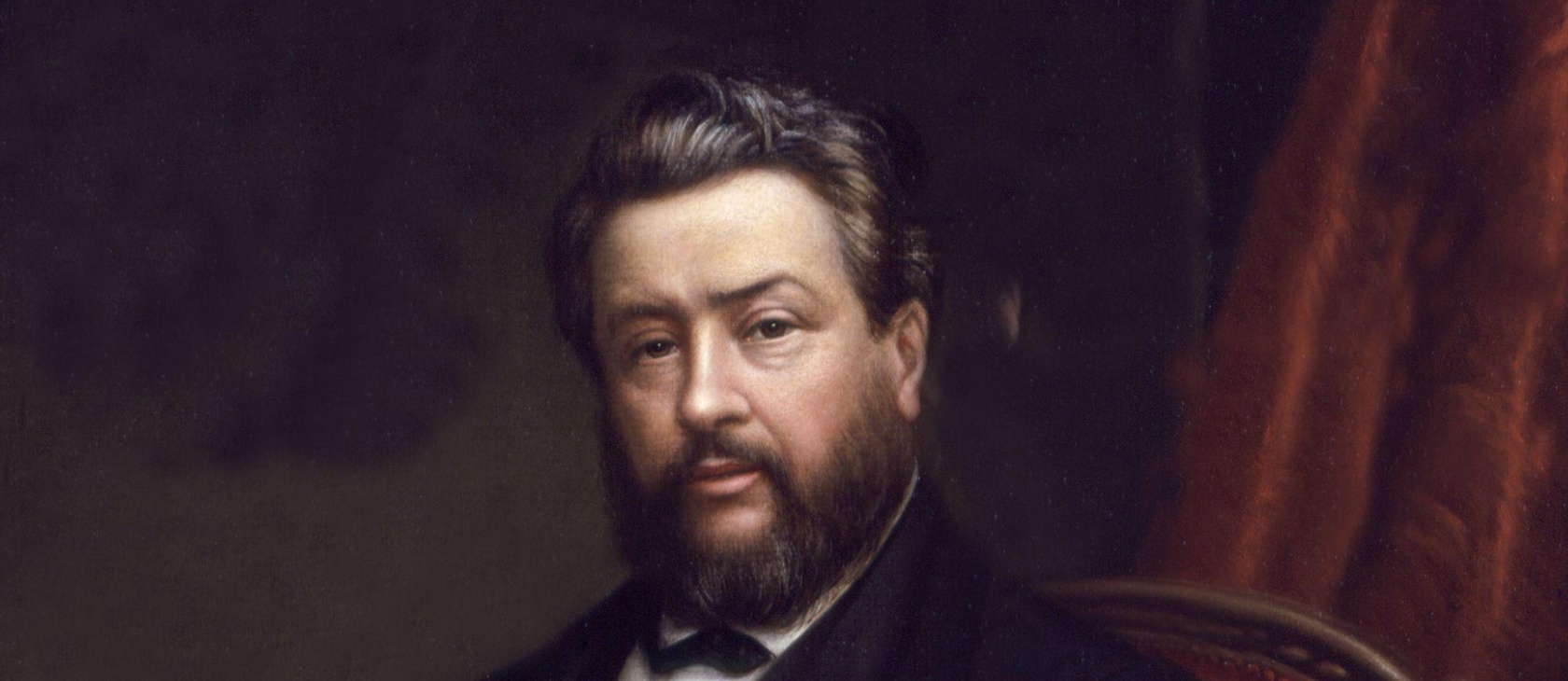
Religion & Liberty: Volume 33, Number 4 Spurgeon and the Poverty-Fighting Church by Christopher Parr • October 30, 2023 Portrait of Charles Spurgeon by Alexander Melville (1885) Charles Spurgeon was a young, zealous 15-year-old boy when he came to faith in Christ. A letter to his mother at the time captures the enthusiasm of his newfound Christian faith: “Oh, how I wish that I could do something for Christ.” God granted that wish, as Spurgeon would e “the prince of...
Adam Smith and the Poor
Adam Smith did not seem to think that riches were requisite to happiness: “the beggar, who suns himself by the side of the highway, possesses that security which kings are fighting for” (The Theory of Moral Sentiments). But he did not mend beggary. The beggar here is not any beggar, but Diogenes the Cynic, who asked of Alexander the Great only to step back so as not to cast a shadow upon Diogenes as he reclined alongside the highway....
Jesus and Class Warfare
Plenty of Marxists have turned to the New Testament and the origins of Christianity. Memorable examples include the works of F.D. Maurice and Zhu Weizhi’s Jesus the Proletarian. After criticizing how so many translations of the New Testament soften Jesus’ teachings regarding material possessions, greed, and wealth, Orthodox theologian David Bentley Hart has gone so far to ask, “Are Christians supposed to be Communists?” In the Huffington Post, Dan Arel has even claimed that “Jesus was clearly a Marxist,...
Related Classification
Copyright 2023-2026 - www.mreligion.com All Rights Reserved