



The biggest challenge to the rise of originalism is precedent. Although originalism is enjoying more support in the judiciary and in the academy than it has in a century, hundreds of non-originalist Supreme Court precedents still shape our legal world. That means originalists face a clear dilemma: If they allow these precedents to dominate, constitutional doctrine will remain non-originalist, except in areas, such as the Second Amendment, which had few if any, controlling precedents before the originalist revival. Conversely, if originalists systematically overturn non-originalist precedent, they risk disrupting established rules and causing legal instability.
It is not surprising that the justices are just beginning to grapple with this fundamental issue. It was not important when most justices were not originalists. But now that at least six of the nine have some affinity for originalism, the question becomes important—indeed the single most salient methodological question in constitutional law today. This term the Court provided early signs of a solution. Two decisions clearly showed that it can cut back non-originalist precedents to restore more of the Constitution’s original meaning, when it can find a principled stopping point. Another decision suggests the Court may overrule some precedents prospectively. That is, it will move the law to the original meaning for future adjudications, while not overruling past decisions in which the precedent controlled. Both methods provide a via media for harmonizing precedent and originalism. Both methods would restore original meaning while protecting reliance interests and preventing undue disruption.
Cutting Back on Non-Originalist Precedent
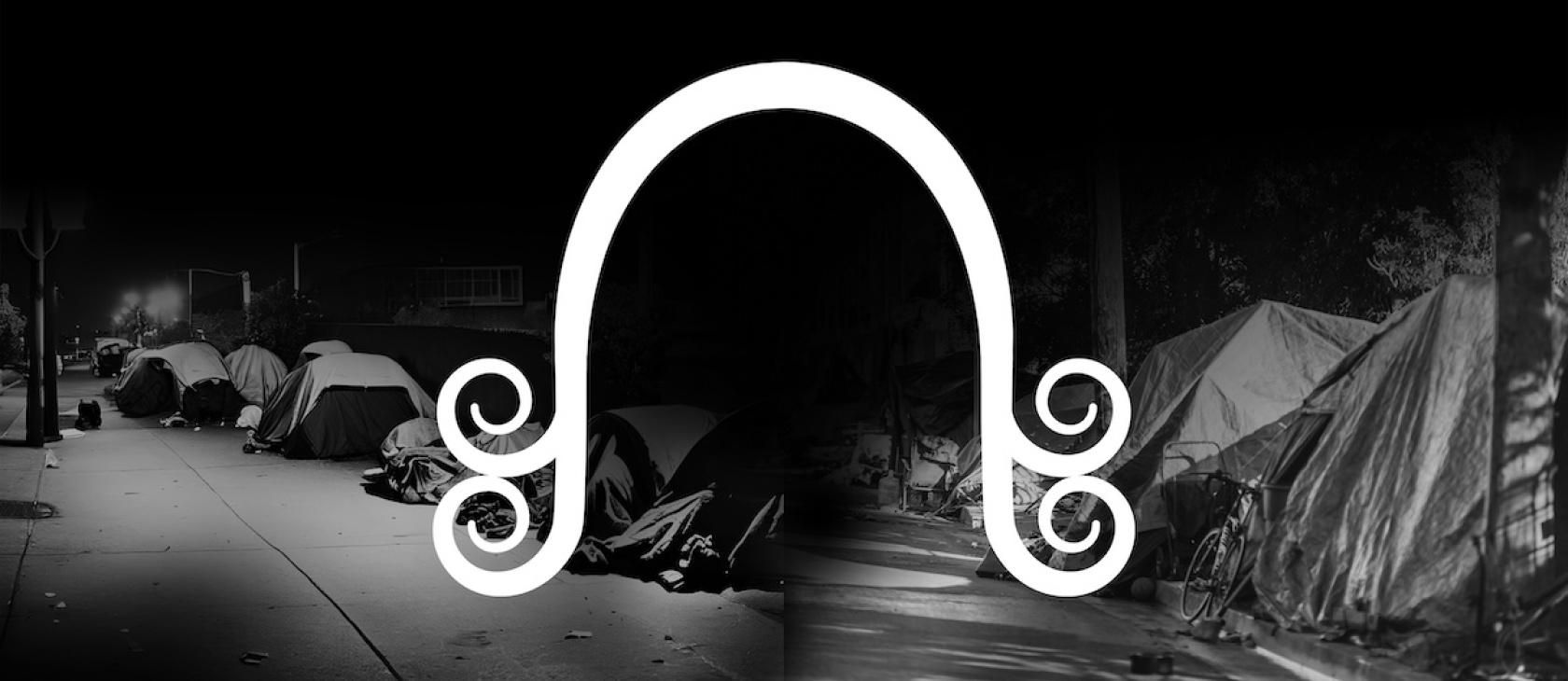
In Grants Pass v. Johnson, the issue was whether the Eighth Amendment’s prohibition on “cruel and unusual punishment” barred applying a ban on public camping to the homeless. The Ninth Circuit had accepted that proposition, basing its decision on the Warren Court precedent of Robinson v. California. There, the Supreme Court had held that California could not enforce a law that penalized “addiction to narcotics.” The Court had reasoned that addiction was a status, and that the Eighth Amendment barred punishing status. The Ninth Circuit held that homelessness was likewise an involuntary status that could not be punished.
The Supreme Court reversed this decision, however, in an opinion by Justice Gorsuch. Before discussing Robinson, Gorsuch noted that at the time of its enactment, the Eighth Amendment was understood to be a prohibition of methods of punishment rather than on what conduct could be punished. It cited a brief by originalist scholar John Stinneford which concluded that the punishments were cruel only if they were designed to create“terror, pain or disgrace,” and only unusual if they had fallen into desuetude. Since the punishments for violating the anti-camping ordinance were only fines for a first offense, Gorsuch observed that they did not offer a good fit with the prohibition. The fines were hardly draconian and, far from falling out of use, they remain a staple of criminal law.
Only afteroutlining the original meaning of the clause did Gorsuch address Robinson. He noted that the issue in Grants Pass was behavior, not status, because the statute penalized an action: camping. Moreover, unlike the statute in Robinson, the Grants Pass enactment was a general law, applying not only to the homeless but to anyone who camped. The Court thus refused to extend the Robinson precedent to this case on originalist grounds.
Grants Pass thus provides an excellent example of what the Supreme Court can do when confronted with precedent inconsistent with original meaning. It can first set forth the original meaning. And then it can refuse to extend or cut back the precedent toward the original meaning if it can do so with a tractable and principled distinction.
Another case in which the Supreme Court narrowly construed a precedent to follow the original meaning is SEC v. Jarkesy. In Jarkesy, the issue was whether the SEC could seek civil penalties for fraud in an agency adjudication by an administrative law judge rather than a civil jury in federal court. The Fifth Circuit had held that this proceeding violated Jarkesy’s right to a jury trial guaranteed by the Seventh Amendment, which provides: “In suits at common law, where the value in controversy shall exceed twenty dollars, the right of trial by jury shall be preserved.”
The Supreme Court affirmed the decision in an opinion by Chief Justice John Roberts. He began by noting the centrality and scope of the Seventh Amendment guarantee at the Framing. Moving cases to proceedings without juries was a British practice to which the colonists had long objected and indeed formed part of the bill of particulars by which the Declaration of Independence justified revolution. Roberts showed that the clause in question broadly encompassed all common lawsuits. Since monetary relief was a hallmark of the common law, that remedy was a mark of something that triggered the right to a jury trial.
Next, Roberts considered whether the action in Jarkesy could be justified under the public rights exception to suits that must be heard in an Article III court and thereby avoid the jury trial requirement. Roberts emphasized that Article III prohibits withdrawing suits at common law from Article III courts, again citing support from the Founding. The Court has recognized some exceptions for matters that “could have been determined solely by the executive and legislative branches” in the first place, like suits concerning actions of its own employees or public benefits.
Originalist justices are vulnerable to criticism for selectively emphasizing one over the other to achieve desired outcomes. But that criticism may be unfair since reconciling originalism and precedent is a challenging enterprise that will take time to perfect.
Much like in Grants Pass, Roberts had to confront a case that did not clearly follow these limitations. In Atlas Roofing v. OSHA, the Supreme Court upheld agency adjudication of a monetary penalty for noncompliance with OSHA safety regulations. The government and Justice Sotomayor’s dissent argued that this precedent justified placing any administrative penalty proceeding outside of a federal court. But Roberts refused to read the case that broadly. The fraud claims at issue in Jarkesy were close enough to those familiar at common law that they must be tried before a jury. He thus limited Atlas Roofing to administrative proceedings that had no analogies in suits at common law.
Jarkesy leaves open the question of whether other civil penalties currently brought before administrative law judges must instead be brought in federal court with civil juries. It thus potentially offers more avenues for litigation that will further chip away at the non-originalist precedent of Atlas Roofing.
To be sure, cutting back on nonoriginalist precedent is easier when the precedent is a single, isolated one, such as Robinson or Atlas Roofing, than when it is part of a body of non-originalist precedents, as with the First Amendment and presidential power. That helps explain—although in our view, it does not justify—the failure of the originalist judges to begin their opinions with discussions of the original meaning in Trump v. United States and Moody v. Netchoice. Another problem is that the litigants in those cases who might have benefited from making strong originalist arguments chose instead to emphasize precedent. But once the method we see in Grants Pass and Jarkesy becomes better established, litigants will naturally focus more on how cutting back precedent toward the original meaning can advance their case.
Prospective Overruling
In Loper Bright v. Raimondo, the Court overruled the famous case of Chevron v. NRDC which required the judiciary to defer to agencies on their readings of ambiguous or vague statutes so long as those interpretations were reasonable. The Court’s reason for overruling the case was that it was inconsistent with original meaning—not of the Constitution but of the Administrative Procedure Act, the crossing-cutting rule book for agencies in administrative law. The Court held that the APA required the judiciary, not the agency, to resolve interpretations of law. Chevron’s carve out of space where agencies made the final interpretation of law was thus incompatible with the statute.
Because Chevron had articulated a basic methodology for interpreting agency statutes, it was not easily amenable to being cut back so as to be more consistent with the APA. But, like constitutional precedent, its overruling raises the problems of disruption and reliance interests. Thousands of cases have been decided under Chevron and they implicate long-standing regulations where hundreds of billions of dollars are at stake. Thus, if these past regulations were open to challenge under a new non-deferential standard, society—businesses, consumers, and citizens alike—would face massive regulatory uncertainty.In addition, adjudicating these cases would require an enormous number of new lawsuits to resolve them under the new governing standard.
The Court announced, however, that those decisions are safe from challenge: “By [overruling Chevron], however, we do not call into question prior cases that relied on the Chevron framework. The holdings of those cases that specific agency actions are lawful—including the Clean Air Act holding of Chevron itself—are still subject to statutory stare decisis despite our change in interpretive methodology.”
Thus, Loper Bright is a form of prospective overruling, protecting past reliance while moving the law to the correct interpretation for the future. Some justices, including the late Antonin Scalia, have criticized prospective overruling as inconsistent with a judge’s duty under Article III to declare the law, but we have defended it in a recent article.
To be sure, Roberts does not expressly call what he is doing prospective overruling. Moreover, it comes in a statutory, not a constitutional case. But we do not think these differences are very relevant. With a cross-cutting precedent like Chevron that applies across administrative law, the stakes for reliance may be even higher than in most constitutional cases. Moreover, Loper Bright itself reflects the recent movement to APA originalism in administrative law. Not surprisingly, this raises questions about how to overrule non-originalist APA precedent and to what lengths the Court should go.
Originalist justices on the Court have yet to establish a consistent method for reconciling originalism and precedent, leaving them vulnerable to criticism for selectively emphasizing one over the other to achieve desired outcomes. But that criticism may be unfair since reconciling originalism and precedent is a challenging enterprise that will take time to perfect. Encouragingly, recent cases this term begin to show the way.








 zpostcode
 Recruit
 weather
 mreligion
 Yellowpages
 sport
sport constellation
 shopping
 name
name game
game directory
 literature
 Word
Word tour
tour furnish
 Lottery
 tftnews
 lyrics
 News
News digital
 car
car dir
dir Edu
Edu Finance


