



Alexander Dugin (1962– ) is that rare bird, a philosopher who becomes a media personality. Perhaps the last was Rûhullah Khomeini, the Grand Ayatollah. An influence on Dugin, Khomeini—who appeared on the cover of Time Magazine six times—thought Plato one of the “great leading figures of divine wisdom.” Comparably, Dugin thinks “all Christian dogma is based on Plato. … In Islamic theology, too, everything is built solely on Platonism. … Plato is the king of philosophy.” In his opinion, the Platonic Ideas orient conservatism: “The conservative sees the eternal in the past and only for that reason does it stand out for him as normative for the present and the future.” This is why he labels his contribution to political thought, Politica Aeterna.
The notoriety of Khomeini and Dugin stems from their apocalyptic geopolitics, both of which posit a drag-out fight between East and West. In Dugin’s language, this is the struggle between Platonopolis and Devilopolis, between tradition and techno-futurism. A difference is that Khomeini’s political innovation of an Islamic republic was a true strategic game changer, but despite the conspiratorial press, Dugin is a college professor at the Russian State University for the Humanities.
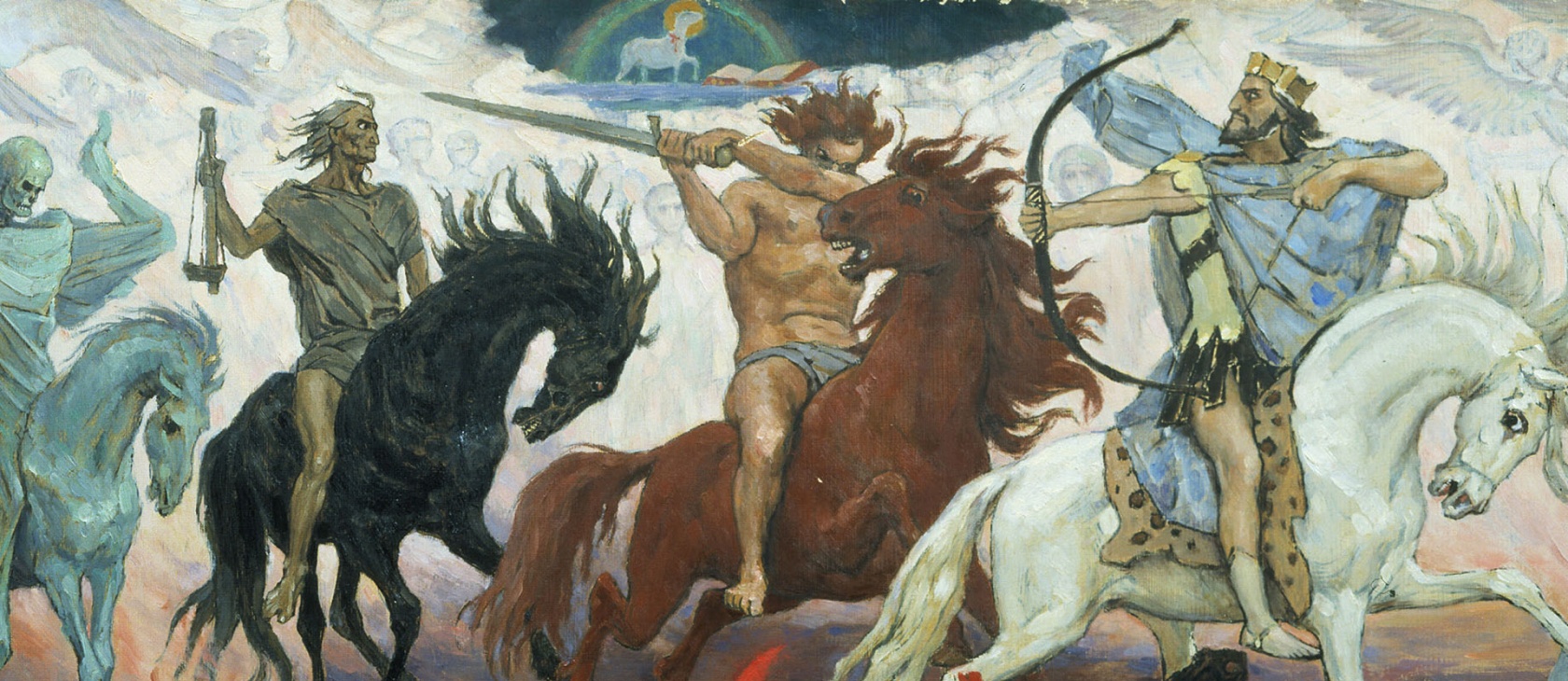
Western media casts Dugin as “Putin’s Brain,” but this is not a serious proposition. Reflecting on the rise of Putin, Dugin characterizes “the then little-known bureaucrat” as a promoter of a “specific practical-technical style” of administration, a style that does not comprehend political motivation: “Steadiest in man are his dreams, his reveries, his wishes, the deep movements of his soul. … Plane, train and rocket are essentially an expression of the dream about eternal angels and magical runners.” In Dugin’s eyes, Putin is strategically myopic: “The era of materialism, economics, rational analysis, experts, technocrats, managers is over. Ideas are returning to our world. … Between the Russian Idea, the Katechon, the Orthodox Civilization, and the world of the Western Antichrist, coming at us.”
Devilopolis
Given a Khomeini speech to read, an uncomprehending President Carter wrote across it, “nutty.” With his talk of angels and the Antichrist, some may react similarly to Dugin. Yet, political impresarios like Steve Bannon have met with him for hours-long conversations. Specifically, Bannon met with Dugin to talk about geopolitics and support for an alliance between the US and Russia against China. This was a hopeless mission. Dugin sees himself as the voice of the Russian narod (folk), giving philosophical expression to a non-Western vision of reality that originates in Eurasia. In this vision, contemporary Western ideas are spiritually bereft. According to reports, Bannon made the argument that the US and Russia share a common Christian patrimony, unlike China. This appeal will have fallen on deaf ears because Dugin agrees with the American thinker Samuel Huntington, who posits a civilizational difference between Western Christianity and Orthodoxy.
For Dugin, the upshot is that to unite knowledge, society, and cosmos there must be a philosopher-king.
Minting imaginative books at remarkable speed, Dugin’s Neo-Platonism intellectualizes the widespread complaint that Western governance is cavalier abroad and unfeeling at home. His blend of the Right’s traditional values with labor-centered Leftism has resonated with many contemporary populist movements. Nevertheless, Dugin is a resource for, and a challenge to, Western conservatives. As a resource, he offers a striking, analytically rich diagnosis of what ails the West. In addition, his thinking is geopolitical: he draws on Thucydides, Clausewitz, and Mackinder, who are staples of our military academies. He also relies on Plato, yet here is where the challenge begins. To Dugin’s mind, the West’s version of Plato is sanitized, read through the strictures of Enlightenment reductive reason.
Dugin’s importance stems from the completeness of his post-liberalism. Unlike others in that camp, Dugin is not interested in half-measures. For example, left and right routinely bemoan materialism. Dugin concurs but then offers a Eurasian spiritual vision derived from a political Platonism that has long been out of fashion in our post-Cartesian age. His “revolutionary Conservatism” challenges post-liberals to cast off that metaphysically deflated framework. What Jimmy Carter thought “nutty” is a political Platonism that Dugin thinks is strategically and spiritually powerful enough to counter the Enlightenment’s pathologies of reason. Parts of Dugin might seem fantastical, but he wants to know whether Western conservatism is just timid or in fact insincere.
Liberal individualism, Dugin believes, has made the West a singularly unattractive cul-de-sac. Starting in the Renaissance, the West accelerated towards Devilopolis. Freeing human genius and dignity, the Renaissance is credited as an important source of modern democracy: yet, as Dugin arrestingly notes, this “step forward” “repudiated Catholic dogmas not for the sake of a secular, scientific order (which did not yet exist) but for magical, alchemical, and hermetic teaching.” In The Rise of the Fourth Political Theory, Dugin contends that the alchemical recombinations defining the modern West rely on the Greek method of making separations (diábolos). Breaking things apart to concoct fresh compounds, the Renaissance set the model for techno-futurism’s diabolical posthumanism. Enlightenment order is not what it purports: the legacy of the Renaissance is an “archaic spirit, with mass rituals, irrational pseudo-scientific research, and harsh racial segregation.”
Defending national economies, Dugin complains in the aforementioned Politica Aeterna that Adam Smith turbo-charged the seed of posthumanism by promoting entrepreneurial activity over land ownership. “Here we come to a very important point: Adam Smith’s capitalism is directed against nation-states.” Favoring global markets over homelands, with Smith, “the urban bourgeois entrepreneur becomes the central figure of the political philosophy of liberalism.” The upshot is “liberalism mutated into a lifestyle” with the consequence that the West “looks foolish and doomed for failure, including its most `glamorous’ aspects. It is not by chance that the heroes of postmodernity are `freaks’ and `monsters, `transvestites’ and `degenerates’—this is the law of style.”
The alchemical compounds of Devilopolis need, as Smith vividly showed, resources. The liberal West is a cul-de-sac because techno-futurism culminates in tyranny. Dugin’s geopolitical work is designed to make this reality bite ever harder. He promotes multipolarity because it weakens the West’s grip on markets. The strategic payoff is the cratering of the West’s self-image of glamorous liberty. As Western governments scramble to maintain growth, they have become increasingly lawless. Liberal prestige needs growth because it is the promise of welfare governance facilitating unrestricted personal liberties. However, far from being free, the desires of Western populations are coded by machines owned by oligarchs. The West’s recombinatory materialism means that its “epistemology is built on the repression, supervision and control of the deepest aspects of human biological existence.”
Platonopolis
Dugin’sremedy starts withHuntington’s “epochal book,” The Clash of Civilizations, from which Dugin takes the idea that certain nations are anchors of civilizations: “There are Western, American, Russian, Chinese, Iranian, and Indian systems of values.” Russia is the anchor nation of Orthodox civilization, “a continental Rome.” Sir Halford Mackinder, one of the founders of the study of geopolitics, argued that the West is a product of Roman Catholicism’s universalism. By contrast, Orthodoxy confined itself to the Eurasian landmass. Adopting this reasoning in Last War of the World-Island: The Geopolitics of Contemporary Russia, Dugin says that the West’s “attempts to present itself as a universal standard of development are nothing other than a colonial, racist pretension to absolute power over humanity.”
About democracy: “I’m against it, but I’m against it only because the West is for it.” Explaining, he quotes at length G. K. Chesterton’s argument that Rome (land power) defeating Carthage (sea power) made possible the eventual rise of Christianity. Dugin draws the corollary: “Only the Antichrist could have been born in a sea civilization.” The anchor nations of the democratic West—first Britain, now America—are sea powers bent, says Dugin, on using sea lanes to export corrupting universalism. With the Iran War as evidence, Dugin perceives “a planetary duel between the civilization of Land and the civilization of the Sea.”
Geopolitics is a “sacred science” because it is derivative of “spiritual geography.” “Today we find ourselves under hypnosis, thinking that `economics is serious,’ while theology, on the other hand, is `optional’ (if not unscientific). But in fact, everything is strictly the other way around. He who knows eternity knows everything.” Specifically, Dugin relies on Iranian Neo-Platonism to show how monarchy and populism are reconciled.
Neo-Platonism offers a metaphysical account of how the One disperses in controlled stages into the Many. Ishraq philosophy proposes that mediating between the Platonic Ideas and Earth is the mundus imaginalis. Dugin embraces the Na-koja-abad of the twelfth-century Persian philosopher, Shihābuddīn Suhrawardī. A spirit world, the Na-koja-abad is a landscape replete with cities, each of a different ethos. Earth is downstream of this landscape with the diverse axiologies of the anchor nations reflecting “general types of rationality” in the mundus imaginalis. Dugin does not accept liberal individualism because all persons are expressions of one of the cities of the Na-koja-abad. We are reflected images of the moral collectivities that “give a man everything: his look, his life, his language, his culture.”
Dugin’s Platonopolis does more than fraternize with war; it primes the charges.
Neo-medievalism like this is a potent strand of contemporary conservatism, especially in Catholic circles. In the West, it is assisted by popular visualizations. Fans of Game of Thrones will see a connection between the Three-Eyed Raven and the Na-koja-abad. Many will think of Tolkien and his wizards, the spirits who mediate between the gods and peoples of Middle-earth. Admittedly, conservatives keen on Ockham’s Razor will be puzzled. Nonetheless, a mediating mundus imaginalis is a logical requirement of Neo-Platonism and the neo-medieval portion of Dugin’s thought serves two important political purposes. First, it explains the spiritual malaise of the West. Dugin describes how in Suhrawardī’s metaphysical geography, Asia is “the place where the sun rises. This is the source of the world, a place of continuity with eternity” whilst the West is an exile, “a place of the exhaustion of being’s rays, a pole of entropy, a territory losing inner being and inner substance.” The human task is thus to move from west to east. The mediating country between west and east is Russia: “from Western exile to the Eastern dawn, to the true dawn of great and sacred Asia, which is the secret angel, the secret substance of Russia.” Hence Russia’s great religious purpose, and the reason Bannon’s outreach was forlorn.
Secret angels (like Gandalf) driving geopolitics have a second, critical implication. The mundus imaginalis is the “topos of the Angelic Council.” A reflection of this topos, Earth needs leadership that can understand the celestial Council’s directives. Dugin glosses this as a Platonic monarch, the “king-sacrificer” (tsar’-zhrets). He gives Iran’s Expediency Discernment Council as an example of Socrates’s daimon. Just like the daimon, the clerics of the earthly Council caution against wrong acts, whilst the President and Iranian Parliament legislate and impel. For Dugin, the upshot is that to unite knowledge, society, and cosmos there must be a philosopher-king, just like Plato said: “Power in Platonism is sacral, rational, clear, and ideal.”
Risky Animal
Dugin’s The Fourth Political Theory offers an alternative to the twentieth century’s three ideologies. Anti-liberal, his fourth theory attempts to retrieve Eurasianism from the debris of Communism. Neo-Platonic dispersion requires that monarchy is complemented by the narod, “a cultural and linguistic unity, a community of historic being, and the presence of a certain destiny.” Dugin delights that in recent years, Russia has rediscovered “the treasure of its national traditions, both monarchic and Soviet.” Styling himself a “National Bolshevik,” he admires Stalin for being clear-eyed about the strategic significance of Russia’s land mass that houses the narod (folk). Though abused during Stalinism, the narod endured and now summons Russians to their root customs and religion. Dugin celebrates the Russian narod as Spartan: befitting a land power, its ethos is ascetic, conservative, and sacrificial.
From the debris of fascism, Dugin retrieves the German nationalists, Martin Heidegger and Carl Schmitt. He rejects accusations of racism. An embracing ideal, the narod has nothing to do with the fragmenting and exclusivist logic of Western thought. The historical record shows, insists Dugin, that democracy cannot escape exclusion. He points out that Athens denied representation to women, metics, and slaves; today, all Western democracies have representation problems with native peoples, migrants, and minority civil rights. Basically, Dugin presents the narod as DEI, which is why he peppers his books with statements like: “Nowadays all this logocentric philosophy has come to an end, and we must consider another road for thought, not in the logocentric, phallocentric, hierarchical and exclusivist way.”
Dugin adopts Schmitt’s idea of the risky animal, man always prowling. “Why, in fact, must we stop waging war, if enemies live around us, who encroach on our space, on our narod, on our religion? If they were not encroaching, it would be a different matter, but then they would not be humans.” The point links to Heidegger’s idea of existential sentiments: first, care of the narod, which then entails, second, being-toward-death: a narod can only thrive “when it chooses authentic existence, but then it encounters its finitude, i.e., risk. This encounter has a name: war, the father of things, according to Heraclitus.” Dugin argues in Political Platonism: The Philosophy of Politics that war is a logical entailment of the dispersal of the One into the Many. He credits Heidegger with the retrieval of this forgotten legacy in Greek thought: “In the body of conservative philosophy, the topic of war must be raised transparently, calmly, without malicious joy or sadism.”
We in the West can agree that techno-futurism is a problem. We can also agree that our civilization needs to ponder how resource wars corrupt the rule of law. Khomeini was a jurist, and it is odd that Dugin does not thematize law. Plato argued that law blocks the subversive return of the Titans. As I have discussed elsewhere, Dugin’s Platonopolis does more than fraternize with war; it primes the charges. Written in heroic mode, his writing constantly returns to talk of “hazarding being.” Thomas Aquinas was fond of Neo-Platonism, too, yet his metaphysics of creation concludes in “universal happiness” on a bedrock of law. Dugin’s influential counterproposal to liberalism is genuinely probing—which means those sympathetic to Enlightenment hopes of peace need to brush up on philosophical theology.

 zpostcode
 Recruit
 weather
 mreligion
 Yellowpages
 sport
sport constellation
 shopping
 name
name game
game directory
 literature
 Word
Word tour
tour furnish
 Lottery
 tftnews
 lyrics
 News
News digital
 car
car dir
dir Edu
Edu Finance


