Home
/
RELIGION & LIBERTY
/
Richard Baxter
Richard Baxter
May 13, 2026 2:48 PM

It is God's great mercy to mankind, that he will use us all in doing good to one another; and it is a great part of his wise government of the world, that in societies men should be tied to it by the sense of every particular man's necessity; and it is a great honour to those that he maketh his almoners, or servants, to convey his gifts to others; God bids you give nothing but what is his, and no otherwise your own but as his stewards. It is his bounty, and your service or stewardship, which is to be exercised.

Richard Baxter is recognized by many as the most prolific theological writer of the 17th Century. He wrote 140 books, many of them while serving in the pastorate. Timothy Keller, pastor of Redeemer Presbyterian Church in New York City, called Richard Baxter's A Christian Directory, "The greatest manual on Biblical counseling ever produced." Baxter's work is considered a treasured instruction on the habits of Christian love and holiness. William Orme, a 19th Century Scottish minister, was able pile 23 volumes of Baxter's more practical theological works. Baxter's practical emphasis on things like pastoral counseling, the family, discipleship, and church discipline makes his writing especially relevant today. Max Weber believed Baxter embodied the Protestant ethic.

Baxter was born in a rural part of England in Rowton, Shropshire, and had far from the privileged education many of the most notable religious leaders of his era enjoyed. He studied to e a preacher and aligned himself with the English nonconformists and Puritan sects. While he was considered a moderate and peacemaker among Protestants, given his stance towards non-separation of the Anglican Church, he also was persecuted for his faith and spent time in prison.

Baxter was plunged into the English Civil War and found himself embroiled in the era's most notable religious controversies. He was expelled from Kidderminster, where he served as a pastor, because of the raging conflict. He soon advocated for and served as a chaplain for military troops during the war. mitment to ministry and the heart of his flock is even more impressive given the rampant corruption of churches in 17th Century England. Baxter penned these words regarding Philippians 1:23 in his work The Saints Everlasting Rest:

My Lord, I have nothing to do in this World, but to seek and serve thee; I have nothing to do with a Heart and its affections, but to breathe after thee. I have nothing to do with my Tongue and Pen, but to speak to thee, and for thee, and to publish thy Glory and thy Will. What have I to do with all my Reputation, and Interest in my Friends, but to increase thy Church, and propagate thy holy Truth and Service? What have I to do with my remaining Time, even these last and languishing hours, but to look up unto thee, and wait for thy Grace, and thy Salvation?

Baxter also endlessly praised the value of work and spoke out against a spirit of dependency and sloth. "An idle beggar will accuse you of uncharitableness, because you maintain him not in sinful idleness, he declared. He praised the value of wealth but reminded those "the more you have, the more you have to give account for." In his humility, Baxter called himself a "mere Christian," a phrase that would later resonate with C.S. Lewis. An inscription of a statue of Baxter that stands today in Kidderminster reads: "Between the years 1641 and 1660 this town was the scene of the labors of Richard Baxter, renowned equally for his Christian learning and his pastoral fidelity. In a stormy and divided age, he advocated unity prehension, pointing the way to everlasting rest."

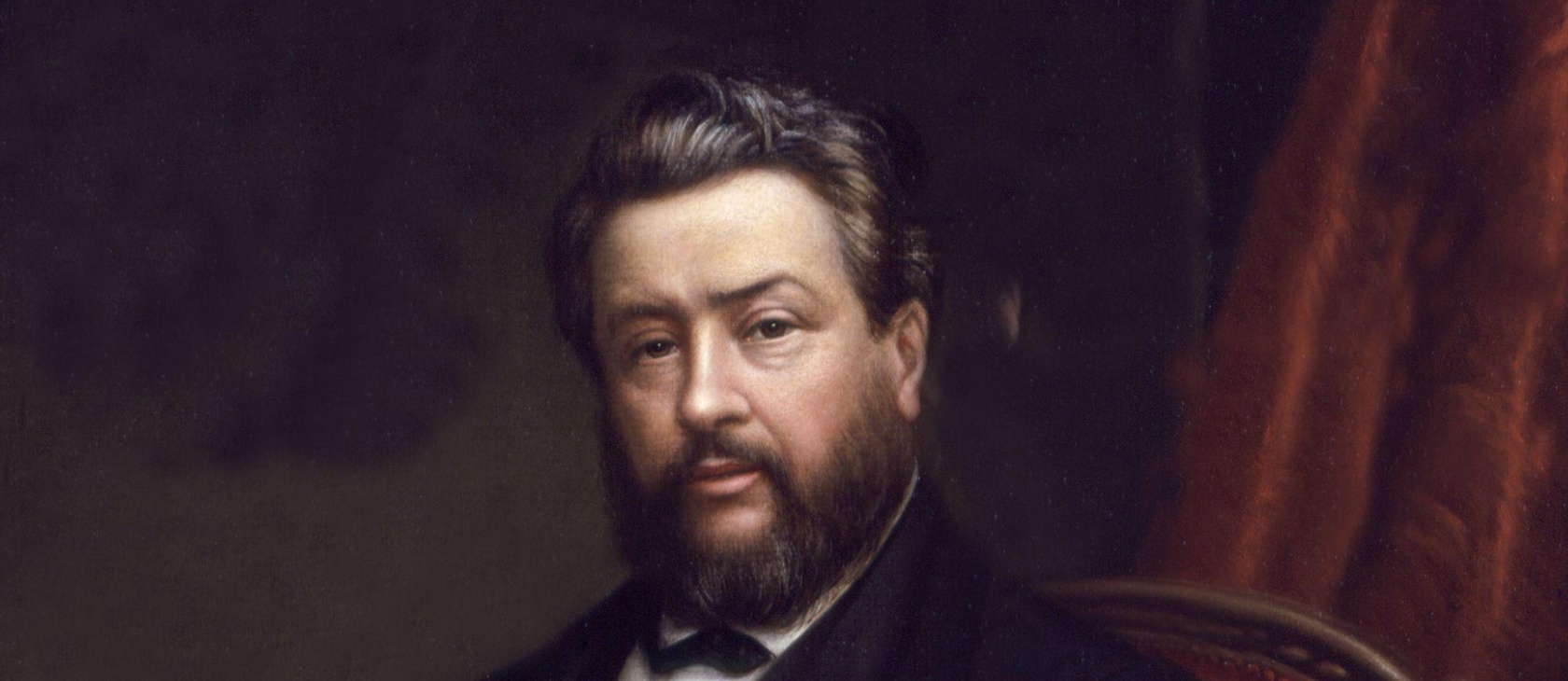
Hero of Liberty image attribution:Robert White [Public domain], via Wikimedia Commons PD-1923

Comments
Welcome to mreligion comments! Please keep conversations courteous and on-topic. To fosterproductive and respectful conversations, you may see comments from our Community Managers.
Sign up to post
Sort by
Show More Comments
RELIGION & LIBERTY
Doubled-edged sword: The power of the Word - Genesis 17:3
Genesis 17:3 “When Abraham prostrated himself, God continued to speak to him: 'My covenant with you is this: you are to e the father of a host of nations'” (Gen. 17:3). Within decades of the crucifixion and resurrection of Christ, the good news had spread from Jerusalem through the Hellenistic culture of the eastern Mediterranean to Rome, and to ends-of-earth places such as India and the British Isles. In the following centuries, holy men and women protected the heritage...
Jewish theology and economic theory
There has been very little work by orthodox Jewish scholars on the relationship among socialism, capitalism, and Judaism. Careful reading of the relevant literature, however, suggests that it is possible to posit five basic axioms of Jewish economic theory from which many economic policy implications can be deduced. Although not exhaustive, our five axioms represent, to the best of our knowledge, the first attempt to formulate a parsimonious list of basic principles that help systematize the foundations of what...
Interest and responsibility
Since at least the Middle Ages, the payment and receipt of interest has existed under a moral cloud, due mainly to a misunderstanding concerning what interest is and why it exists. Medieval theologians gradually came around to the view that now prevails in economic science. What connects all forms of interest is the insight that interest is nothing more or less than the exchange ratios between different time horizons. If I prefer to save now, I must put off...
Be wary of power
Some people imagine that there is a third way between the market economy and socialism, and in a sense they are right. But the way to it does not lie with government programs. Before I explain that, let us consider the unseen effects of substituting government means for voluntary human energies. We often use the word voluntary to identify charitable actions taken in society that do not result in profit. But consider that profit in a market economy also...
Health within limits: A reading of Wendell Berry
A few months ago, a friend and I drove to Indianapolis on a pilgrimage to see and hear Wendell Berry. I was struck by the difference between my own heroic construct and the reality before me. Here in Indianapolis stood an elderly man, albeit a sharp, irascible, very tall and vigorous personage. He reflected on the limitless demiurge of consumerism that e to blight our culture, on the anachronistic vigor with which he seeks to guard over his own...
How does Acton's Rome office contribute to the mission of the Acton Institute?
The Acton Institute has a number of affiliates around the world, but when it came time to establish a presence in Rome, the institute opted not to start another affiliate, but to open a new Acton office, Istituto Acton. This allows the institute and its Grand Rapids staff to work closely with the Rome staff on a number of important projects that further our mission to promote a free and virtuous society on the international stage. A large part...
Editor's note
In our feature interview in this issue of R&L, Chuck Colson makes reference to the now-famous lecture Pope Benedict XVI gave at Regensburg last September. The heart of that lecture was the relationship of faith and reason. In the course of arguing that each needs the other, Pope Benedict raised questions about Islam that garnered worldwide attention. But Pope Benedict's point was not principally about Islam. His point was that religious faith, when not purified by reason, can lose...
Europe without roots
Optimism is obligatory, but it's cheap. In the current situation, there is a heavy price to pay. Relativism has wreaked havoc, and it continues to act as a mirror and an echo chamber for the dark mood that has fallen over the West. It has paralyzed the West, when it is already disoriented and at a standstill, rendered it defenseless when it is already acquiescent, and confused it when it is already reluctant to rise to the challenge. One...
The creative imperative
This article was excerpted from Samuel Gregg's The Commercial Society: Foundations and Challenges in a Global Age, a new book published by Lexington Books. Commercial society's impact upon poverty is not simply a result of the unintended consequences of market exchange. It owes much mercial society's particular moral foundations. By moral foundations, we mean particular values and habits of action indispensable for the workings mercial society. What follows is an attempt to mercial society's basic moral foundations. Taken together,...
The challenge of globalization to the Church
The Acton Institute is midway through a series of lectures – eight in Rome and one in Poland – celebrating the fifteenth anniversary of Centesimus Annus, Pope John Paul II's landmark social encyclical. The lecture series started in October 2005 and will continue through 2007. The following is taken from Centesimus Annus, Globalization, and Individual Development, an ing monograph itself expanded from Lord Griffiths's address delivered on October 19, 2006, in Rome. The church has the potential to tackle...
Related Classification
Copyright 2023-2026 - www.mreligion.com All Rights Reserved