


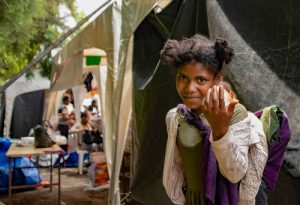
Christians who support the free market often find ourselves accused of worshiping, in the words of the New York Times, “a false idol” – a thought, shared by a disconcerting number of evangelical Christians and Roman Catholics alike. Yet irrefutable proof to the contrary issued from two very different venues and literally echoed all over the world this week.
From the unassuming and scholarly halls of Canada’s Fraser Institute on Tuesday came its annual report detailing the state of global economic freedom. Its authors provided us the service of cross-referencing their findings with other indices of human well-being and found that the free market benefits the world in at least seven ways:
Life expectancy increases – and people live longer: The average person in the freest nations lives 15 years longer than those in the least free nations (79.5 years in the top 20 percent of free nations vs. 64.4 years in the bottom quartile), according to the World Bank’s “World Development Indicators.”Infant mortality rate declines – and children live: Babies are about seven times as likely to die by their first birthday in the least free nations as they are in the freest nations. (In the most economically interventionist societies, 42.25 babies out of every 1,000 babies die within their first year of life. On the other hand, only 6.28 babies of every thousand die in the most laissez-faire countries.) The decline in death – and the upswing in the number of babies who have an opportunity to grow and offer their unique gifts to the world – moves in sync with increased economic freedom, according to the World Bank’s “World Development Indicators” data.Average citizens prosper: The typical person in the most economically free countries made $40,376 in 2016; someone living in the lowest 20 percent had a per capita e of one-seventh of that ($5,649).Poverty declines sharply: People in economically unfree countries are 2,142 percent more likely to live in extreme poverty (defined as $1.90 a day), and 1,200 percent more likely to live in moderate poverty ($3.20 a day), as recorded by the “World Development Indicators.” At each 20 percent increment in economic freedom, poverty rates fall by more than half.Political freedom expands: Citizens of nations that do not intervene in the economy also enjoy greater political and civil freedom, as measured by Freedom House’s “Freedom in the World 2017” report. (Likewise, theFoundation for the Advancement of Libertyfound that economic liberty is positively correlated with electoral freedom. So is religious liberty, freedom of the press, and an Anglo-American cultural influence.)More gender equality: Women in the most economically free nations score two-and-a-half times better on the UN Gender Inequality Index than those in the most economically interventionist (socialist munist) states.Greater happiness. People who live in economically free nations score significantly higher on the UN World Happiness Report. This makes sense, since a free society leaves its members free to pursue their own desires, or even respect their unalienable right to the “pursuit of happiness.”
“Where people are free to pursue their own opportunities and make their own choices, they lead more prosperous, happier, and healthier lives,” said Fred McMahon of the Fraser Institute.
These disparities in the most fundamental measures of life occur, not just between nations, but within the same nation at different times, as economic liberty expands or contracts.
This message came from a very different venue, and a very different messenger, on Wednesday.
President Donald Trump – neither unassuming nor one to affect academic mannerisms – noted the ravages of socialism in his speech before the United Nations.
The most notable example involved the change that has taken place within the nation ranked dead last for economic freedom in the Fraser Institute’s 2018 report: Venezuela. (North Korea and Cuba are not rated due to lack of data.)
“Currently, we are witnessing a human tragedy as an example in Venezuela,” the president said. “More than two million people have fled the anguish inflicted by the socialist [Nicolás] Maduro regime and its Cuban sponsors.”
Then he recounted Venezuela’s transition from a free nation to a socialist one:
Venezuela was one of the richest countries on earth. Today, socialism has bankrupted the oil-rich nation and driven its people into abject poverty. Virtually everywhere, socialism munism has been tried. It has produced suffering, corruption, and decay. Socialism’s thirst for power leads to expansion, incursion, and oppression. All nations of the world should resist socialism and the misery that it brings to everyone. In that spirit, we asked the nations gathered here to join us in calling for the restoration of democracy in Venezuela. Today we are announcing additional sanctions against the repressive regime, targeting Maduro’s inner circle and close advisers.
His speech put a human face on the Fraser Institute’s numbers. Economic data subsume a myriad of human tragedies.
No one who cares about human flourishing, political freedom, gender equality, or the right of newborn babies to survive to adulthood can turn a blind eye to economic liberty. The production of plenty means that the average person rises, the less fortunate are not so bad off, and the vulnerable at society’s margins survive. For those at either end of life’s journey, economic liberty can literally mean the difference between life and death.
And, as Ian Vasquez said on the Cato Institute’s daily podcast, the countries in this year’s top 10 freest e from the transatlantic sphere (North America and Europe), but also Oceania, Asia, and Africa. Liberty benefits all peoples and cultures by providing them with the stability, security, and autonomy necessary to fulfill their earthly callings.
The empirical evidence proves that economic freedom best empowers all children of God to reach their potential, from the cradle to the grave and every prolonged, joyful second in between.
Waddington. This photo has been cropped. CC BY-SA 2.0.)









 zpostcode
 Recruit
 weather
 mreligion
 Yellowpages
 sport
sport constellation
 shopping
 name
name game
game directory
 literature
 Word
Word tour
tour furnish
 Lottery
 tftnews
 lyrics
 News
News digital
 car
car dir
dir Edu
Edu Finance


