

Home
/
RELIGION & LIBERTY ONLINE
/
5 facts about Frederick Douglass
Mar 12, 2026 8:22 AM

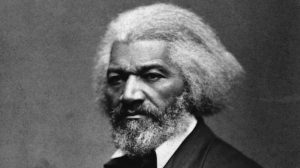
February 14 is the chosen birthday of Frederick Douglass (1818-1895), one of America’s greatest champions of individual liberty. Here are five facts you should know about this writer, orator, statesman, and abolitionist:

1. Douglas was born into slavery in Maryland circa 1818. (Like many slaves, he never knew his actual date of birth and so chose February 14 as his birthday.) He was given the name Frederick Augustus Washington Bailey but decided to change it when he became a free man. Although he was set on keeping his first name “Frederick”, he asked his friend Nathan Johnson to help him choose a last name. Johnson had been reading Sir Walter Scott’s narrative poem, Lady of the Lake, and mended the name of a main character: Douglass.

2. In his youth, Douglass taught himself to read, aided by scraps of reading material he found and with the help of some white children he came into contact with in his neighborhood. Soon after, while hired out to a Maryland farmer, he surreptitiously taught other slaves to read the New Testament at a weekly Sunday school. It was during these meeting that he plotted his first escape attempt, for reading and writing sparked a desire for freedom. “Once you learn to read,” he would later write, “you will be forever free.” In 1845 he wrote about his life of bondage in Narrative of the Life of Frederick Douglass, an American Slave. The book became an instant bestseller and the preeminent example of the literary genre known as slave narrative.

3. After escaping to the North, Douglass settled in New Bedford, Massachusetts where he became a preacher in an African Methodist Episcopal Zion church. Honed in the pulpit, his oratorical skills would make him one of the most sought after abolitionist speakers of his day. Douglass was associated with a school of the antislavery movement that believed slavery should be ended through moral persuasion, and he attempted to use his writings and speaking events to educate slaveholders and Southerners about the evils of slavery.

4. Douglass spent nearly two years traveling in Great Britain speaking for the abolitionist cause. He was even encouraged to settle in England because his fame made it risky for him to return to the U.S., where federal law gave his slavemaster the right to seize Douglass. Two of his English friends, however, raised $710.96 to buy his freedom. At the age of 28, Douglass finally became a free man.

5. Even before the Civil War brought an end to the American slavery, Douglass became active in the women’s suffrage movement. He became so famous within the women’s rights movement that in 1872 he was nominated for Vice President of the United States at the Equal Rights Party convention. Although he declined the nomination and refused to campaign, he became the first African American to be listed on a presidential election ballot. In 1888, he also received one vote from the Kentucky Delegation at the Republican Convention in Chicago, making him the first African American nominated to be a U.S. presidential candidate for a major political party (he had also received a single vote to be a U.S. presidential candidate during the National Liberty Party Convention in 1848).


Comments
Welcome to mreligion comments! Please keep conversations courteous and on-topic. To fosterproductive and respectful conversations, you may see comments from our Community Managers.
Sign up to post
Sort by
Show More Comments
RELIGION & LIBERTY ONLINE
‘An Economic Roadmap to Nowhere’
Ismael Hernandez responds to President Obama’s “You didn’t get there on your own” speech with a piece titled “Obama’s Assault on Entrepreneurship: An Economic Roadmap to Nowhere,” on Crisis Magazine’s website. Hernandez, founder of the Freedom & Virtue Institute and regular Acton lecturer, employs Catholic moral teaching to determine just how much credit the government deserves for an entrepreneur’s successes. The President’s statements, Hernandez reasons, fail to account for the freedom of the individual to make sound economic and moral...
Teacher’s Union: We Want to Help You By Suing You
For decades teachers’s unions have been giving teachers—and unions—a bad name. A prime example is the intimidation tactics used by Louisiana Association of Educators (LAE): A Louisiana teachers union is threatening private schools with legal action if they accept money from a new voucher program – and the threat has already forced at least one school to put its participation in the program on hold. The demand was sent a few weeks ago by law firm representing the Louisiana Association...
On Call in Culture and Storytelling
Last week we talked about how our memory is important to God using us where we are. Now we talk about another skill that is important to cultivate while being On Call in Culture: Storytelling. Only when we can express what God is doing through us can we truly understand our own experiences. The first step in storytelling is observation and reflection. After observing our spheres and reflecting on what happens we can begin to share with others what we...
Rev. Robert Sirico Interview in ‘The Washington Times’
Brett M. Decker, editorial page editor of The Washington Times, recently interviewed Rev. Robert Sirico, president and co-founder of The Acton Institute, in response to Rev. Sirico’s latest book, Defending the Free Market: The Moral Case for a Free Economy. In his answers, Rev. Sirico addresses the market’s moral potential as well as the present state of the nation. Excerpt: Decker: Your new book is about the moral case for a free economy. What is the morality of the marketplace...
Hollande’s ‘Idol of Egalité’
French President François Hollande has promised a 75% tax rate on those in his country who earn an annual salary above one million euros ($1.24 million). Not surprisingly, this number has struck fear into the hearts and wallets of quite a few of France’s top earners, including some who are contemplating leaving and taking their jobs with them. The New York Times has the story: panies are studying contingency plans to move high-paid executives outside of France, according to consultants,...
Ministers With MBAs
Libby A. Nelson at Inside Higher Education reports on the latest trend in clergy training: Dual degrees for seminary students aren’t entirely new. For decades, some seminaries and their nearby or affiliated colleges have graduated students with masters’ degrees in both divinity and social work. bination of a master’s degree in divinity with a master’s in business administration is newer, but growing, says Dan Aleshire, executive director of the Association of Theological Schools, an accrediting body. In the past five...
Acton Commentary: The Rich Don’t Make Us Poor
The “fixed pie” fallacy in economic thinking, as expressed by writers such as Hilaire Belloc, has served the class warfare crowd well despite lacking any basis in reality. “The historical reality of entrepreneurs gives the lie to two of Belloc’s assumptions: that the wealthy can maintain luxurious living standards by sitting on their wealth, and that capitalism prevents the poor from working their way up the economic ladder,” writes Charles Kaupke in the latest Acton Commentary (published August 8).The full...
Academic Kits Available for Fall Semester
The fall semester is fast approaching. Why not look for ways to introduce your students to Abraham Kuyper in interactive ways? Kuyper has a perspective that is relevant to today’s student and their reality. The On Call in Culture University and Seminary Resource Kits are designed to provide you as an instructor with some simple ways to integrate Wisdom & Wonder, the first book in the Common Grace Translation Project, into your curriculum. Our hope is that your students will...
Radio Free Acton with Amity Shlaes
In continuing with the work of highlighting Calvin Coolidge at Acton, Marc Vander Maas and I recently spoke with Amity Shlaes. Shlaes’s biography of the 30th president will be out in early 2013. She is a big fan of the Acton Institute and praised our work saying, “Acton has been all over the Coolidge case.” Shlaes is also interviewed in the Fall 2009 issue of Religion & Liberty. Listen to the podcast below: [audio: Marc and I also recorded an...
Hunter Baker’s ‘Political Thought’
One of the nice things about being asked to write an endorsement for books is that you often get plimentary copy. My copy of Political Thought: A Student’s Guide arrived earlier this week, and it is the latest offering from Hunter Baker, my friend, sometime PowerBlog contributor, and last year’s recipient of Acton’s Novak Award. My endorsement is as follows and mend the book to you: Hunter Baker provides an accessible and insightful primer on the various streams of thought...
Related Classification
Copyright 2023-2026 - www.mreligion.com All Rights Reserved






