

Home
/
RELIGION & LIBERTY ONLINE
/
Religion & Liberty: Fighting for totalitarianism’s victims
Jan 8, 2026 7:03 AM

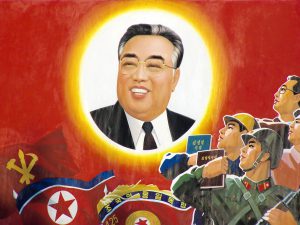
The unofficial theme for Religion & Liberty’s first issue in 2017 is despotism. In this issue, you’ll find stories from the Soviet Union, a close look into the North Korea regime and a reexamination of Hitler’s rise to power.

The cover story is an interview with human rights expert Suzanne Scholte, who discusses her passion for fighting the sadistic rule of Kim Jong Un and working with North Korean defectors. After 20 years fighting for those who don’t enjoy freedom and democracy, she has countless stories and anecdotes to share. Several harrowing tales of life in North Korea or under other regimes are adapted from the Scholte interview and featured in “Stories from the worst regimes.”

One can’t ponder infamously cruel governments for long without thinking of World War II. A newly translated book, Hitler: Ascent, 1889-1939, by Volker Ullrich takes a deep look into Adolf Hitler’s historic rise to power. Fr. Anthony Perkins reviews the book and explains what this all means for us today.

Moving away from totalitarianism, the “Double-Edge Sword” reflects on John 5:20–21. These short verses demonstrate plete and perfect unity between God the Father and God the Son.

In an excerpt from Acton’s new monograph What’s Wrong with Global Governance? Robert Gorman explains exactly what global governance is and advises readers to be wary of these encroaching bodies. The Church should especially fight back against many of the unsavory things e with political bodies that enjoy transnational authority.

Theologian Thomas C. Oden admitted he was “in love with heresies” at one point, but famously had a change of heart and a craving for orthodoxy. Though he passed away in 2016, his legacy will go on. This issue’s “In the Liberal Tradition” celebrates his life and work.

Rev. Robert Sirico closes the issue with a reflection on humility and power. He discusses this ongoing theme of totalitarianism and the cruelty of those regimes.

Finally, there’s some news for Religion & Liberty readers. This issue’s FAQ is an important one, as the Religion & Liberty editorial board has decided it’s time for a change. This publication will be redesigned and will feature a new layout and expanded content starting with the Spring 2017 issue. Kris Mauren outlines some of the new features and what you can look forward to when you receive the next issue.

Read the PDF of the issue today!

Comments
Welcome to mreligion comments! Please keep conversations courteous and on-topic. To fosterproductive and respectful conversations, you may see comments from our Community Managers.
Sign up to post
Sort by
Show More Comments
RELIGION & LIBERTY ONLINE
Feeling ‘Good’ All The Time: Isn’t That Enough?
We live in a society that really wants us to feel good. We have weight-loss programs, 24-hour gyms, hair color for men and women, and scads of “self-help” books. We laugh at videos on the internet of people doing dumb stuff, just so we know we are better than that. If we’ve got a job, a reasonably well-trained dog and no parking tickets to pay, we are good. Right? John Zmirak begs to differ. He takes us to an imaginary...
The 30-Hours-Per-Week Job Hurdle
One of the most basic concepts in economics and business is marginal or incremental cost, the additional cost needed to produce or purchase one more unit of a good or service. For example, if a business can produce 100 widgets at a total cost of $5,000 and 101 widgets for $5,500, the marginal cost of the 151st unit is $500. At that rate, pany has a disincentive to produce more than 100 widgets since the cost rises sharply (an average...
The Dark Ages – Not So Dark, Really
The Dark Ages: that time when people knew the Earth was flat, the civilization of the Western Roman Empire had collapsed, and people basically sat around waiting for something – anything – good to happen. Except the Dark Ages weren’t so dark after all. Anthony Esolen, professor of literature at Providence College would like to set the record straight. Nobody teaches history in schools anyway, much less the history of Europe. They do current events, social studies. The literature of...
New Acton University Billboard in Grand Rapids
Acton University is fast approaching. As a way to greet our speakers and attendees we’ve placed this billboard on 131 South near the Wealthy St. Exit. If you’re in Grand Rapids, be sure to check it out! ...
Radicaltarianism: Toward an Economics of Possibility and Grace
Over at Rough Trade, the always intriguing James Poulos celebrates the increased attention now being given to the “relationship between economic and religious life,” pointing to the Acton Institute’s very own Samuel Greggto kick things off. Yet he remains unsatisfied, fearful of a return to what he views to be unhelpful “conceptual frameworks and cultural antagonisms” of the past, and urging us to push toward “a new mode of analysis that breaks away from the old, exhausting debates.” For Poulos,...
‘Economic Examination of Conscience’
Kishore Jayabalan, Rome director of the Acton Institute for the Study of Religion and Liberty, clarified remarks made by Pope Francis at a May 16 reception of new Vatican ambassadors. The pope, calling for an examination of the world’s relationship with money, said we are facing “dire consequences” due to the power we give money. Jayabalan had this to say: If we look at money as wealth itself, we can very easily place it above everything else. But if we...
Samuel Gregg: Pope Francis And The True Meaning Of Poverty
Pope Francis has made ments on poverty, some of which have been misconstrued by the media and in the Church itself. Samuel Gregg, Director of Research for the Acton Institute, discusses both the meaning of poverty within Church teaching and what Pope Francis is truly referring to when he addresses poverty in our world today. In Crisis Magazine, Gregg points out that Christians are never to be forgetful of economic disparities, but that “poverty” has a richer and far more...
Dirt and Development
“We poverty junkies spend a lot of time examining the fruits and the roots,” says Mark Weber at PovertyCure, “But what of the soil?” Tyler Cowen also recently noted that economists don’t talk nearly enough about soil, despite their contributing to some of the biggest problems in the entire world. The problems can be seen in the European Union’s Institute for Environment & Sustainability recently published Soil Atlas of Africa. Robin Grier highlights some of the findings: 1. “While Africa...
G8 Summit Protests Sponsored by Capitalism
Leaders from Canada, France, Germany, Italy, Japan, Russia, the U.S., and UK will meet at Lough Erne in Northern Ireland for the G8 Summit June 17-18, 2013. These international negotiations among the world’s largest economies provide opportunities to discuss the fluidity of trade between nations but also provokes public protest. All over social media, various groups are set to organize protests about the global trade conference because capitalism and international trade are viewed as evil. For example, the “Stop G8...
How Did the Global Poverty Rate Halve in 20 Years?
From 1990 to 2010, the global poverty rate dipped from 43% to 21%. The Economist explains why the rate halved in twenty years: How did this happen? Presidents and prime ministers in the West have made grandiloquent speeches about making poverty history for fifty years. In 2000 the United Nations announced a series of eight Millenium Development Goals to reduce poverty, improve health and so on. The impact of such initiatives has been marginal at best. Almost all of the...
Related Classification
Copyright 2023-2026 - www.mreligion.com All Rights Reserved
