Home
/
RELIGION & LIBERTY
/
Michael Polanyi
Michael Polanyi
Feb 13, 2026 4:16 PM

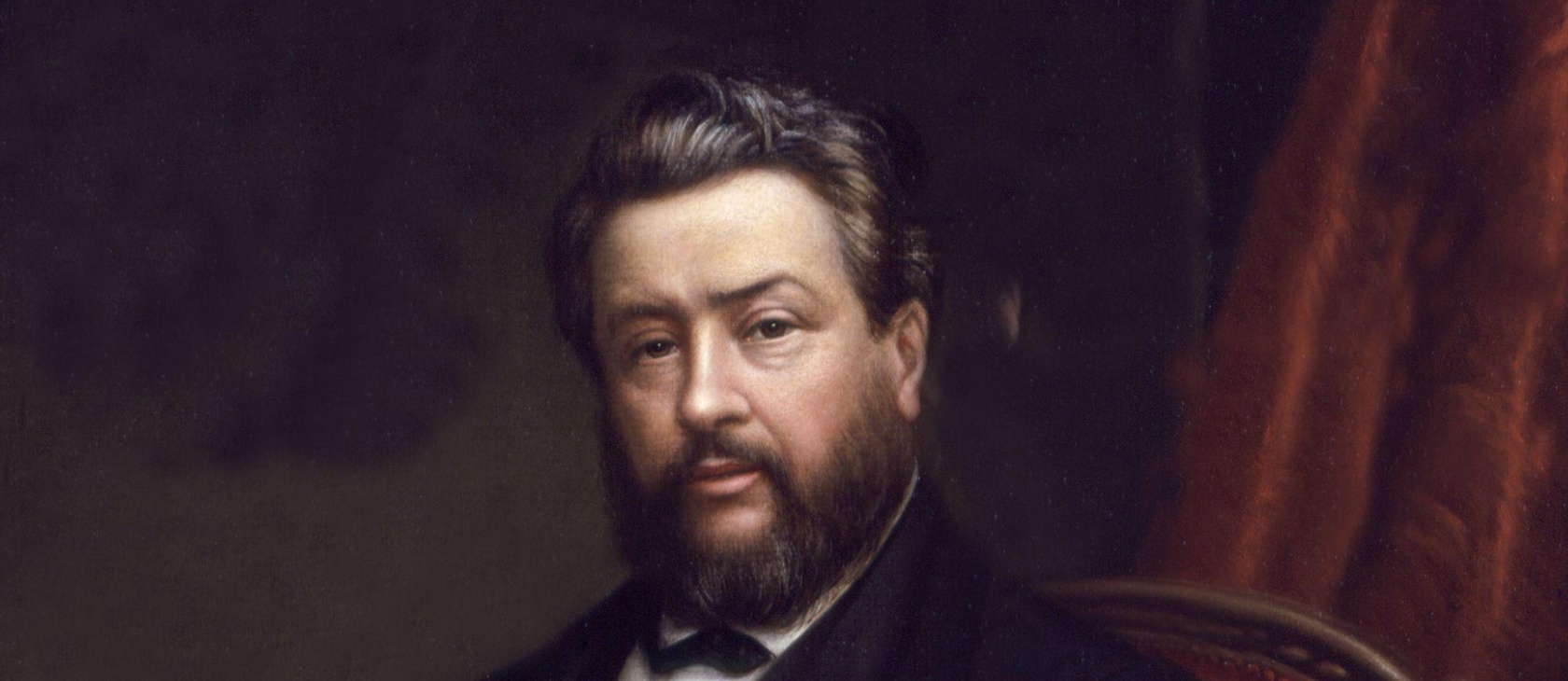
Michael Polanyi (1891–1976) was the younger brother of the famous Karl Polanyi, one of the staunchest critics historically of Western society and capitalist values. Trained as a physician, Polanyi undertook a career as a chemist. Polanyi, a native of Hungary with a Jewish heritage, immigrated first to Germany, where he proved his brilliance as a scientist. When the Nazis hijacked German politics in 1933, Polanyi ventured to Great Britain. There his interest shifted from physical to social sciences. The concept of spontaneous order, on which F. A. Hayek would later build his theory of cultural evolution, stems partially from Michael Polanyi’s writings.

Polanyi anticipated the starting point of Hayek’s analysis by opposing the general contemporary view that where order exists somebody must have been consciously ordering it. In plex social systems, an ordering appropriate to the requirements of a permanently changing environment is possible only by leaving sufficient room for self-determination and voluntary, mutual adaptation to the members of these societies. Polanyi calls the orders resulting from the voluntary and mutual adjustments between free individuals “spontaneous” or “polycentric.” Maintaining order in plex society then depends on allowing people to have the freedom “to interact with each other on their own initiative—subject only to laws which uniformly apply to all of them.” General restrictions that apply broadly to each member of a society emerge without the directive of a centralized authority. This spontaneous order concept is the fruit of Polanyi’s cross of science with the market process.

When Polanyi shifted his focus from scientific investigation to social and philosophical questions, he also became interested in religion’s role in society and in a modern individual’s life. At the request of his friend J. H. Oldham, a British ecumenical leader, religious intellectual, and editor of the Christian News Letter, Polanyi participated in several discussion groups over a sixteen-year period with other British intellectuals preoccupied with the relationship between Christianity and contemporary culture and politics. In his last book, Meaning, Polanyi tries to extend the epistemological model that he developed in his magnum opus Personal Knowledge to describe the nature of human knowledge found in art, myth, and religion. Using his theory of tacit knowing, Polanyi describes the differences between ordinary perceptual and conceptual knowledge and that which is found in the class of special artifacts available in art and religion. Along side of his insistence for allowing people enough freedom to enable them to order society through their own self-determination, Polanyi stresses the importance of the collective meaning in art, myth, and religion in the contemporary world.

Source: Phil Mullins, “Gospel & Culture: M. Polanyi 1891–1976” (May 12, 2003), www.deepsight.org/articles/polanyi.htm

Hero of Liberty image attribution:Original author is unknown, found in Manchester archives [Public domain], via Wikimedia Commons

Comments
Welcome to mreligion comments! Please keep conversations courteous and on-topic. To fosterproductive and respectful conversations, you may see comments from our Community Managers.
Sign up to post
Sort by
Show More Comments
RELIGION & LIBERTY
Knowledge’s Limits and a Nobel Economist’s Humility
  Half a century ago, a largely forgotten economist received the unexpected news that he had been awarded the Sveriges Riksbank Prize in Economic Sciences in Memory of Alfred Nobel. Friedrich A. Hayek was equally surprised to find himself sharing the sixth Nobel Prize in Economics with Gunnar Myrdal. The Swedish economist’s decidedly social democratic views could not have been more...
The Bifurcation of Constitutional Rights
  I confess I start every year with a song of hope—even for the three-ring circus in Washington, DC. And I end every year with a song of despair.   For the most recent fiscal year, the federal government spent about a quarter of US GDP. American businesses spent almost 2 trillion or roughly another 10% of GDP complying with federal regulations....
Permission to Speak
  We live in a world of mutually assured cancellation. Piled-on abuse and career destruction are now standard when dealing with political or intellectual opponents.   I wrote about this on my personal Substack last month. There, I drew on the escalating—and global—war of words and deeds over Israel-Palestine. Finally, conservatives and dissenting liberals had found a way to wound the woke...
Third
  The resignation of Claudine Gay provides a window into many pathologies of elite universities—antisemitism on campus, the prioritization of DEI over merit, and plagiarism among academics. But it also reflects their poor governance. The Harvard Corporation made mistake after mistake—first, in deciding to hire Gay, then, in defending her after a disastrous performance before Congress and substantial allegations of plagiarism....
Threading the Feminist Needle
  I recently published the bookThe End of Woman. In it, I drilled down into first-wave feminism to demonstrate that many of the defining characteristics of feminism we live with today emerged earlier than most realize. My fundamental critique of feminism is that it started with the wrong question, asking: “How to make women more like men?” As a result, this...
More Than a Symbol
  I thank Graham McAleer for his thoughtful review of The Narrow Passage: Plato, Foucault, and the Possibility of Political Philosophy.   McAleer makes a number of intelligent observations and fair-minded criticisms. My most substantial disagreement concerns his claim that Eric Voegelin provides a ready solution to our dilemmas. McAleer writes:   Voegelin argues that an enduring polity has a resilient symbol that...
Institutionalizing the Neo
  In December 2023, the Biden Administration released the much anticipated, and much criticized, “2023 Horizontal Merger Guidelines.” The Guidelines, which are a joint production of the Federal Trade Commission and the Department of Justice, are meant to be a reference tool to advise enforcers on how to scrutinize merging firms. They updated the agencies’ enforcement priorities, procedures, and expectations from...
Science’s Assault on Free Will
  What if peoples’ failures were never their fault but the product of genetic or environmental conditions into which they were born? Would such news be a cause for celebration regarding the newfound potential to improve these unfortunate circumstances and prevent human suffering, or would it be viewed as dangerous, a threat to the individual responsibility essential for any decent society?...
Masculinity, Motherhood, and American Moxie
  When New Jersey mob boss Tony Soprano finds himself in the office of psychologist Jennifer Melfi in the pilot episode of The Sopranos 1999, she asks him a number of questions. About his family, his work, and the panic attack that landed him, against his inclination, in psychotherapy.   He asks her only one: “What ever happened to Gary Cooper?”   Contrasting...
Making Music with His Friends
  From childhood, he has admired the straightlaced singing cowboy Gene Autry he’s also the world’s most famous pot-smoking hippie. His band is called The Family, and he’s well known for his long-term friendships and deep loyalty his own family life was often in shambles. He was instrumental in reviving an unpolished, rugged country style by rejecting the pop-music inspired “Nashville...
Related Classification
Copyright 2023-2026 - www.mreligion.com All Rights Reserved