


Home
/
RELIGION & LIBERTY ONLINE
/
ResearchLinks – 08.17.12
Jan 27, 2026 11:59 PM

Article: “Catholicism, Human Rights and the Public Sphere”

Christopher McCrudden, International Journal of Public Theology

This article suggests that the scope and meaning of human rights, and its relationship to religion, is anything but settled, and that this gives an opportunity to those who support a role for religion in public life to intervene. Such intervention should address four main issues. First, it should ensure that judges engage in attempting to understand religious issues from a cognitively internal viewpoint. Secondly, it should articulat a justification for freedom of religion that fully captures the core of the significance of religious belief, and the importance of the religious principles in the public sphere. Thirdly, it should ensure engagement and dialogue between the churches and others on the meaning of human dignity, given its centrality to religious and secular perspectives on rights. Lastly, the churches should consider more carefully what it means to give ‘public reasons’ in the political and cultural context, and how it can engage in the process of ‘public reasoning’ regarding human rights.

Article: “New Challenges for Catholic-Inspired NGOs in Light of Caritas in Veritate“

Jane Adolphe, Catholic Social Science Re

The non-governmental organization (NGO) is perceived not only as a disseminator of information, monitor of human rights, or provider of services, but also as a shaper of national, regional, and international policy. Many members of the lay faithful, working with others from various Christian denominations, have established NGOs to monitor and to promote the rights of the unborn, the natural family, and many other topics mon interest. These NGOs lobby at the national, regional, and international levels. This paper discusses the role of the Catholic-inspired NGO on the international level with reference to the thought of Pope Benedict XVI in his encyclical, Caritas in Veritate.

Call for Papers: “Governance and Sustainable Development: Building Commerce and Communities”

International Conference on “Governance and Sustainable Development: Building Commerce and Communities,” Coimbatore, India 10th-13th December, 2012. With increasing calls for greater accountability and efficient management of sustainable development, there are also greater demands for more effective governance in this area. The overarching aim of the conference is to provide a forum for stimulating debate and exchange of ideas by exploring the latest developments in the governance of sustainable development from a variety of perspectives including environmental sustainability, social enterprise, corporate governance, legal pluralism, and social investment. The conference will appeal to academics, professionals from both business and non-profit entities, and policy makers.

Call for Editors: Operations Editor and Media Review Section Editor

Journal of Biblical Integration in Business

The Operations Editor would work with the JBIB editor to identify data bases and journal listings that the JBIB should be in, to assist with printing and other logistics, and to help guide the future of the JBIB in the fast-paced academic journal industry.

The Book and Media Editor would work with the editorial staff of the JBIB to manage media reviews for the journal. The Editor should understand the nature of media in the 21st century, be organized, be experienced in the classroom, and be of an inquiring mind.

Syllabus: “State, Society, and Economics”

Michael Moreland, Villanova University School of Law, University of St. Thomas School of Law, Rome Summer Program

The course I taught was a survey of some major themes in the Catholic social tradition, with readings from Augustine, Aquinas, Maritain, and the modern papal encyclicals and conciliar documents. Interested readers can see the syllabus here. Guest speakers Father Robert Dodaro, OSA and Father Stephen Brock brought their great expertise to bear on our discussions of Augustine and Aquinas, and I took the class on a side trip to the magnificent Augustinian mother church in Rome, the Basilica Sant’Agostino, which includes the tomb of St. Monica and a wonderful Caravaggio (Madonna di Loreto).

Comments
Welcome to mreligion comments! Please keep conversations courteous and on-topic. To fosterproductive and respectful conversations, you may see comments from our Community Managers.
Sign up to post
Sort by
Show More Comments
RELIGION & LIBERTY ONLINE
The Tragedy of Dutch Compassion
Albert Hahn: Dr. Kuyper's care for the little people (1905)In yesterday’s post I highlighted a pair of articles that cover the transition over the last 120 years or so in the Netherlands from an emphasis on private charitable giving to reliance upon the welfare state. In some ways this story mirrors a similar transformation in American society as described by Marvin Olasky in his landmark book, The Tragedy of American Compassion. Olasky’s work does double-duty, however, not only chronicling this...
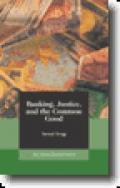
Free ebook: Banking, Justice and the Common Good
Acton Institute is once again offering a free ebook; this time, Banking, Justice and the Common Good. From now until May 5, 2012 at 3 a.m. EST, you can click on this link and download the monograph for free. We’d appreciate ments and thoughts on the book. When you’ve finished, please go to the Amazon page for the book and leave a review. ...
Our National Debt is a Loan from Future Generations
Why do democracies struggle with debt? One reason, as John Coleman notes, is that one of the problems is that debt is essentially an intergenerational wealth transfer: Debt can often be seen, essentially, a loan from future generations to the current generation. In a democracy, some of the least represented individuals are the young or those from future generations. Young people vote less. They donate and volunteer less. And their concerns — 20, 30, or 40 years in the future...
The Nobility and Greatness of Work
May 1st was the Feast of St. Joseph the Worker on the Catholic calendar, and in 2005, Pope Benedict XVI offered a short reflection on human labor when speaking to construction workers (via Whispers in the Loggia): I’m taken in mind to how, in the New Testament, in the profession of Jesus before his public ministry, the word “tecton” appears, which we translate as “carpenter,” because then homes were mostly homes of wood. But, more than a “carpenter,” it’s an...
The Inhumane Wendell Berry
“Can one have an off day in giving the Jefferson Lecture (an off week or month in writing it)?” asks Matthew J. Franck in reference to the recent NEH honor afforded to agrarian Wendell Berry. “I’d like to think so. For judging by the text of the lecture Berry gave in Washington at the beginning of this week, his thinking can be fairly repellent.” Titled “It All Turns on Affection,” his lecture is chiefly a catalogue of Berry’s hatreds. He...
U.S. Federal Budget Debate Highlights Catholic Social Teaching
Current debates surrounding the U.S. federal budget have turned the spotlight on subsidiarity, solidarity and mon good, all aspects of Catholic social teaching. In an article by the Catholic News Service’s Dennis Sadowski, Acton research fellow and director of media Michael Matheson Miller said, “The principles are there. They are to guide us and we are to pay attention to them. You have to affirm those principles. Where Catholics are going to disagree is in the prudential implementation of them.”...
From Christian Giving to the Welfare State in the Netherlands
I recently came across an interesting academic journal, Diaconia: Journal for the Study of Christian Social Practice. One of the sample articles available is by Herman Noordegraaf of the Protestant Theological University in Leiden. His piece is titled, “Aid Under Protest? Churches in the Netherlands and Material Aid to the Poor” (PDF). The latest issue of the Journal of Markets & Morality is a theme issue on “Modern Christian Social Thought,” and a series of pieces take up a line...
Charles Colson’s ‘Ecumenism of the Trenches’
“Walter Hooper once said of C.S. Lewis that he was the most truly converted person he had ever met,” says Baptist theologian Timothy George. “The same thing can be justly said of Charles W. Colson, who came to faith in Christ through reading Lewis’ Mere Christianity.” In an article for the National Catholic Register,George examines the legacy of his friend, a man who helped forge Evangelicals and Catholics Together and the ‘Manhattan Declaration.’: Sentenced to prison for his Watergate crimes,...
Video: The False Promise of Green Energy
For PowerBlog readers, we’re posting the video from Andrew Morriss’ April 26 Acton Lecture Series talk in Grand Rapids, Mich., on “The False Promise of Green Energy.” Here’s the lecture description: “Green energy advocates claim that transforming America to an economy based on wind, solar, and biofuels will produce jobs for Americans, benefits for the environment, and restore American industry. Prof. Andrew Morriss, co-author of The False Promise of Green Energy (Cato, 2011), shows that these claims are based on...
Coolidge and His Foundational Views on Government
Below is an excerpt from an early speech given by Calvin Coolidge to the Algonquin Club in Boston, Mass. in 1915. These remarks are included in a series of speeches Coolidge published in the book, Have Faith in Massachusetts. The speeches primarily deal with his philosophy of government, which because of his emphasis on foundational beliefs, remained consistent. In the excerpt, Coolidge quotes a “Dr. Garman,” who was a professor at Amherst College, in Amherst Mass. Coolidge graduated from the...
Related Classification
Copyright 2023-2026 - www.mreligion.com All Rights Reserved







