Home
/
RELIGION & LIBERTY
/
Henri Landwirth
Henri Landwirth
May 12, 2026 11:10 PM

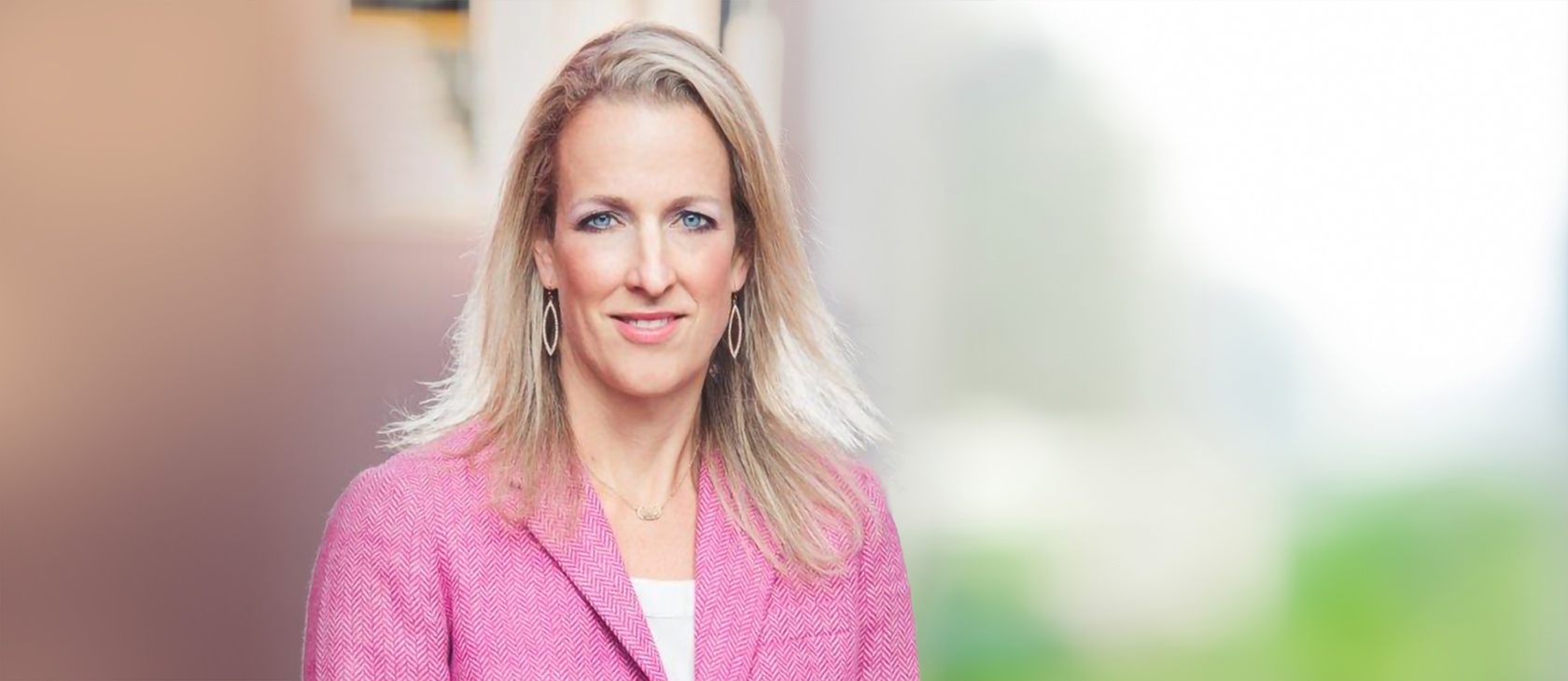
Henri Landwirth (1927-2018) overcame a traumatic childhood during the Holocaust to e a great businessman and philanthropist for terminally ill children. Landwirth and his twin sister, Margot, were born in Antwerp, Belgium, in 1927 to clothing salesman Max Landwirth and his wife, Fanny. When Henri was 13, the Nazis forced his family into the Krakow ghetto, shot Max, then dispersed his surviving family to concentration camps. He would see his mother only once more before she and a thousand other prisoners were loaded onto a ship, which the Nazis sank.

From age 13 to 18, Henri was starved and beaten severely. He finally escaped during the last weeks of the war through Czechoslovakia, eventually finding work as a diamond-cutter in his uncle’s factory in Belgium.

In 1949, he arrived in New York City unable to speak English, with only a sixth-grade education, $20, and a copy of the Torah. After serving stateside during the Korean War, Landwirth studied hotel management on the G.I. Bill. In 1954, he was hired to run the President Madison Hotel in Miami Beach, where he personally performed every job, learning how each one contributes to guest satisfaction.

As hotel manager, one small act of kindness changed his life forever. He loaned his tie to a man, who needed it to eat in the restaurant. That man turned out to be B.G. McNabb of General Dynamics, who was responsible for developing the new space program at Cape Canaveral. With no appropriate lodging in the area for personnel, McNabb built a 100-room motel and hired Henri Landwirth to run it. Henri met the people who worked on Project Mercury, America’s first manned spaceflight program. One of them, John Glenn, became his partner in a new Holiday Inn three miles from Walt Disney World. With success upon success, Henri became one of Florida’s most successful hoteliers.

As Landwirth prospered, he offered free hotel rooms to the Make-A-Wish Foundation for seriously ill children. In 1986, a six-year-old named Amy died before her family could finalize plex travel arrangements. Determined to make these trips stress-free, Landwirth partnered with Disney and others to create the Give Kids the World Village. Rather than perpetually seek hotel rooms for these families, Henri built them an entire village. He opened the 35-acre resort in 1989, in Kissimmee, Florida. It now covers 89 acres and has 166 villas, each of which provides luxury modations for up to six people. Thousands of volunteers ensure that the child’s every need or desire is met. As of this writing, Give Kids the World has served 160,000 children from more than 75 countries.

Henri spent virtually every day for 15 years at the village, fine-tuning its operations and joyfully engaging with the children and their families. He explained the reason that he felt drawn to these children was that they were spending their childhood in pain and uncertainty – just as he had – never knowing if each day might be their last.

Henri Landwirth’s experience serving customers in business taught him how he could best serve the vulnerable. His intelligence and charisma made the village successful. But Henri believed that something greater was at play: “It must be God – God is right here in this village,” he said.

Henri Landwirth cut and faceted his gem of a life into a sparkle that rivaled the stars.

Comments
Welcome to mreligion comments! Please keep conversations courteous and on-topic. To fosterproductive and respectful conversations, you may see comments from our Community Managers.
Sign up to post
Sort by
Show More Comments
RELIGION & LIBERTY
Economic Imperialism
R&L: You are sometimes called an “economic imperialist.” What is meant by this? Becker: That refers to my belief that economic analysis can be applied to many problems in social life, not just those conventionally called “economic.” The theme of my Nobel lecture, based on my life’s work, is that the horizons of economics need to be expanded. Economists can talk not only about the demand for cars, but also about matters such as the family, discrimination, and religion,...
Corporate Philanthropy
R&L: Capital Research Center recently published a study of patterns of corporate philanthropy in the United States. Could you give us a brief summary of that study? Johnson: Patterns of Corporate Philanthropy is an annual study of corporate public affairs giving. Using the Forbes 250 listing of America’s largest corporations, it examines contributions to public policy groups–not traditional service charities, the arts, hospitals, etc.–because these groups increasingly determine the political, economic, and moral climate in which businesses and society...
Science and the Environment
R&L: With the world-wide decline of socialism, many individuals think that the environmental movement may be the next great threat to freedom. Do you agree? Ray: Yes, I do, and I'll tell you why. It became evident to me when I attended the worldwide Earth Summit in Rio de Janeiro last June. The International Socialist Party, which is intent upon continuing to press countries into socialism, is now headed up by people within the United Nations. They are the...
Faith and the Limitations of the State
R&L: You played a role in the international political scene at what may be known as history’s most critical hour. Are you aware of a spiritual dimension to what you participated in? Thatcher: Yes, very much so. Freedom is a moral quality. es from the Old Testament and the New. It’s definitely a part of Judaism and Christianity. The talents that we have are God-given talents, therefore we have a right to use them. But, of course, you can...
Productivity and Potential
R&L: You have led an incredibly productive and active life, from the early civil rights movement to now working to strengthen the black family. What motivates you? Perkins: I don’t like to see human potential wasted, and that’s what happens when people are left behind, either because the system excludes them or because they have failed to adopt solid values. I spent 22 years, from 1962 to 1980, in rural Mississippi, and prior to that I lived in California....
Markets and Virtue
R&L: Please explore with us the way in which certain human virtues promised by the years of Communist rule in your country. Klaus: Basic human virtues such as thrift, honesty, and fidelity can grow and flourish only in an environment of individual freedom and self-responsibility. Communist totalitarianism deprived people of both of them, made them more passive, more cowardly, and more resigned than in countries with political pluralism, property rights, and market structures. R&L: In the long term, do...
Lessons from Liechtenstein
R&L: In the United States, monarchs are usually seen as either mere figureheads or as malevolent dictators. What is the role of a monarch in a free society? Liechtenstein: In our time, monarchies are an important factor in the stability of a country. The monarchy stands for continuity and moral responsibility for the next generation. The monarchs don’t hold their positions for a few years, and then, after an election, find themselves out of office. Rather, they automatically have...
Morality and American Society
R&L: What role did religion or faith play in the founding of National Review in the 1950s? Buckley: Well, it was very plain to all of my associates that I was a pro-Christian. Senior editor James Burnham was a lapsed Catholic; Willmoore Kendall, a Catholic convert; Willi Schlamm, Jewish but “pro-God;” and, of course, Whittaker Chambers was a Christian. The only event that was historically conspicuous within the annals of National Review was the resignation from the Board of...
Toward Humane Governance
R&L: Let’s begin with a discussion of the distinction between totalitarian and authoritarian regimes, especially in light of the former ing enfeebled. What should our stance be regarding the remaining authoritarian regimes? Kirkpatrick: I always assume that democracy is the only good form of government, quite frankly, and democracy is always to be preferred. I think that it’s always appropriate for Americans and for American foreign policy to make clear why we feel that self-government is patible with peace,...
Sound Economics and Evangelicals
R&L: You are a pastor and also speak weekly to hundreds of thousands of people on national television. In your opinion, why is it important for Christians to be grounded in sound economic thinking? Kennedy: Unsound economic thinking can lead to disastrous results and suffering for hundreds of millions of people. Consider the catastrophic impact on the vast number of people who had to live under the false economic thinking that munism. Our own society contains many examples of...
Related Classification
Copyright 2023-2026 - www.mreligion.com All Rights Reserved